
- Home
- Flight quote
- Villa Gesell
Private flights to Villa Gesell
From USD 3,410 · 1 h 15 flight time
Results:
- Itinerary
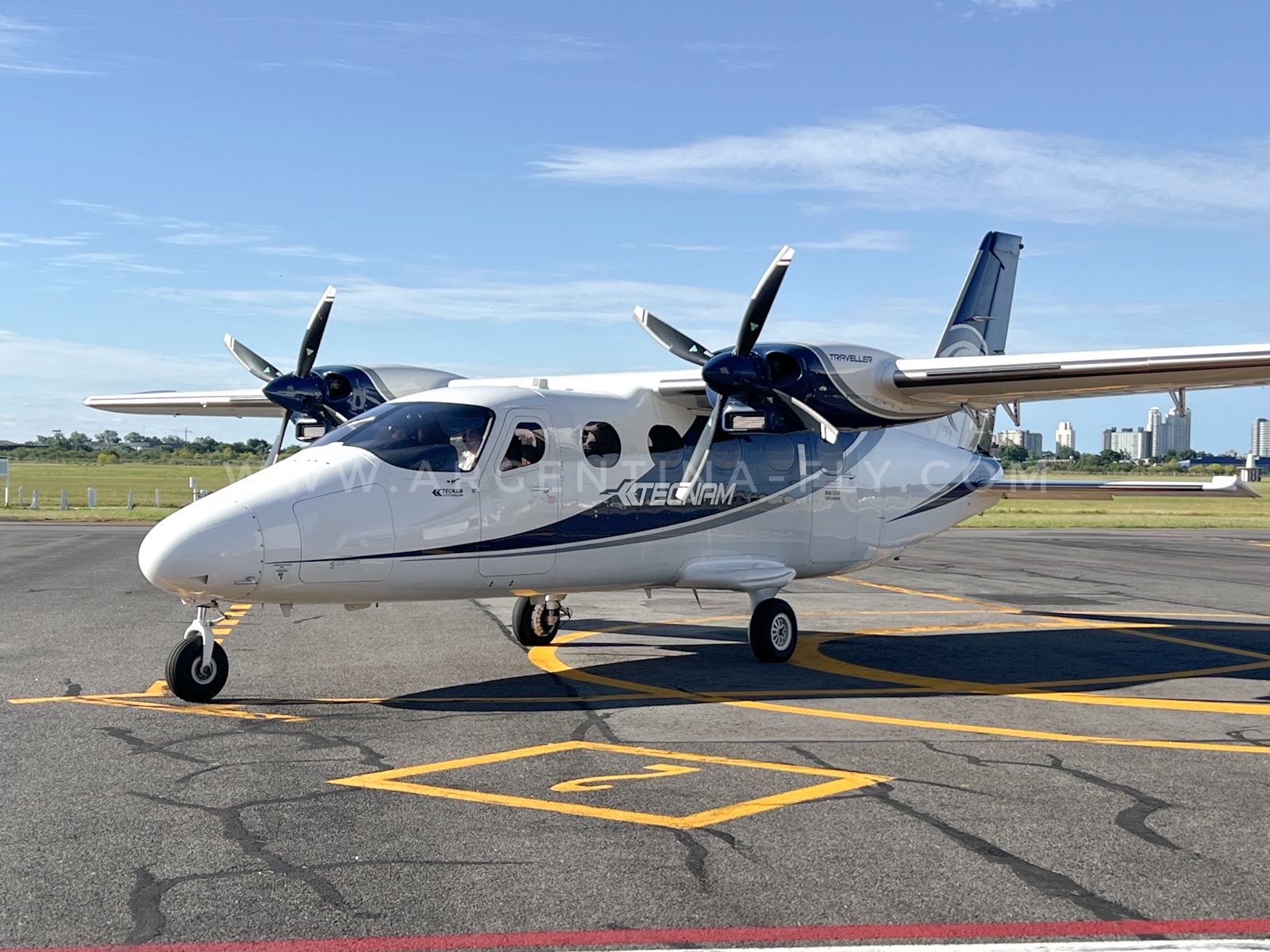
Tecnam Traveller
Piston aircraft · 9 passengers · 1 h 151 h 15flight time
USD 3,410+ VAT 10.5%
Request a quote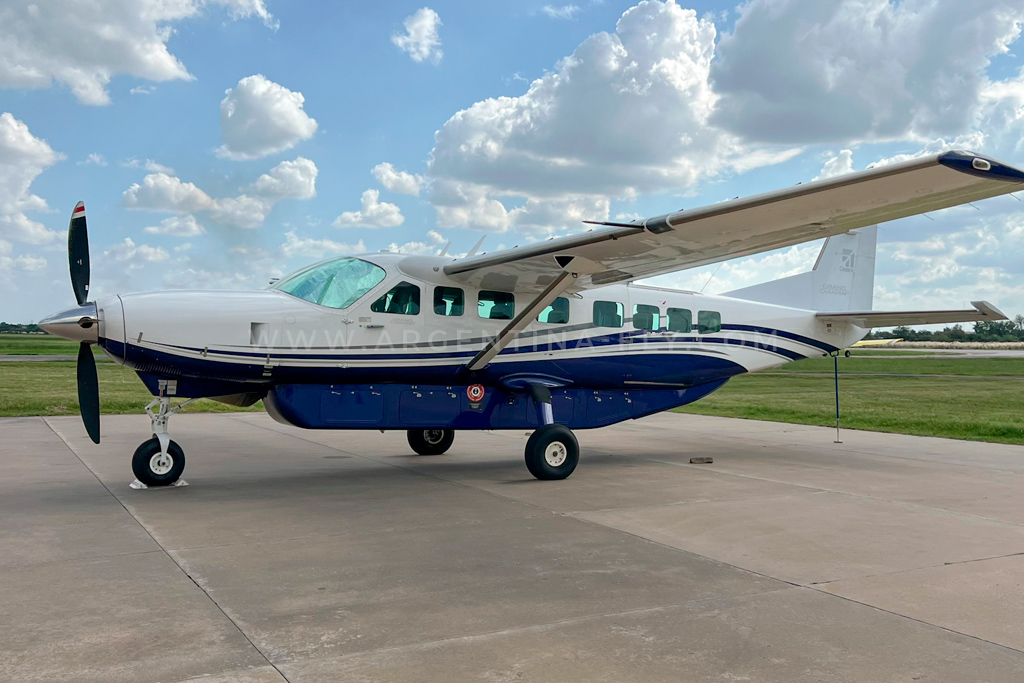
Cessna Grand Caravan
Turboprop · 9 passengers · 1 h 201 h 20flight time
USD 3,540+ VAT 10.5%
Request a quote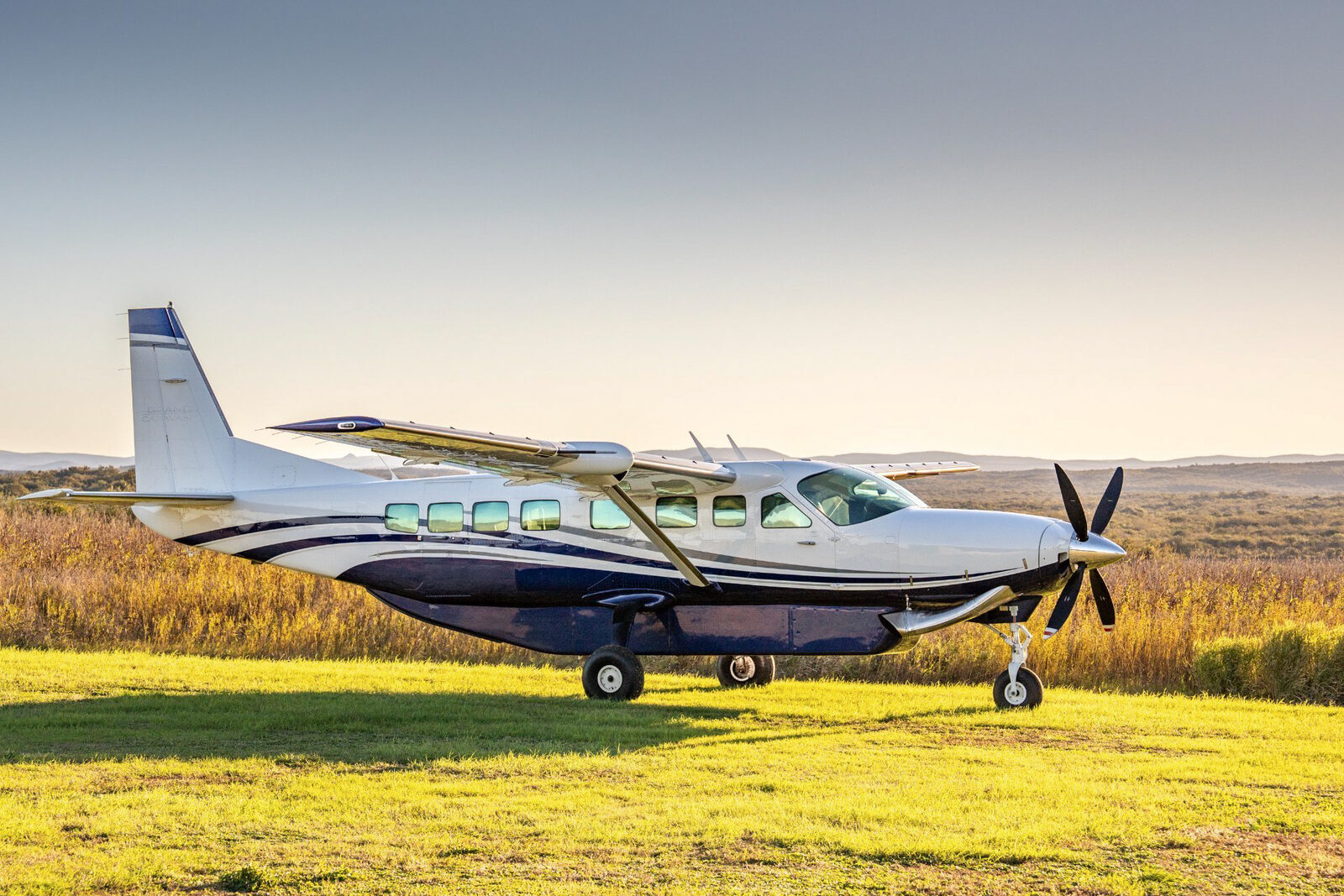
Cessna Grand Caravan Ex
Turboprop · 9 passengers · 1 h 151 h 15flight time
USD 3,780+ VAT 10.5%
Request a quote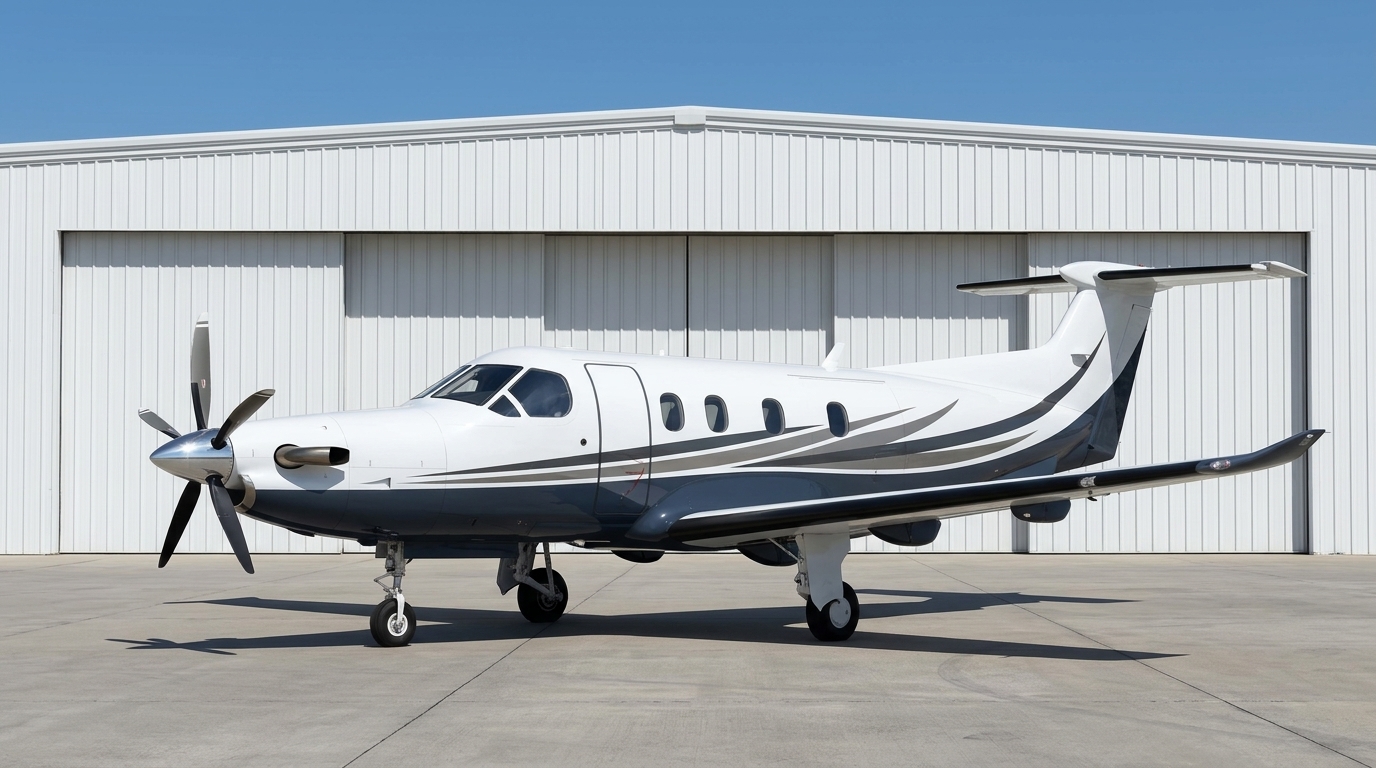
Pilatus PC12 Pro
Turboprop · 8 passengers · 1 h 001 h 00flight time
USD 4,080+ VAT 10.5%
Request a quote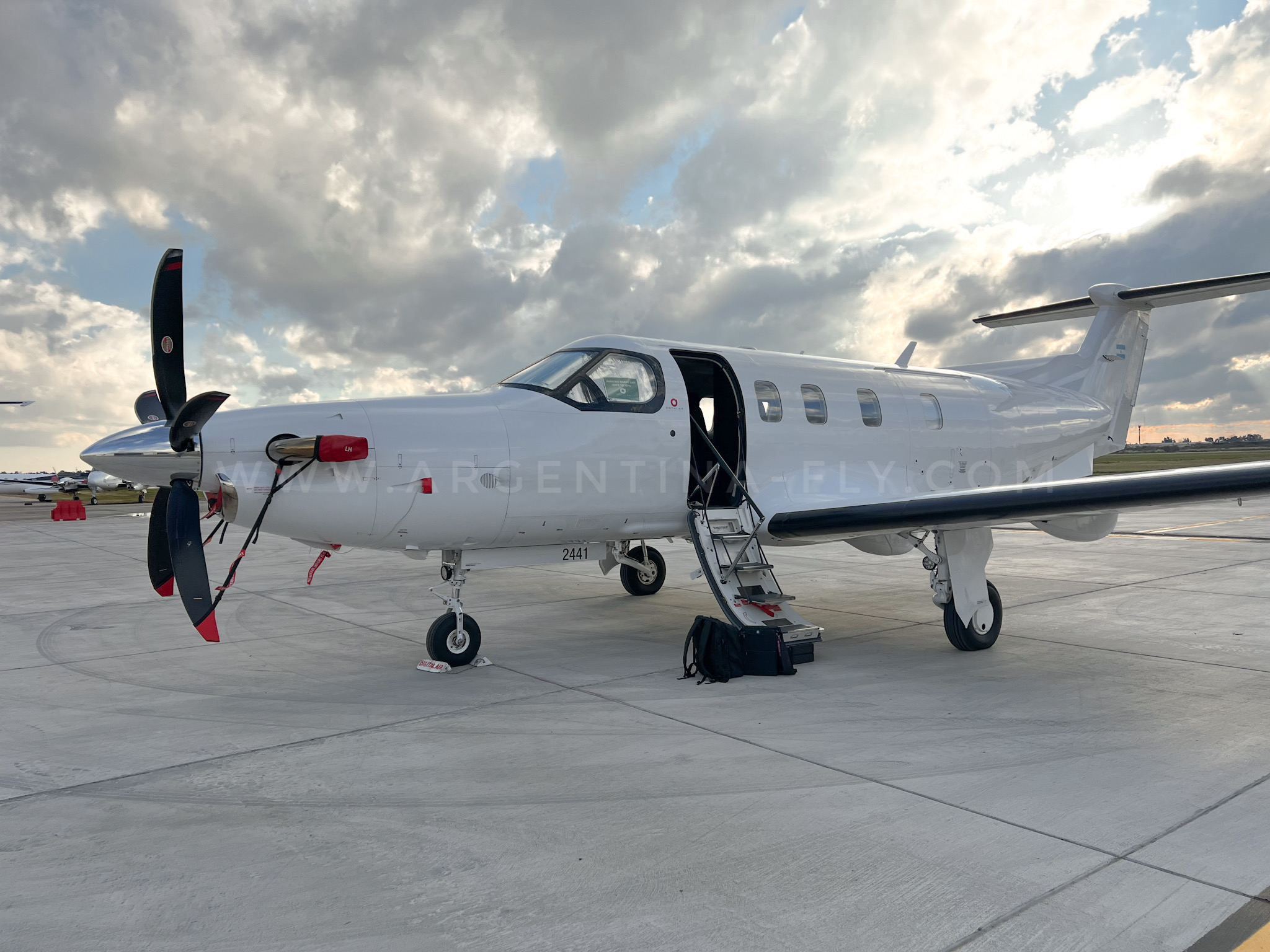
Pilatus PC-12
Turboprop · 8 passengers · 1 h 001 h 00flight time
USD 4,700+ VAT 10.5%
Request a quote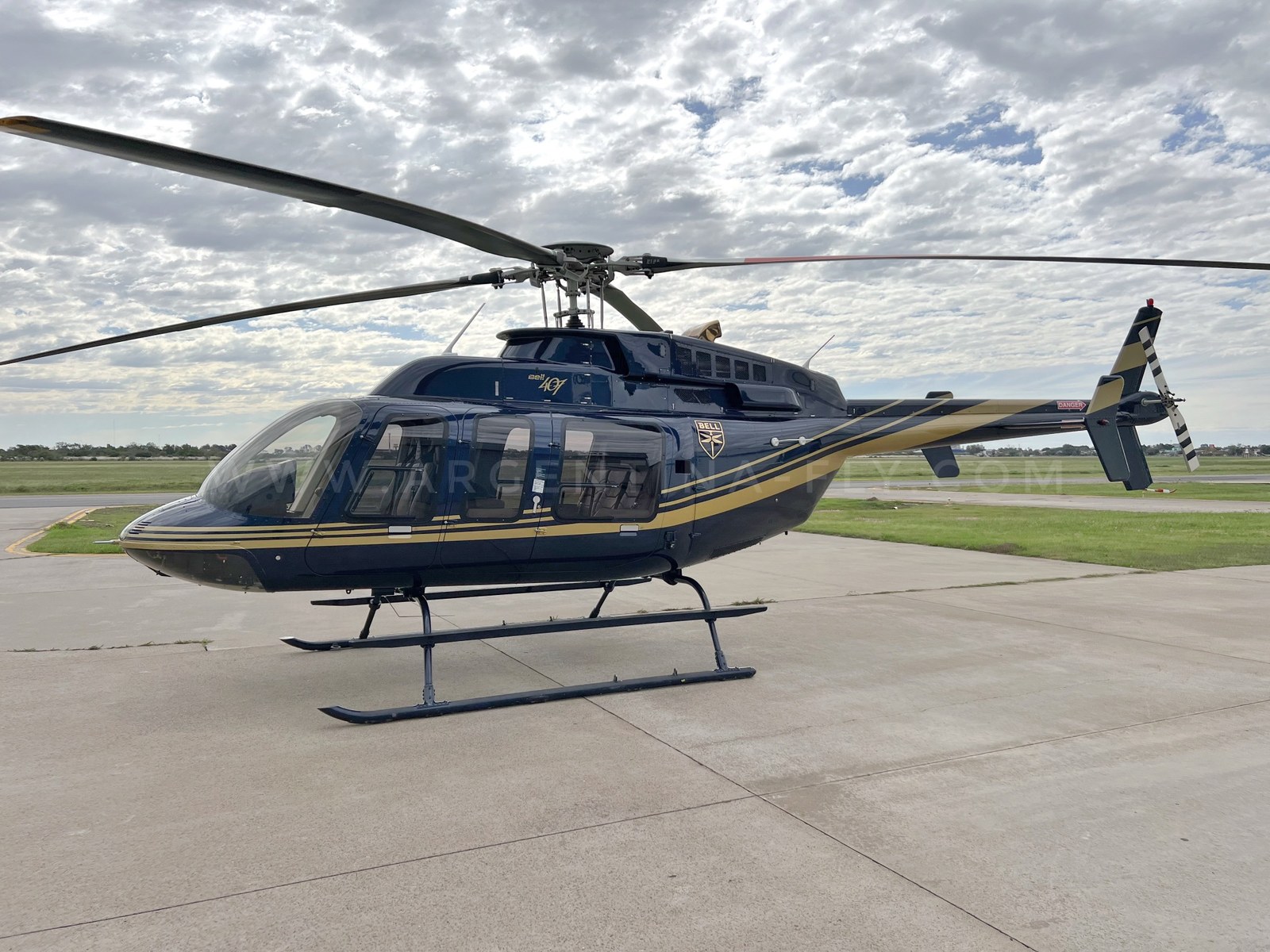
Bell 407
Helicopter · 6 passengers · 1 h 351 h 35flight time
USD 9,390+ VAT 10.5%
Request a quote
Route and airfields
Rate conditions
Please read carefully before requesting a quote.
Prices
Reference fares in US dollars (USD), for the entire aircraft. They may vary with aircraft availability and travel dates. For itineraries with several destinations, please request a tailored quote.
Not included
VAT on flights within Argentina, fees abroad on international flights (airport charges, handling and FBO, among others), and special services on request.
Base airport
Fares are calculated for departure from San Fernando (FDO). Departing from Aeroparque (AEP) or Ezeiza (EZE) may change the fare, depending on where each aircraft is based.
Reference fleet
The aircraft displayed are for reference purposes only and may vary depending on operational availability. Contact us to learn about the available options for your trip.
Rate conditions
Please read carefully before requesting your quotation.
Published prices are provided for reference only.
 Prices
Reference fares in US dollars (USD), for the entire aircraft. They may vary with aircraft availability and travel dates. For itineraries with several destinations, please request a tailored quote.
 Not included
VAT on flights within Argentina, fees abroad on international flights (airport charges, handling and FBO, among others), and special services on request.
 Base airport
Fares are calculated for departure from San Fernando (FDO). Departing from Aeroparque (AEP) or Ezeiza (EZE) may change the fare, depending on where each aircraft is based.
 Reference fleet
The aircraft displayed are for reference purposes only and may vary depending on operational availability. Contact us to learn about the available options for your trip.
Need a personalized quotation?
Request quotation
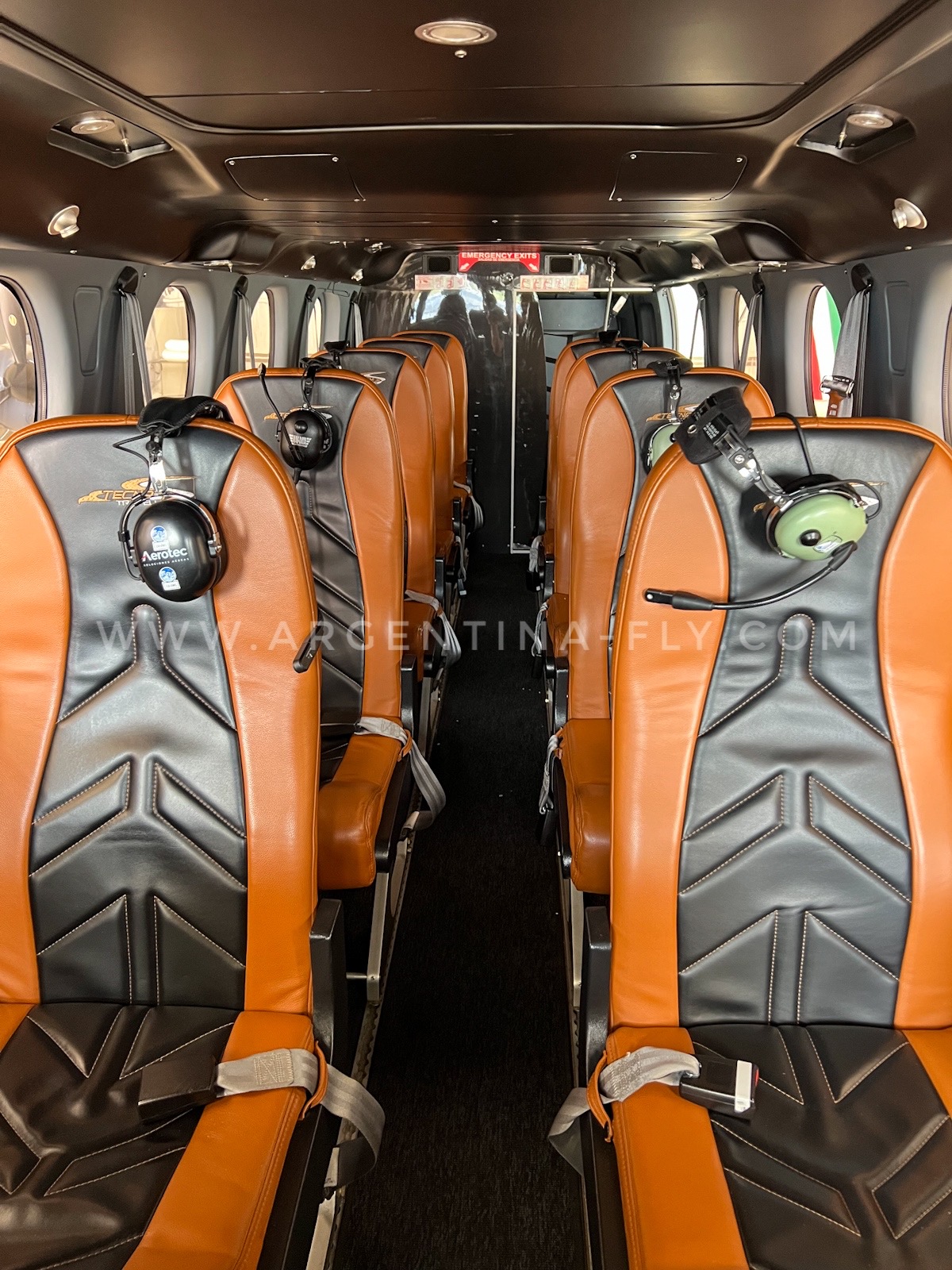
Tecnam Traveller
High-capacity twin-engine aircraft, ideal for group transfers with up to 9 passengers.
 Capacity
9 passengers
 Lavatory
Not available
 Cabin
Non-pressurized
 Luggage
Moderate
 Wi-Fi
Not available
 Villa Gesell (VLG)
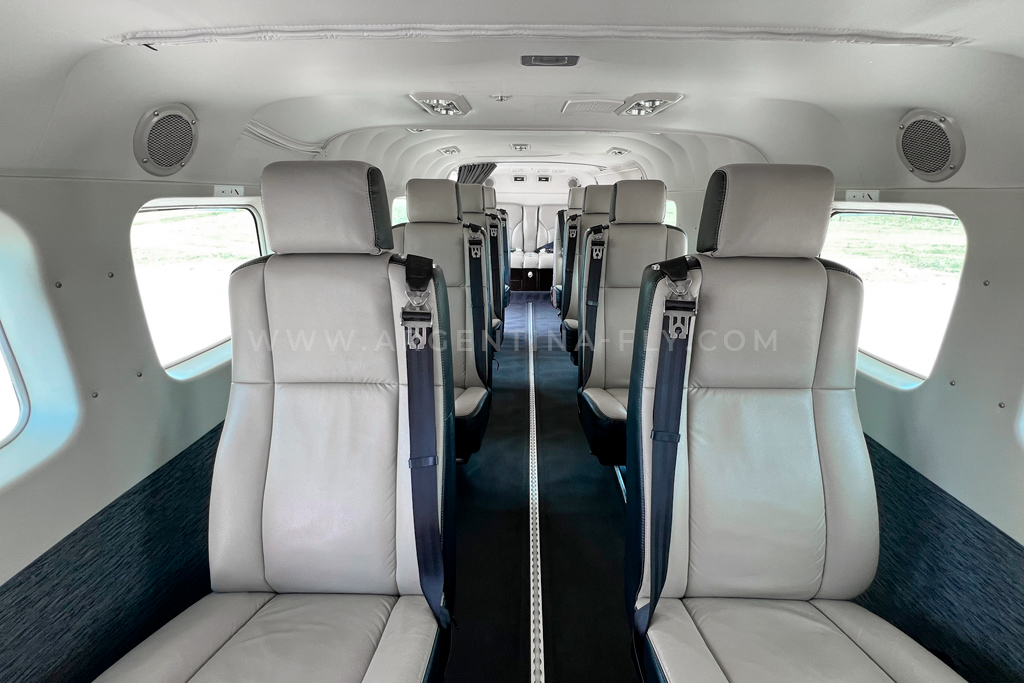
Cessna Grand Caravan
Versatile turboprop with generous payload capacity and a comfortable cabin, ideal for groups and flights to destinations with short runways.
Capacity
9 passengers
Lavatory
Not available
Cabin
Non-pressurized
Luggage
Moderate
Wi-Fi
Portable Starlink
Villa Gesell (VLG)
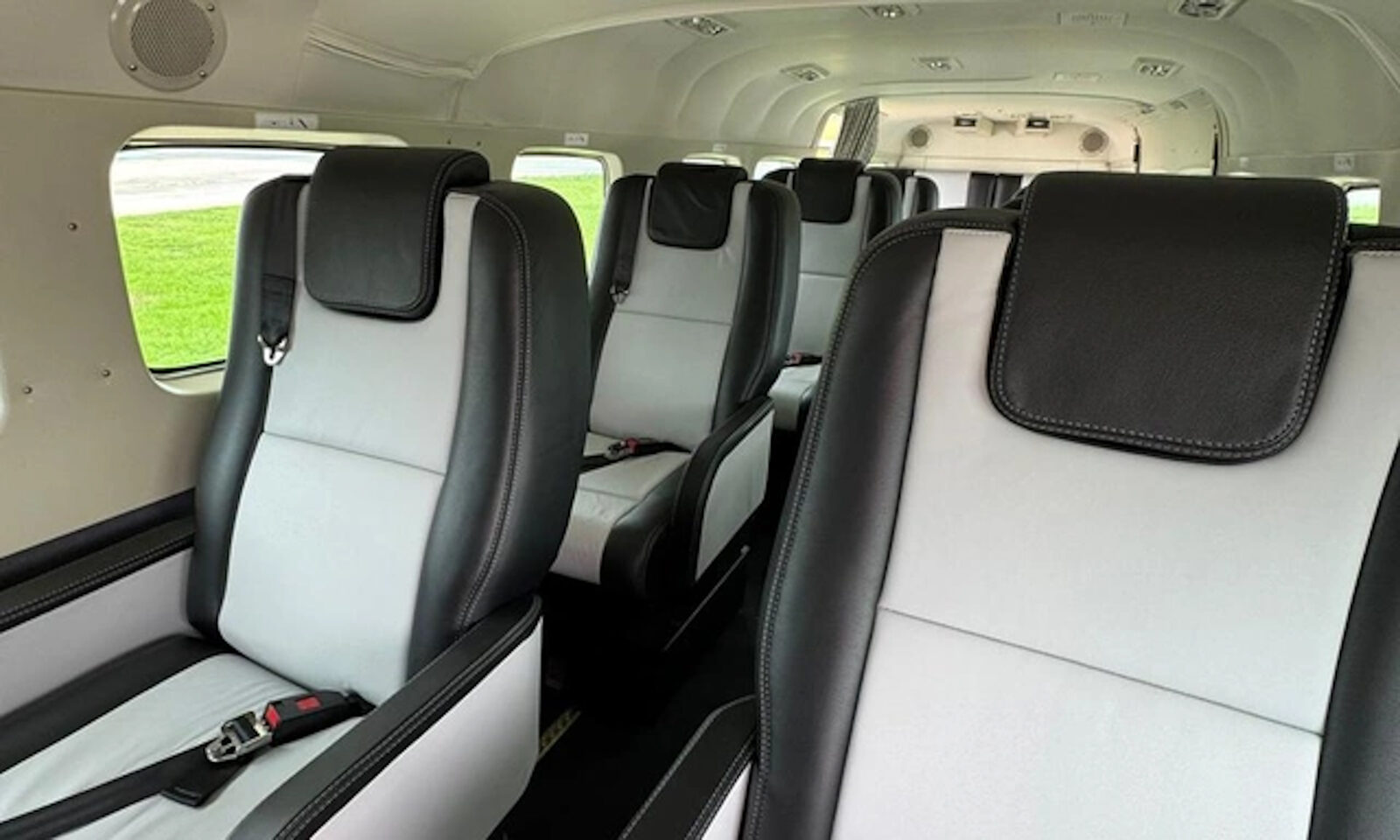
Cessna Grand Caravan Ex
Versatile turboprop with generous payload capacity and a comfortable cabin, ideal for groups and flights to destinations with short runways.
Capacity
9 passengers
Lavatory
Not available
Cabin
Not pressurized
Luggage
Standard
Wi-Fi
Portable Starlink
Villa Gesell (VLG)
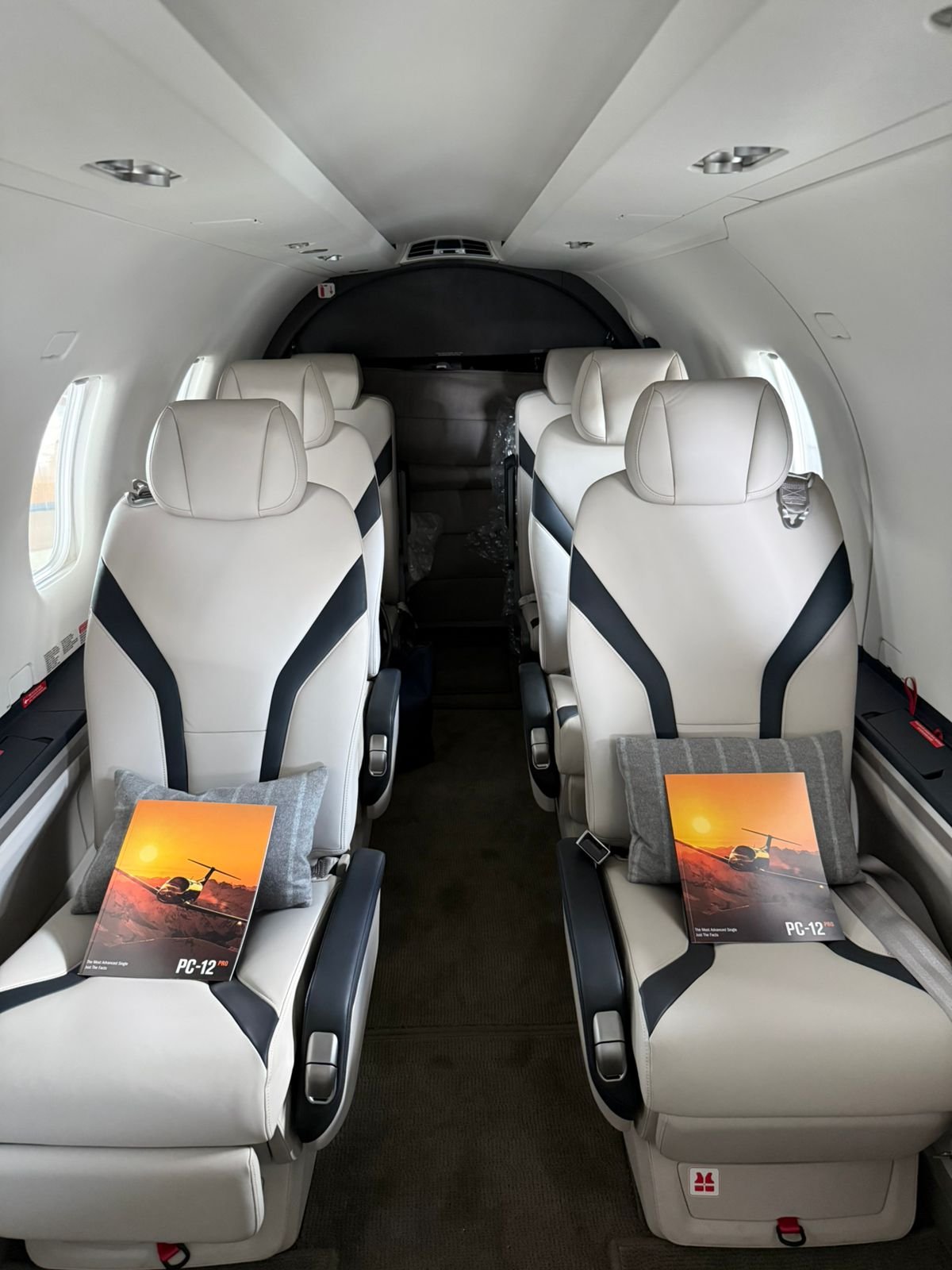
Pilatus PC12 Pro
High-performance single-engine turboprop in executive configuration, with a spacious cabin and latest-generation technology.
Capacity
8 passengers
Lavatory
Not available
Cabin
Pressurized
Luggage
Standard
Wi-Fi
Portable Starlink
Villa Gesell (VLG)
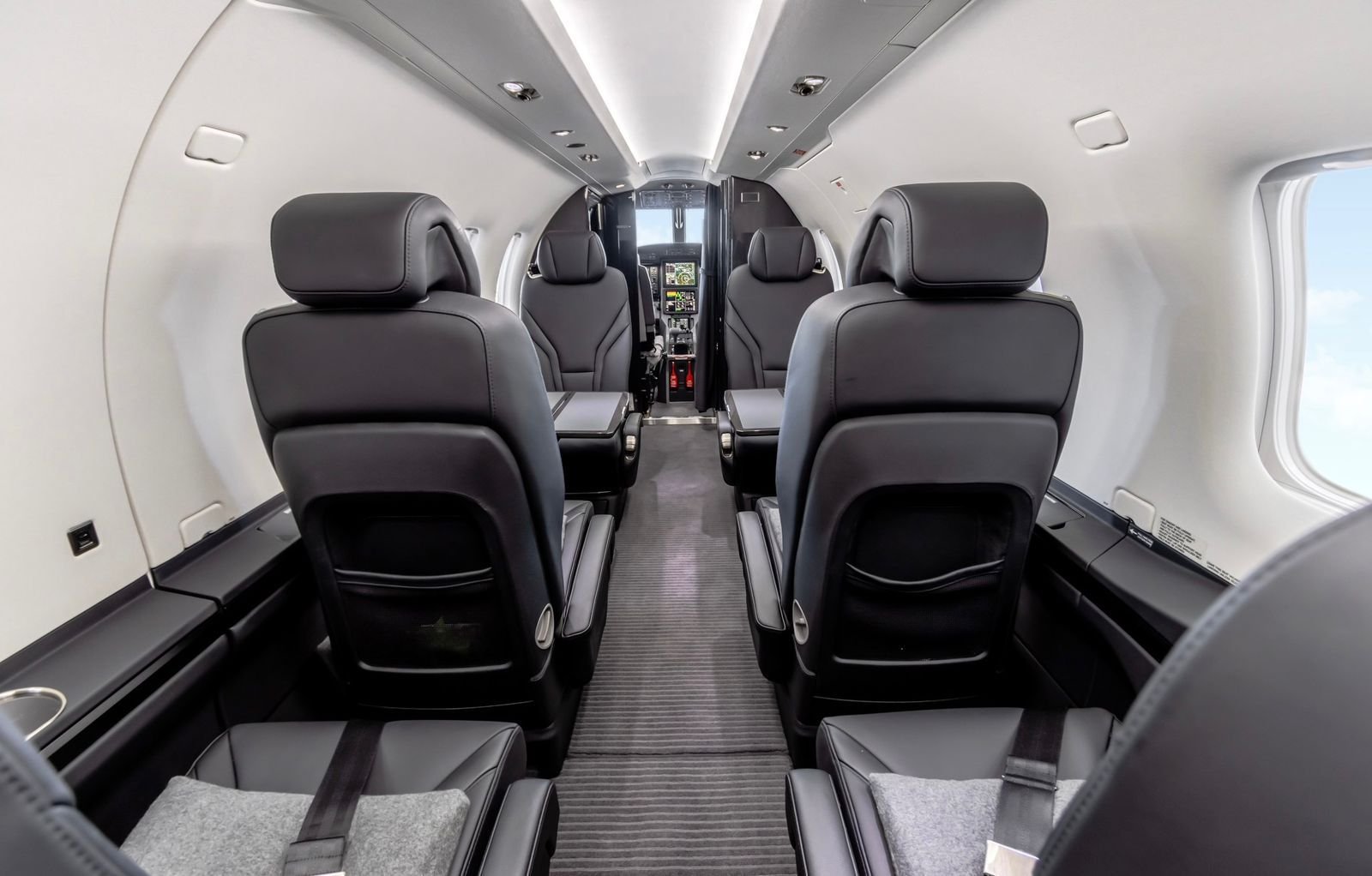
Pilatus PC-12
High-performance single-engine turboprop in executive configuration, with a spacious cabin and latest-generation technology.
Capacity
8 passengers
Lavatory
Not available
Cabin
Pressurized
Luggage
Standard
Wi-Fi
Portable Starlink
Villa Gesell (VLG)
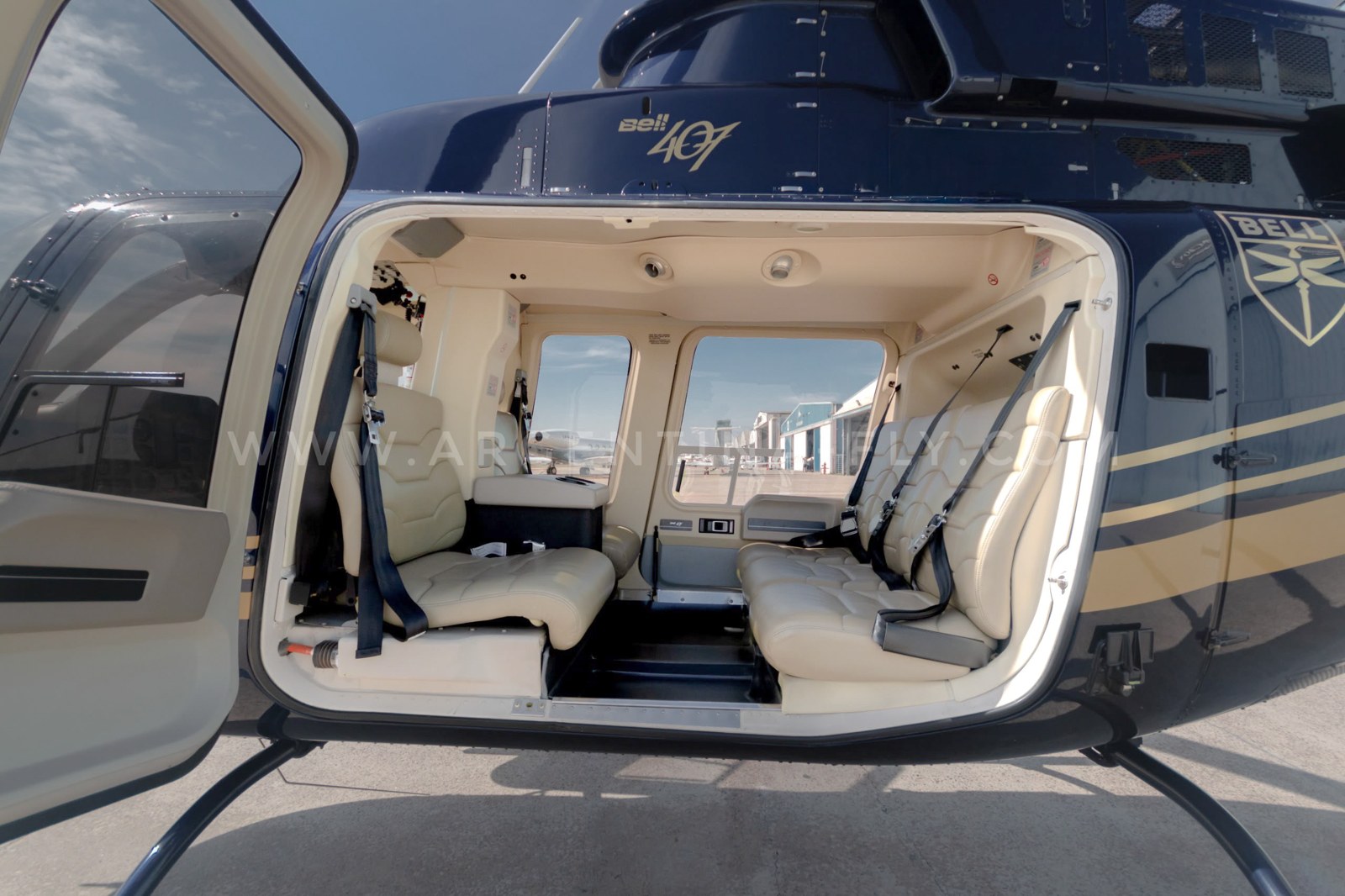
Bell 407
Single-engine helicopter for up to 6 passengers, with a five-seat cabin and a double door.
Capacity
6 passengers
Lavatory
Not available
Cabin
Not pressurized
Luggage
Compact
Wi-Fi
Not available
Villa Gesell (VLG)
Other routes from Buenos Aires
Destinations near Villa Gesell, with the lowest reference fare and the shortest flight time.
Villa Gesell
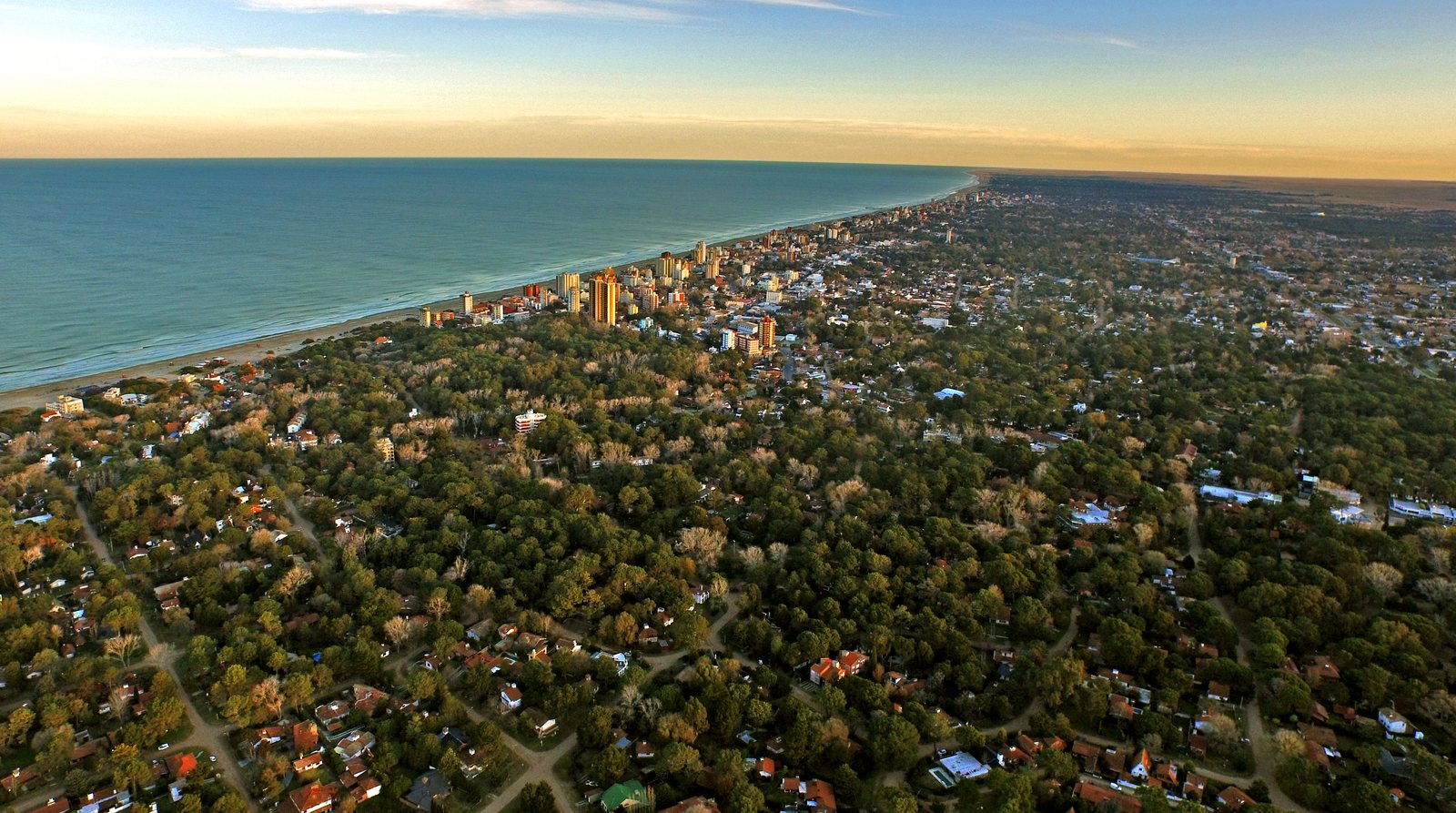
Villa Gesell was born in 1931 on shifting, treeless dunes that Carlos Gesell stabilized and planted until they became a forest. Today the district (partido) takes in the town, with its wooden boardwalk and fishing pier, and to the south Mar de las Pampas, Las Gaviotas and Mar Azul, among pines and dunes, as far as the Faro Querandí Nature Reserve. From Buenos Aires, a private flight reaches the Villa Gesell airfield in 1 h 00 to 1 h 20.
The founder and the forest
Carlos Gesell's houses and the pine forest he planted on the sand.
In 1931 Carlos Gesell bought beachfront land made of drifting sand dunes. He began by stabilizing them with native grasses such as esparto and tupé, and added acacias, which fix nitrogen in the soil; then came pines, cypresses, poplars, eucalyptus, oaks and even sequoias. That work produced the forest on which the town grew.
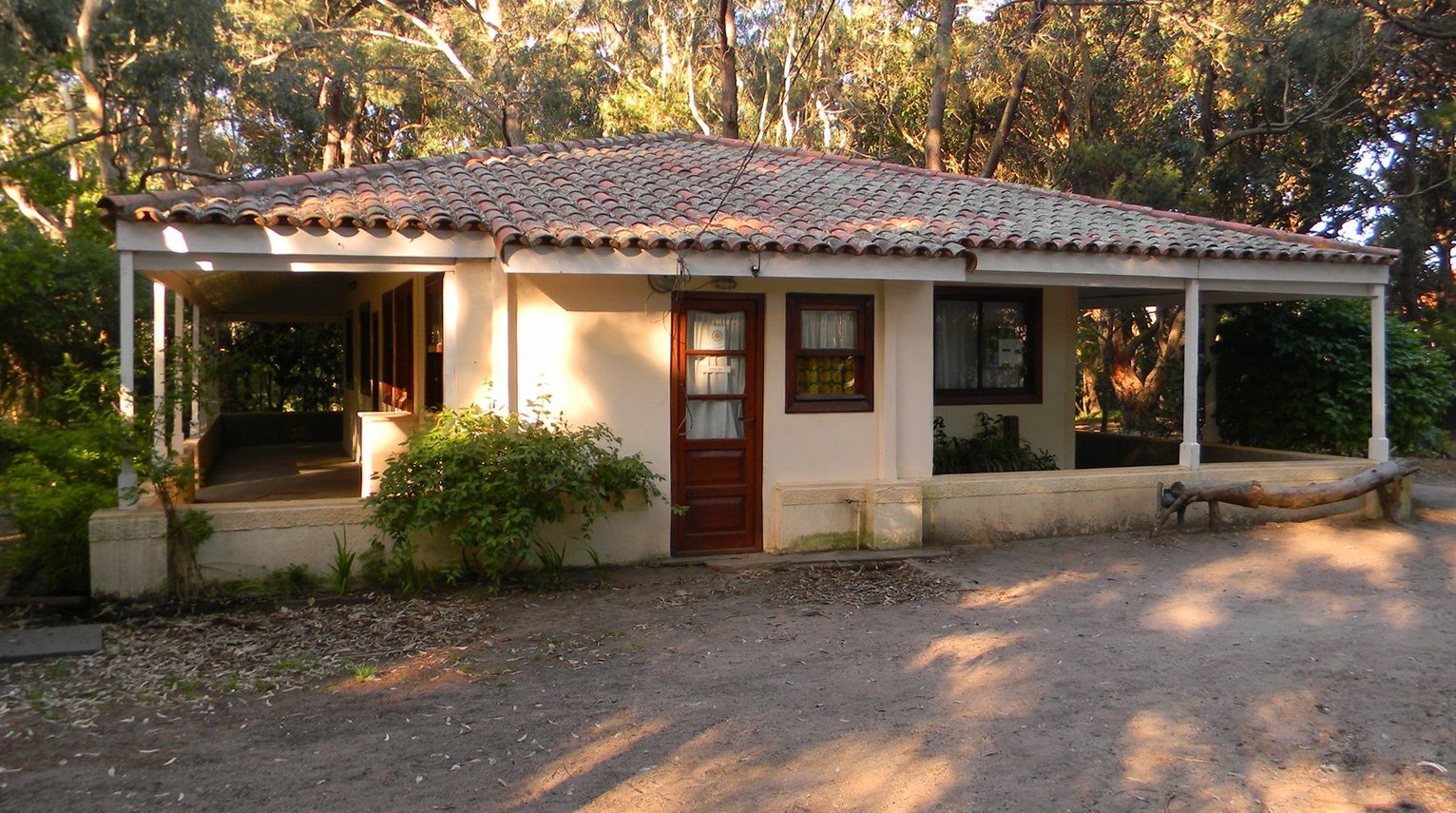
The heart of that story is the Pinar del Norte, at Alameda 202 and Calle 303, officially named Bosque Fundacional y Casco Histórico, the founding forest and historic quarter, since 2026. There stands the family's first house, built in three weeks in 1931 on a 9-meter dune: it has four doors, so that one would always be clear when the wind piled up sand. It houses the Municipal Historical Museum and Archive and has been a Bien de Interés Histórico Nacional, a national heritage designation, since 2013.
About 70 meters away is the 1952 chalet where Gesell lived until his death in 1979; today it is the Casa Museo y Centro Cultural Chalet de Don Carlos, a house museum and cultural center with exhibitions and concerts year-round. The same grounds hold the Museo de los Pioneros, in the first post office, and the Museo del Veterano de Guerra de Malvinas, the museum of the veterans of the war in the Falkland Islands (Malvinas Argentinas). Guided tours of about 90 minutes on the history and the forest leave from the museum, and the Paseo de los Pinares continues 1,200 meters on foot or by bike to the Pinar del Anfiteatro.
What to see
- Chalet de Don CarlosGesell's second house, from 1952, now a house museum and cultural center in the Pinar del Norte.
- Museo de los PionerosPhotos and objects of the first settlers, from 1940 to 1960, in the old post office.
- Museo y Archivo Histórico MunicipalThe 1931 four-door house; guided tours of the Pinar del Norte start here.
- Pinar del AnfiteatroThe town's second municipal reserve, with a natural amphitheater in the forest; Avenida 10 and Paseo 102.
- Pinar del NorteBosque Fundacional y Casco Histórico, at Alameda 202 and Calle 303; open daily in summer and Tuesday to Saturday in winter.
Boardwalk, beach and pier
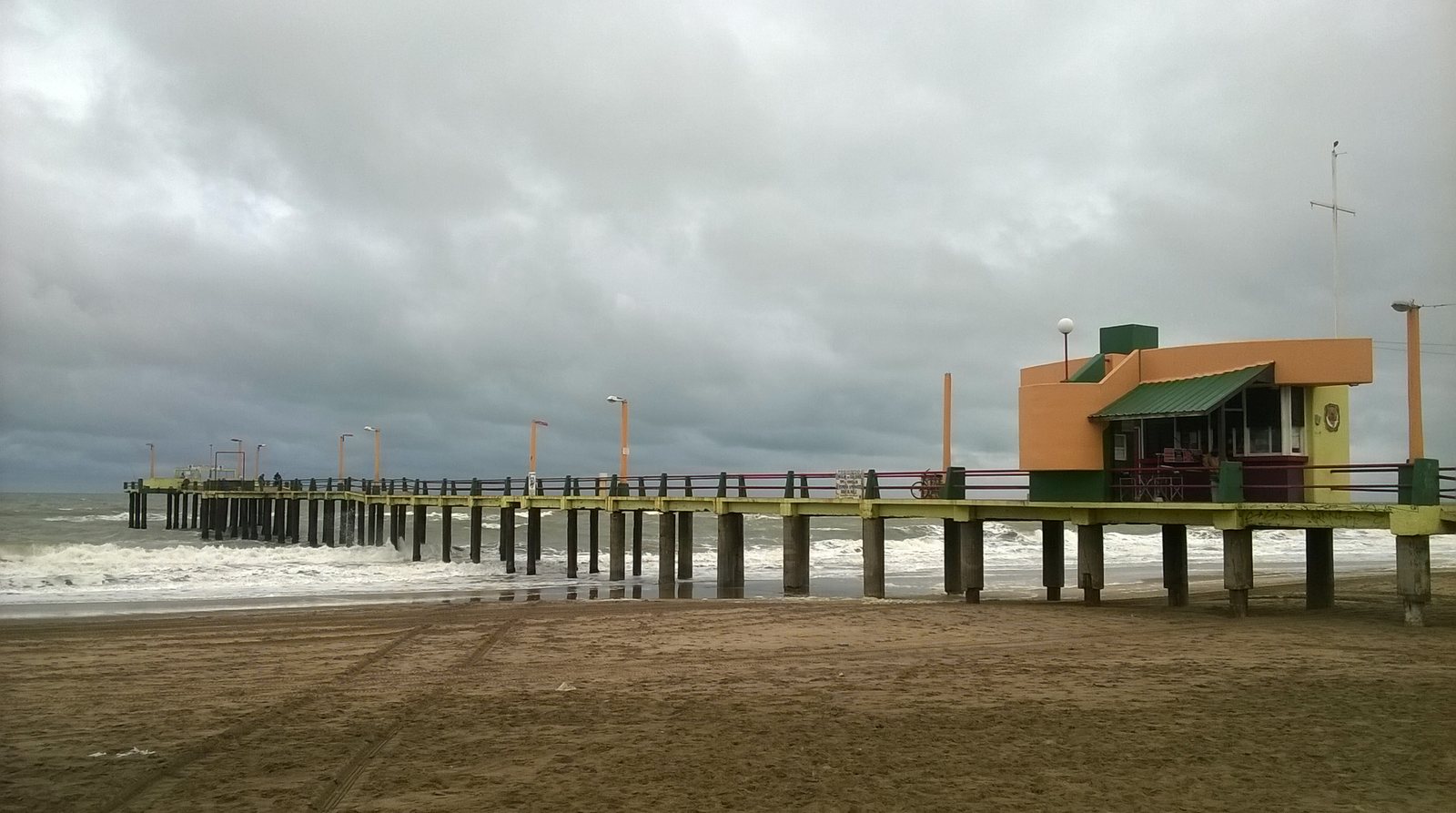
A wooden promenade facing the sea and a pier that runs 150 meters out.
In front of downtown, the Matilde Ontiveros boardwalk, wooden and accessible, follows the beach from Calle 303, in the Barrio Norte, to Paseo 129. It has lookouts at Avenida Buenos Aires and at Paseos 105, 107, 126 and 128, and is named after Argentina's first woman lifeguard, who ran her own beach club in Villa Gesell.
The boardwalk ends at the Muelle de Pescadores, the fishing pier at Paseo 129: a concrete pier running 150 meters into the sea, owned by the Club de Pesca, Caza y Náutica de Villa Gesell. Pejerrey (silverside), rays, southern kingcroaker (burriqueta) and tope shark (cazón) are caught year-round; October to April is the best season, with whitemouth croaker (corvina) and Brazilian codling (brótola). In early October, the Fiesta Nacional de la Brótola, the national codling festival, brings close to a thousand anglers to the beach between Paseos 105 and 140.
The first beachfront hotel was the Atlántico, opened in 1949 on Paseo 105 with the backing of Carlos Gesell, who later owned it. It is still on the beachfront, two blocks from downtown, and in Mar de las Pampas the resorts and apartment hotels with spas sit between the forest and the beach.
What to see
- Muelle de PescadoresA 150-meter pier at Paseo 129, with shore fishing year-round.
- Rambla Matilde OntiverosWooden promenade from Calle 303 to Paseo 129, with lookouts and bridges over the dunes.
Where to stay
- Atlántico HotelOn the beachfront at Paseo 105, opened in 1949; a heated pool and a breakfast room with sea views.
- Jaina Resort & SpaApartments with a spa 50 meters from the Mar de las Pampas beach, with a heated indoor pool and an outdoor one.
- PlenilunioA design apartment hotel with a spa in Mar de las Pampas, 60 meters from the beach; adults-only rooms in its Hotel del Bosque.
- Rincón del DuendeA resort on wooded grounds facing the Mar de las Pampas beach, with indoor and outdoor pools.
Avenida 3, culture and golf
Crafts fairs, theaters, choirs in the forest and a course among the pines.
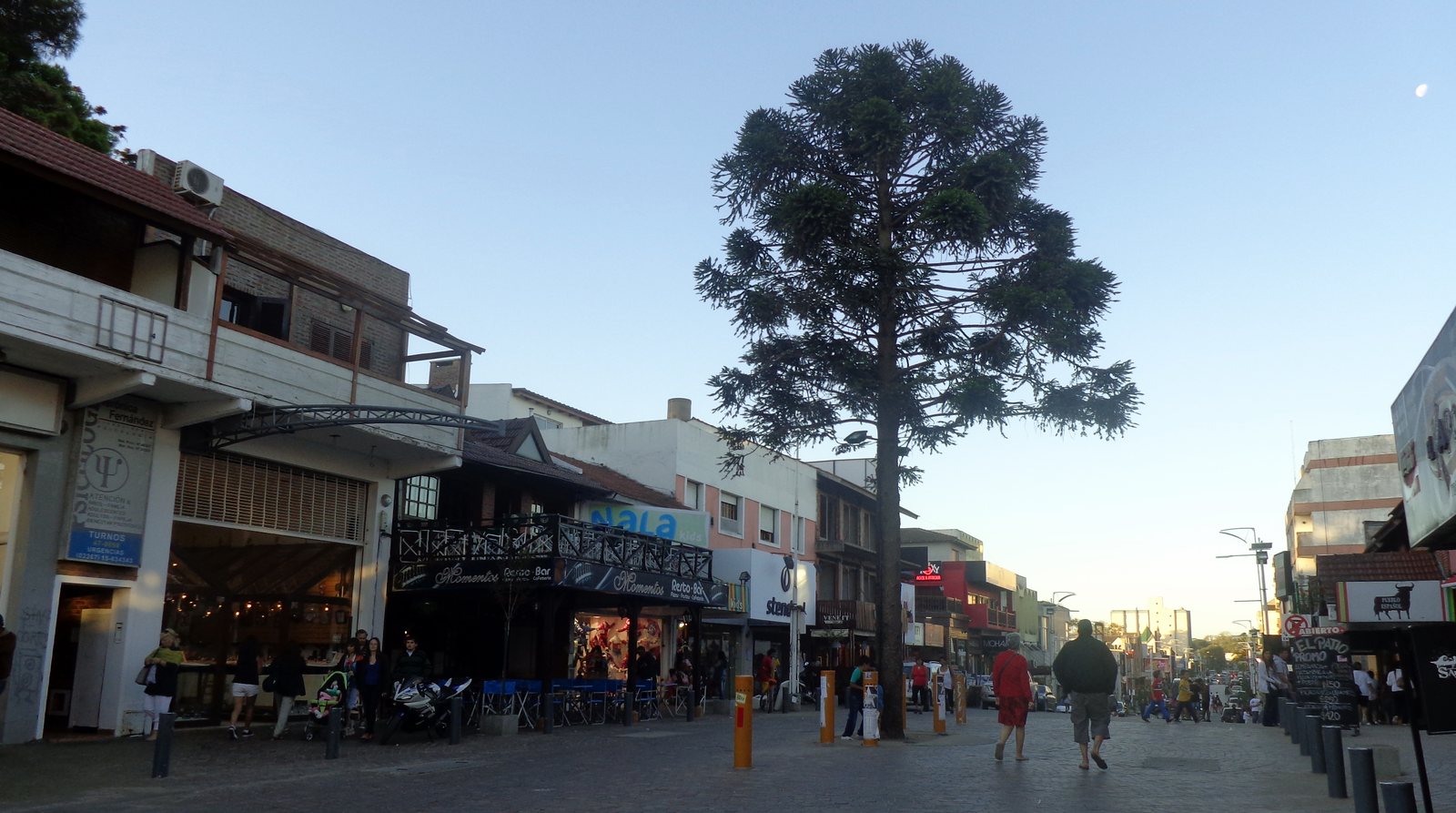
Avenida 3 is the town's main shopping street. Every night in January and February it hosts crafts fairs: the Paseo de los Artesanos at Paseo 104, F.A.R.A. between Paseos 112 and 113 and F.A.M.A. between Paseos 133 and 134. The same avenue has the Teatro San Martín, movie theaters, the Anfiteatro del Cielo and the Casa de la Música, and the little road train that tours the town leaves from Plaza Carlos Idaho Gesell, at Paseo 110 bis.
Every January and February since 1970, the Anfiteatro del Pinar has hosted the Encuentros Corales: choirs from different provinces live together for up to a week and sing in free public concerts. The idea came from Carlos Gesell and the choir of the Escuela Superior de Bellas Artes of the Universidad Nacional de La Plata, which opened that natural amphitheater in the forest in 1968.
To the south, the old bus terminal that Gesell promoted, with its vaulted concrete portico by the architect Carlos Defelice, is now the Polo Cultural Sur, a local heritage site since 2018. The municipal Senderos del Rock circuit traces the town's ties to Argentine rock.
The Villa Gesell Golf Club is next to the Acceso Norte traffic circle, at km 411 of Route 11, about 10 minutes from Mar de las Pampas. Its 18-hole course winds among low hills, pines, cypresses and eucalyptus, and the club has a clubhouse with a bar and restaurant, a pro shop, a putting green, a driving range and tennis courts.
What to see
- Anfiteatro del PinarA natural amphitheater in the forest, at Avenida 10 and Paseo 102; home of the summer Encuentros Corales.
- Paseo de los ArtesanosA fair at Avenida 3 and Paseo 104, every day in January and February, from 5 p.m. to 1 a.m.
- Polo Cultural SurThe old bus terminal, at Avenida 4 and Paseo 140, with crafts sellers every night.
- Teatro San MartínA performance venue at Avenida 3 and Paseo 105.
Golf
- Villa Gesell Golf Club18 holes among the pines on the Camino de los Pioneros, next to the Acceso Norte on Route 11.
Mar de las Pampas and Mar Azul
Sand streets in the forest and untouched dunes facing the sea.
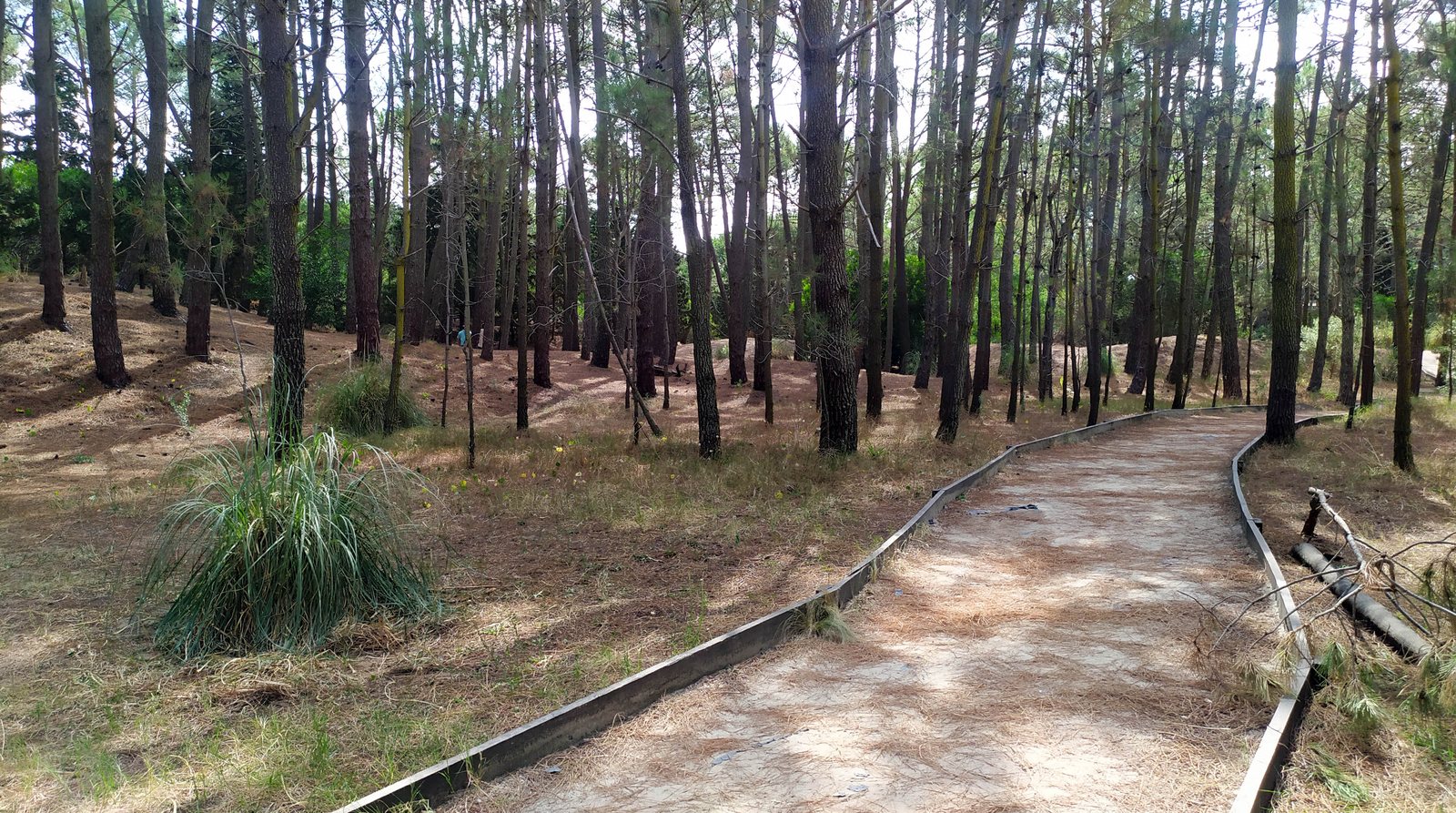
About 10 km south of downtown, Mar de las Pampas grew on dunes that were shifting sand half a century ago. Its sand streets follow the lay of the land and curve around the trees, there is no seafront road, and the beach is reached on footpaths over the dunes. In 2026 it was one of eight Argentine towns put forward for UN Tourism's Best Tourism Villages program.
The Sendero Botánico Mónica García, run by the neighborhood association, tells the story of how the dunes were stabilized and planted over some 20 blocks and 70 minutes, starting at Padre Cardiel and Carlos Gesell. In January and February, from 6 p.m. to 1 a.m., the Aldea Hippie opens, a crafts market along forest paths, and since 2010 the Nuestra Señora del Valle chapel has hosted the free symphonic and choral concerts of Mar de las Pampas en Concierto.
At the table, Mar de las Pampas has signature cuisine with the catch of the day and produce from the farms of Madariaga, and a beach restaurant serving all day. Farther south are Las Gaviotas and Mar Azul, smaller villages; Mar Azul has the Casa de la Cultura Mercedes Sosa and the Plaza del Bosque, and from its Calle 47 the beach leads into the Faro Querandí Nature Reserve.
What to see
- Aldea HippieA crafts market on Mercedes Sosa, between El Lucero and Los Andes; January and February, 6 p.m. to 1 a.m.
- Capilla Nuestra Señora del ValleHome of Mar de las Pampas en Concierto, at Pitella and Mansilla, among the pines.
- Casa de la Cultura Mercedes SosaMar Azul's cultural center, on Miramar between Calles 45 and 46.
- Sendero Botánico Mónica GarcíaSome 20 signposted blocks on how the dunes were planted; about 70 minutes.
Where to eat
- El Nido BistróSignature cuisine in the forest, with the catch of the day and produce from Madariaga; Joaquín V. González and Benito Lynch.
- SoleadoA beach restaurant at Virazón and the beach, serving all day.
Faro Querandí
Twenty-one kilometers of protected dunes and a 54-meter lighthouse.
South of Mar Azul begins the Faro Querandí Municipal Nature Reserve, created in 1996 to keep the coastal dunes in their natural state: 5,757 hectares of dunes, marshes and grasslands along 21 km of coast, about 3 km wide, with very wide beaches. It is home to the black-and-white monjita, an endangered bird, and the sand dune lizard, a provincial natural monument; early in the day, shorebirds can be seen along the water's edge.
Access is along the beach from Calle 47 in Mar Azul. About 5 km in is the ranger station, where the Los Senecios trail begins, about 40 minutes long and marked with yellow-tipped posts; in summer it is best walked from 8 to 10 a.m. or from 5 to 7 p.m. Pets, fires and camping are not allowed.
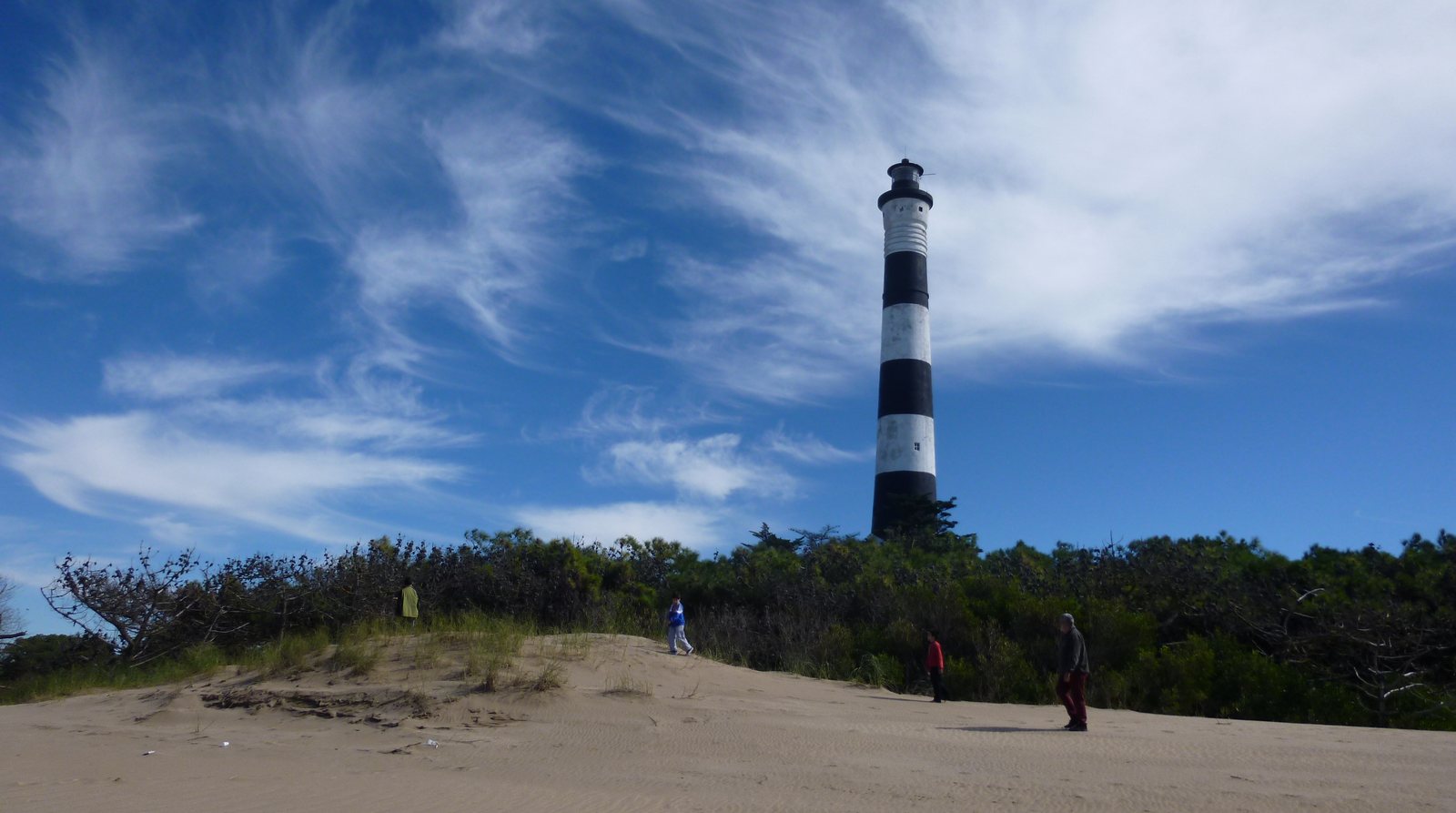
In the heart of the reserve, about 15 km from Mar Azul, stands the Faro Querandí: a 54-meter conical tower with black and white bands, the second-tallest lighthouse on Argentina's sea coast after the Recalada lighthouse near Bahía Blanca. It is surrounded by a forest planted by the Navy. It can be visited, though not climbed, and is reached along the beach in four-wheel-drive vehicles: tours leave from Villa Gesell.
What to see
- Faro QuerandíA 54-meter tower about 15 km south of Mar Azul; visited without climbing, reached by four-wheel drive along the beach.
- Reserva Natural Faro Querandí5,757 hectares of dunes, marshes and grasslands along 21 km of coast; access from Calle 47 in Mar Azul.
- Sendero Los SeneciosAbout 40 minutes from the ranger station, with native plants and wildlife tracks.
Arrival
From departure to destination.
- Departure
- From San Fernando (FDO), Aeroparque (AEP) or Ezeiza (EZE). The fare may change depending on where each aircraft is based.
- Airfield
- Villa Gesell (VLG), public-use and non-towered, 3 km west of the town: a 1,591 m paved runway. Daytime operations only. It is about 7 km to downtown, about 16 km to Mar de las Pampas and about 19 km to Mar Azul.
- Aircraft
- Piston twins and turboprops land here; the runway does not take jets. By jet, you fly to Mar del Plata, 0 h 45 from Buenos Aires and about 100 km away by road.
- On arrival
- Taxis and remises, private car services, run from the airfield to downtown, Mar de las Pampas and Mar Azul.
- Pinamar and Cariló
- In the neighboring partido, to the north: downtown Pinamar is about 25 km from the airfield by road.
When to go
The seasons at the destination.
- January and February
- Peak beach season: crafts fairs on Avenida 3 and at the Aldea Hippie, and free Encuentros Corales concerts at the Anfiteatro del Pinar.
- Winter school holidays (July)
- Invierno Medieval, a medieval winter festival with music, dancing and combat displays, in the Pinar del Anfiteatro and the Plaza del Bosque in Mar Azul.
- August
- ChocoGesell, the Fiesta Nacional del Chocolate Artesanal, Argentina's national artisanal chocolate festival, on the August long weekend in the Bosque Fundacional.
- October
- The Fiesta Nacional de la Brótola early in the month and the Fiesta Nacional de la Diversidad Cultural, a national cultural diversity festival, on the October long weekend.
- October to April
- The best fishing season on the pier, with whitemouth croaker and Brazilian codling.
- Year-round
- The Pinar del Norte and its museums, golf, the Faro Querandí Reserve and the Mar de las Pampas forest out of season.
Key facts
- Airport
- Villa GesellIATA / ICAO: VLG / SAZV3 km west of the town1,591 m paved runway
- Category
- Public-use, non-towered
- Distance
- 349 kmFlight distance from Buenos Aires; 375 km by road, via the Autovía 2 and General Madariaga
Frequently asked questions
Price, flight time, airport, departure and travel documents.
How much does a private flight from Buenos Aires to Villa Gesell cost?
Reference fares for a one-way private flight from Buenos Aires (San Fernando), whole aircraft, start at USD 3,410 for a piston twin and USD 3,540 for a turboprop. Round trips are calculated in the quote tool according to the length of your stay.
How long is the flight?
Between 1 h 00 and 1 h 20, depending on the aircraft.
Which airfield does the flight land at?
Villa Gesell Airfield (VLG / SAZV), 3 km west of the town and about 7 km from downtown by street. It is public-use and non-towered; it has a 1,591 m paved runway and operates in daylight only. Mar de las Pampas is about 16 km away and Mar Azul about 19 km.
Can I fly to Villa Gesell by jet?
No. The runway has restrictions for jet aircraft, so Villa Gesell is served by piston twins and turboprops, which take 1 h 00 to 1 h 20 from Buenos Aires. To travel by jet, the nearest airport is Mar del Plata, 0 h 45 from Buenos Aires and about 100 km from Villa Gesell by road.
Can I fly there and back in a day?
Yes. The flight takes from 1 h 00 each way: enough to tour the Pinar del Norte, have lunch in Mar de las Pampas or reach the Faro Querandí. Since the airfield does not operate at night, the return flight has to leave in daylight. Enter your dates and times in our online quote tool: the fare is calculated by length of stay, from a same-day return to several days.
When is the best time to fly to Villa Gesell?
It depends on the plan. January and February are beach season, with crafts fairs and the Encuentros Corales. The winter school holidays bring the Invierno Medieval and the August long weekend, ChocoGesell; October has the Fiesta Nacional de la Brótola and the Fiesta Nacional de la Diversidad Cultural. Pier fishing is best from October to April, and the forest, the museums and the reserve can be visited year-round.
How do I get to the Faro Querandí?
Along the beach, from Calle 47 in Mar Azul. The lighthouse is about 15 km away, in the heart of the reserve, and can only be reached in four-wheel-drive vehicles, along the middle of the beach and under 30 km/h; tours leave from Villa Gesell. It can be visited, but not climbed.
Where does the flight depart from?
Fares are calculated for departure from San Fernando (FDO). Departing from Aeroparque (AEP) or Ezeiza (EZE) may change the fare, depending on where each aircraft is based.
What documents do I need?
It is a domestic flight within Argentina: Argentine citizens travel with a valid national ID (DNI) and foreign nationals with a valid passport.
Are the published fares final?
They are estimates. The final quote depends on dates, length of stay, aircraft type and applicable operating fees.

Ready to fly? Let’s talk.
Share the details of your trip and we’ll help you find the aircraft and flight solution best suited to your needs.
- WhatsApp+54 9 11 3080 7775
- Phone+54 9 11 3080 7775
- Emailinfo@argentina-fly.com
For charter operatorsList your aircraft