
- Home
- Flight quote
- Falkland Islands (Malvinas Argentinas)
Private flights to the Falkland Islands (Malvinas Argentinas)
Flights to the Falkland Islands require special authorizations; contact us so we can assess each trip.
Falkland Islands (Malvinas Argentinas)
The Falkland Islands (Malvinas Argentinas) are an archipelago of more than 700 islands in the South Atlantic, with colonies of five penguin species, elephant seals, sea lions and albatross along almost untouched coasts. Mount Pleasant Airport, 1,931 km from Buenos Aires, is the main airport in the islands; from there a road leads to the capital, Stanley, and a local air service reaches the outer islands.
Penguins and wildlife
Volunteer Point, Gypsy Cove and the islands' five penguin species.
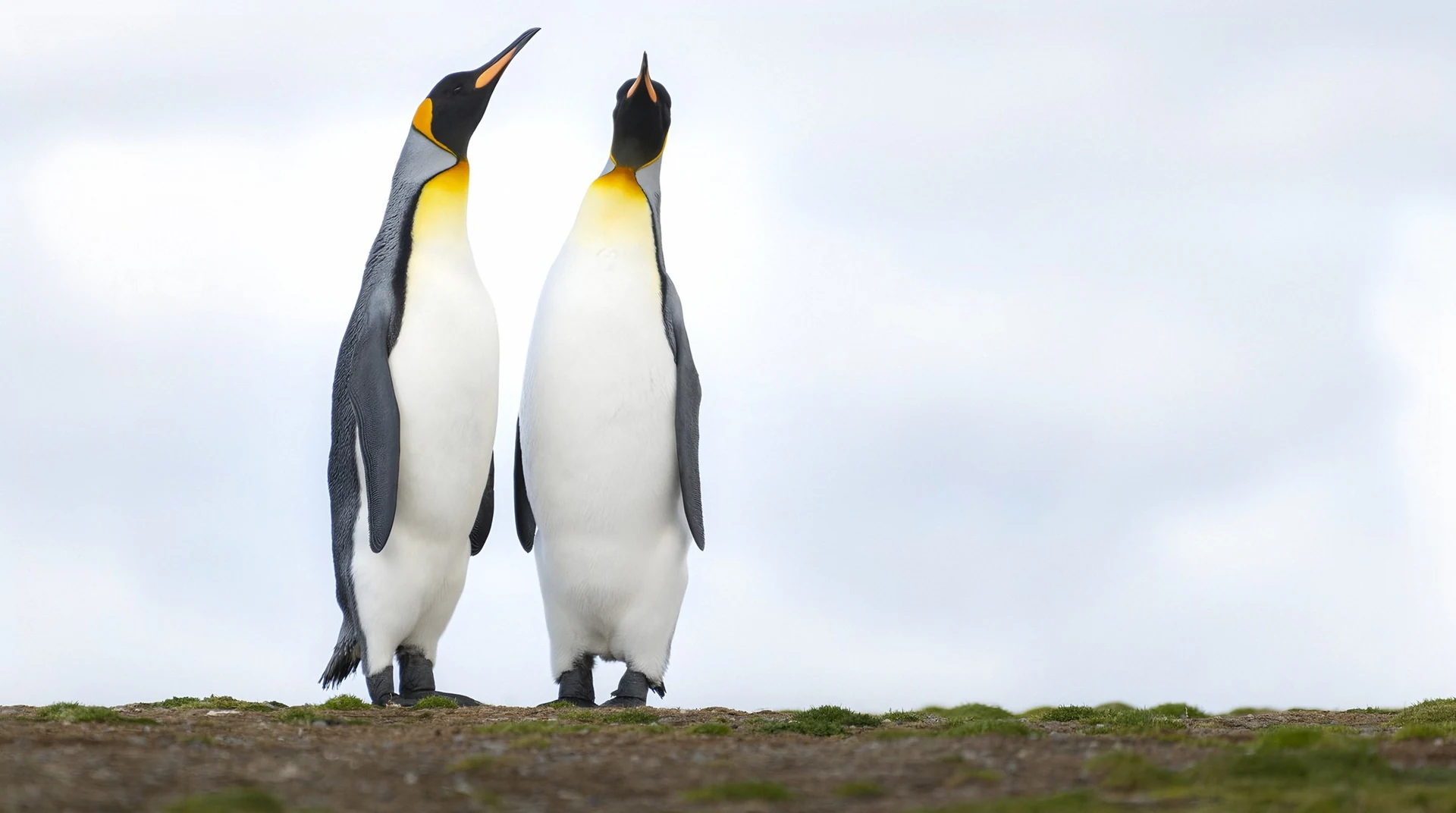
Every summer the islands receive close to a million penguins of five species: gentoo, king, Magellanic, macaroni and rockhopper. The Falklands have the largest gentoo population in the world. Gentoo and king penguins live here all year; the Magellanic, whose call sounds like a donkey's bray, comes only in summer.
Volunteer Point, in the northeast of East Falkland, is a private nature reserve on the Johnson's Harbour farm and an Important Bird Area. It has the largest group of king penguins in the islands, with gentoo and Magellanic colonies beside it. You get there by road and then across open country in a four-wheel-drive vehicle; most visitors make it a day trip from Stanley. You must ask permission first, by phone or email, and camping and flying drones are not allowed without written authorization.
Closer to the capital is Gypsy Cove, part of the Cape Pembroke Peninsula nature reserve: a small white-sand bay sheltered from the wind, where Magellanic penguins nest in underground burrows. It is open at any hour.
What to see
- Gypsy CoveA few kilometers from Stanley; Magellanic penguins and shorebirds, with free access.
- Volunteer PointThe largest group of king penguins in the islands; from November to March it is open from 10 a.m. to 3 p.m., except Tuesdays and Wednesdays, with the owner's prior permission.
The outer islands
Sea Lion, Carcass, Saunders and Pebble, with lodges and local flights.
The usual way to reach the outer islands is the local government's air service, FIGAS, with Islander aircraft departing from Stanley Airport. It has no published timetable: it works like an air taxi, you book by 10 a.m. the day before, and the itinerary is confirmed that afternoon. Visitors' baggage is limited to 20 kg, and anyone over that must let them know in advance.
Sea Lion Island is a national nature reserve that works only as a wildlife destination. It is the main breeding site for elephant seals in the islands, with more than two thousand animals at the October peak, and one of the best places to watch killer whales hunt pups, especially between mid-November and mid-December. There are South American sea lions and Magellanic, gentoo and rockhopper penguins, and it is easy to explore on foot from its only lodge.
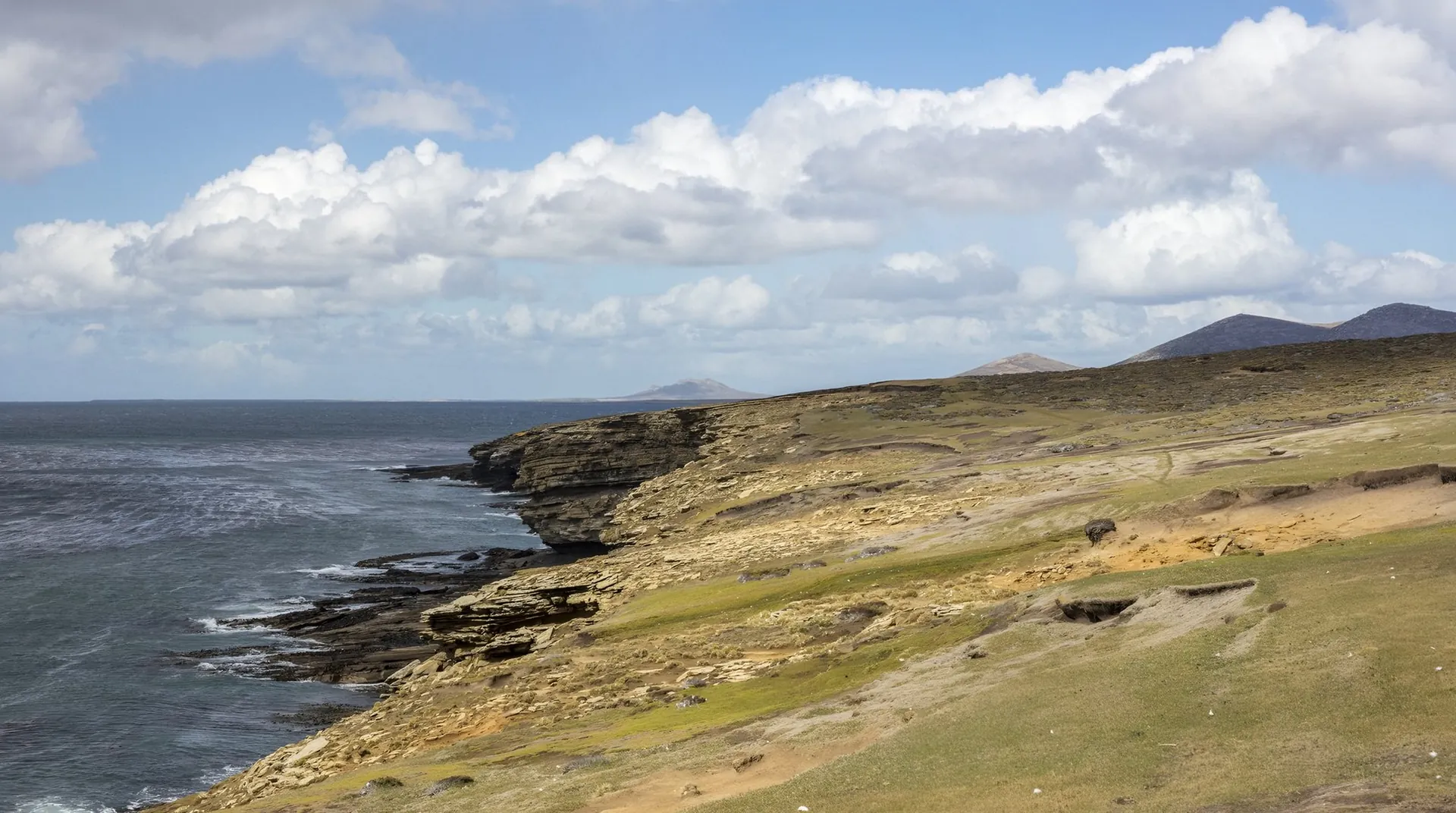
Carcass Island, a sheep farm more than a century old, is an Important Bird Area: small birds that land on your shoes, the striated caracara, or Johnny Rook, which takes whatever it can carry, and walks to Leopard Beach or Mount Byng, at 213 m. Saunders Island has five penguin species, black-browed albatross colonies, the white-sand beach at The Neck and nine of the islands' fourteen endemic plants. On Pebble Island, Elephant Beach is the longest beach in the archipelago, at 6.4 km.
What to see
- Carcass IslandA sheep farm and Important Bird Area; a walk to Mount Byng, at 213 m, with views.
- Pebble IslandElephant Beach, 6.4 km long, the longest beach in the islands; penguins and black-necked swans.
- Saunders IslandFive penguin species and black-browed albatross; the beach at The Neck.
- Sea Lion IslandElephant seals, sea lions and killer whales; a single lodge on the island.
Stanley
The cathedral, the museum, the wooden houses and the Cape Pembroke lighthouse.
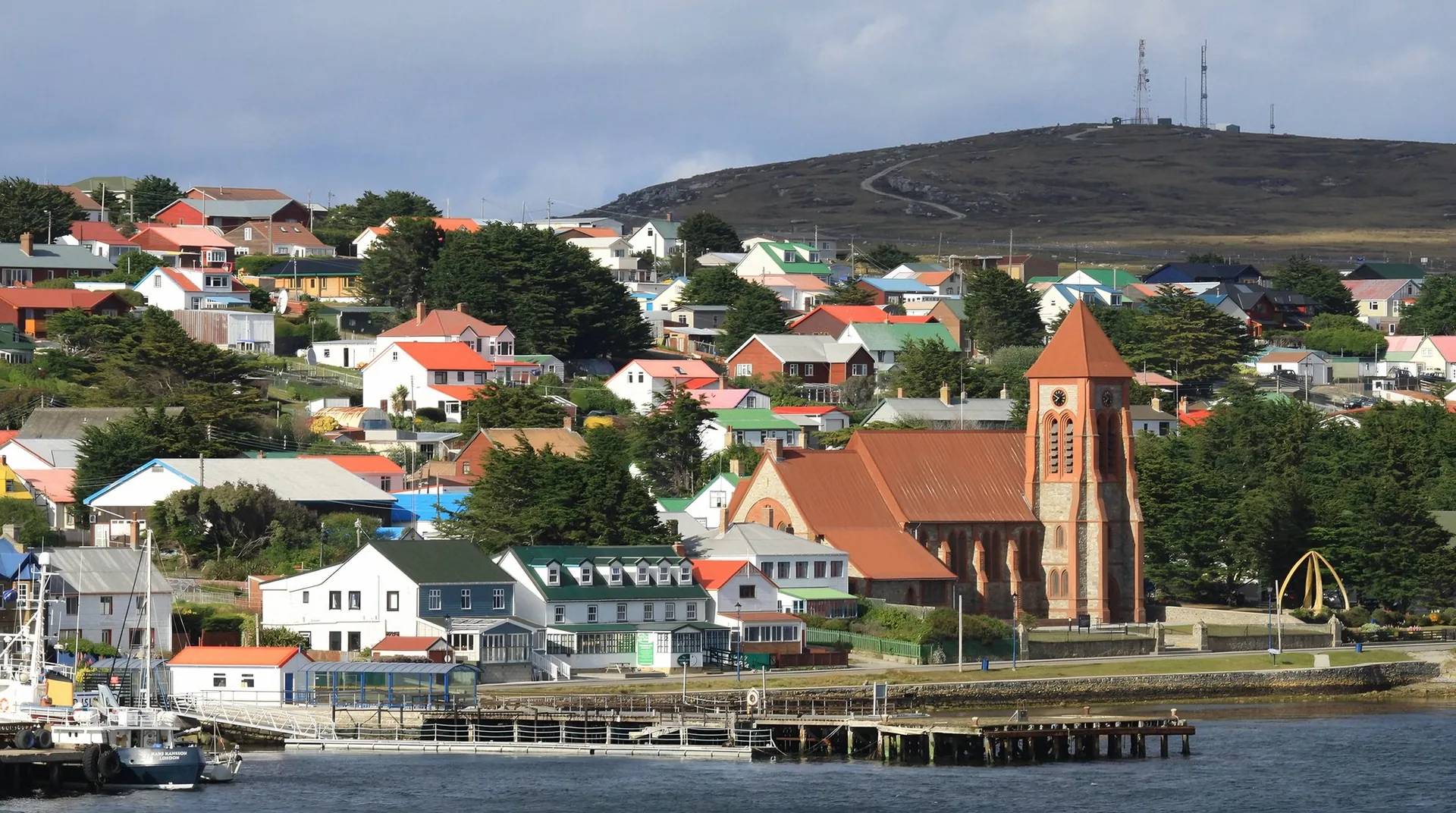
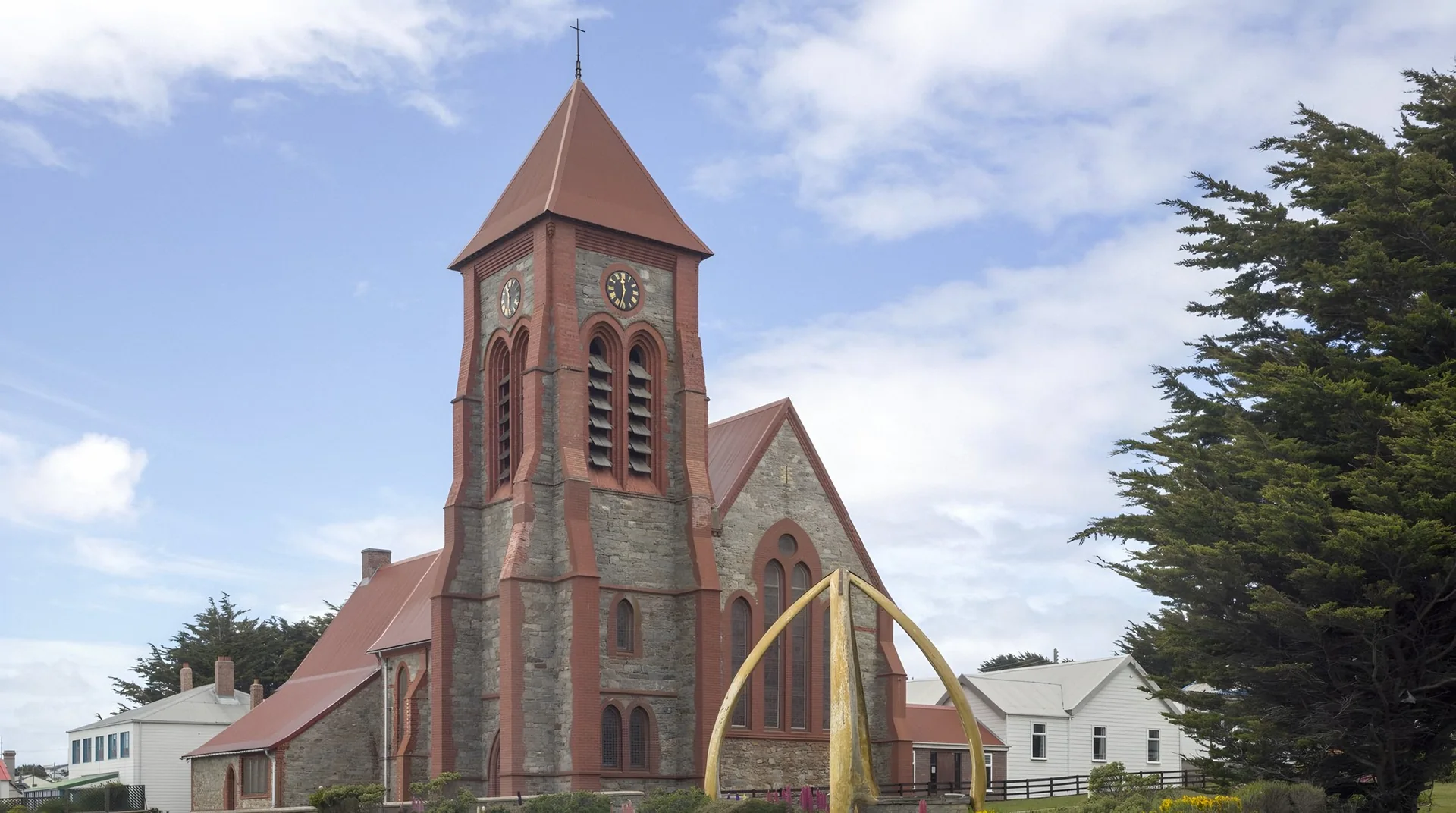
Stanley stretches along a sheltered harbor lined with colorful houses, and it is the size of a village with the services of a large city. Christ Church Cathedral is the southernmost Anglican cathedral in the world; its stained glass windows, banners and kneelers, with scenes from the islands, tell the story of island life. Beside it is the Whalebone Arch, a 1933 arch made from the jawbones of two blue whales.
On Ross Road, facing the sea, the Historic Dockyard Museum brings together objects from rural life, seafaring and natural history, including the oldest remains of the warrah, an extinct canid. It closes on Mondays. In the center, the houses on Drury Street and Pioneer Row were put together from imported kits and are private homes today; Cartmell Cottage, part of the museum, can be visited on request. The Jubilee Villas, from 1887, are a group of houses with the look of an English town.
At the eastern end of the harbor lies the hull of the Lady Elizabeth, a sailing ship launched in Sunderland in 1879 that reached the islands damaged after rounding Cape Horn in 1913. A little over 11 km to the east, the Cape Pembroke lighthouse marks the easternmost point of the archipelago; you reach it on a three-hour walk or by vehicle along a track.
What to see
- Cape PembrokeA lighthouse at the easternmost point of the islands, a little over 11 km from Stanley; about three hours on foot or by vehicle.
- Cartmell CottageA pioneer house on Pioneer Row, part of the museum; visits on request.
- Christ Church Cathedral and Whalebone ArchThe southernmost Anglican cathedral in the world and, beside it, the 1933 arch of whale jawbones.
- Historic Dockyard MuseumOn Ross Road, with exhibits on rural life, seafaring and natural history; closed on Mondays.
- Jubilee VillasTerraced houses from 1887 in English style, in contrast with the rest of the harbor's architecture.
- Lady ElizabethThe hull of a sailing ship from 1879 at the eastern end of the harbor.
Fishing and walks
Sea trout, stone runs and walking routes.
The brown trout and sea trout season runs from September 1 to April 30. The best months are September and October, and February and March, when the biggest fish tend to be caught; in December and January few fish come in, and it is best to fish the estuaries. Mullet can be fished all year. On East Falkland you fish the San Carlos River, and on West Falkland, the Warrah River.
Before you go, check with an operator or the islands' tourist board about catch limits, any fees that apply and biosecurity measures: fishing gear, footwear and clothing can carry risky organisms from one island to another.
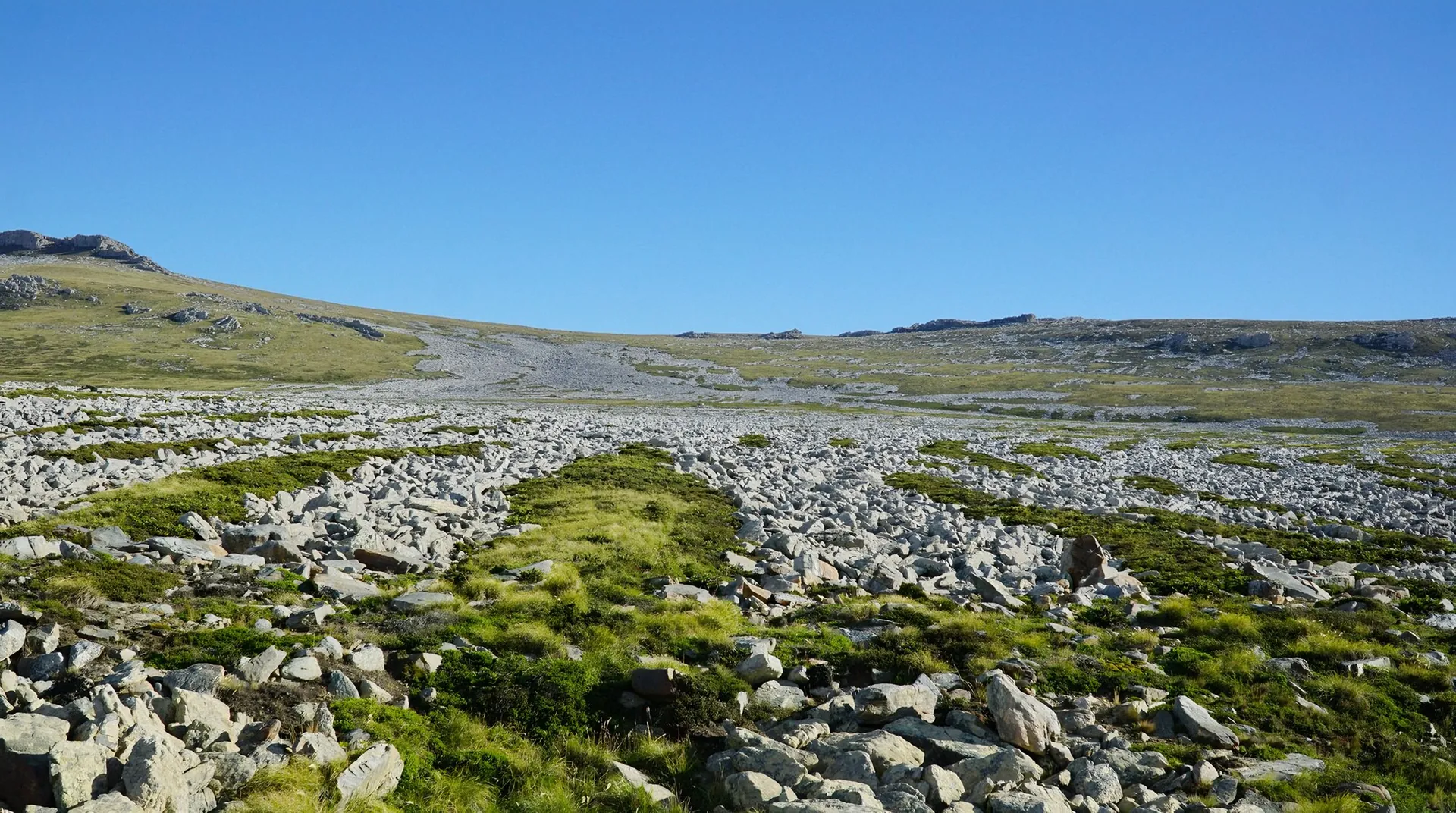
The landscapes change gradually: golden grasslands, ridges of hills and the stone runs, streams of rock that flow down the slopes and that some roads cross. Self-guided walking guides are available at the visitor center on the Stanley waterfront and at the lodgings; anyone walking without a guide should know how to navigate, tell someone the route and carry water, food and warm clothing.
What to see
- San Carlos RiverTrout fishing on East Falkland.
- Warrah RiverTrout fishing on West Falkland.
Where to stay and eat
Hotels in Stanley and lodges with full board.
Almost all the hotels, lodges and guesthouses in the islands are run by their owners. In Stanley there are hotels facing the harbor; on the outer islands, lodges with full board, and flights and transfers are arranged with the accommodation. Booked accommodation is also one of the entry requirements.
The cooking is home-style: mutton chops at breakfast, trout, mullet and toothfish, and the tradition of smoko, the mid-morning or mid-afternoon break with tea and homemade cakes. The hotels in Stanley have restaurants; outside the capital, meals are part of the accommodation.
In Stanley
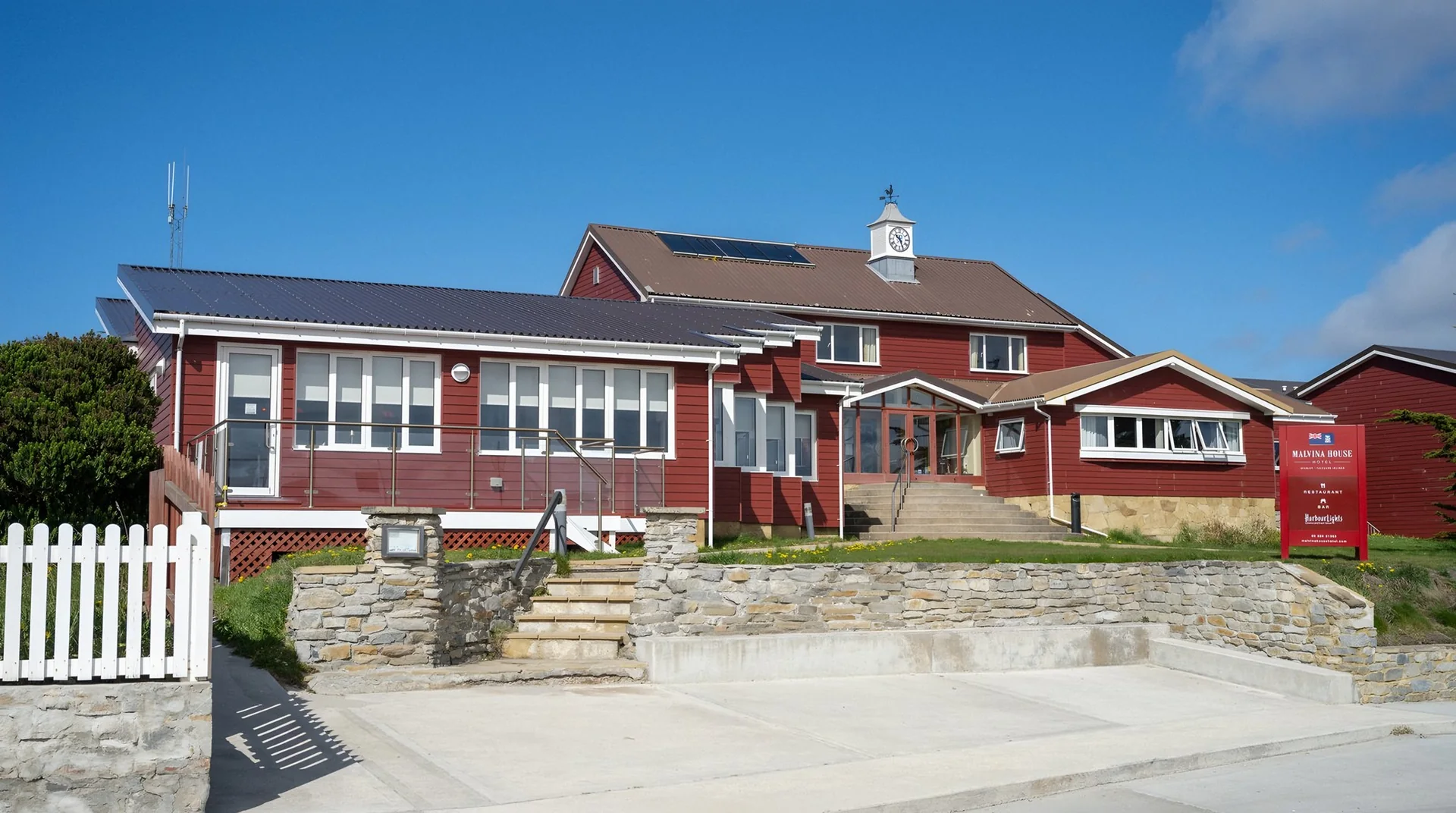
- Malvina House HotelOn Ross Road, facing the harbor; built in 1881 and rebuilt in 1968, with a spa and restaurant. Four stars in the islands' tourist board accreditation scheme.
- The Waterfront Boutique HotelOn Ross Road, with boutique-style rooms and suites and the Kitchen Café. Four stars in the same scheme.
In the islands
- Carcass Island HouseA former farmhouse with six rooms, all with private bathroom; open from October to March. Three stars.
- Pebble Island LodgeA 1928 farmhouse turned lodge, for up to 11 guests, with full board and guided excursions.
- Sea Lion LodgeThe only accommodation on Sea Lion Island, for up to 20 guests, with full board; open from October to March. Three stars.
- Volunteer HouseAt Volunteer Point, for up to four guests, with meals included; steps from the king penguin colony. Two stars.
Arrival
From departure to destination.
- Departure
- From San Fernando (FDO), Aeroparque (AEP) or Ezeiza (EZE). The fare may change depending on where each aircraft is based.
- Airport
- Mount Pleasant (MPN / EGYP): the main airport in the islands, with a paved runway. It is open from 11:30 a.m. to 8:30 p.m. UTC (8:30 a.m. to 5:30 p.m. Argentine time) and can receive flights 24 hours a day.
- Flight permits
- Any aircraft that lands in or overflies the islands needs a permit from the civil aviation authority, requested at least 14 days ahead, and the airport's prior permission to land (PPR).
- Documents
- U.S. citizens need a passport valid for the whole stay and no visa. On arrival, immigration issues a visitor permit for up to one month; you must show an onward ticket, booked accommodation, funds and insurance with aeromedical evacuation.
- To Stanley
- By road, with a long paved stretch. There are taxis and transfer services between the airport and the capital; it is best to book them through your accommodation.
- Money and biosecurity
- The Falkland Islands pound is worth the same as the pound sterling; dollars are also accepted, and outside Stanley it is best to carry cash. Meat, eggs, unpasteurized dairy and raw vegetables cannot be brought in.
When to go
The seasons at the destination.
- September to April
- Trout fishing season, with the best months in September and October and in February and March.
- October
- Peak elephant seal breeding on Sea Lion Island; the lodges in the islands open, until March.
- Mid-November to mid-December
- Killer whales hunting elephant seal pups off Sea Lion Island.
- November to March
- Volunteer Point open from 10 a.m. to 3 p.m., except Tuesdays and Wednesdays; in summer the Magellanic and rockhopper penguins arrive.
- Year-round
- Gentoo and king penguins, Stanley and its museum, which closes on Mondays.
Key facts
- Airport
- Mount PleasantIATA / ICAO: MPN / EGYPMain airport in the islands
- Category
- Public-use and towered
- Distance
- 1,931 kmFlight distance from Buenos Aires
Frequently asked questions
Price, flight time, airport, departure and travel documents.
Which airport does the flight land at?
Mount Pleasant Airport (MPN / EGYP), the main airport in the islands, with a paved runway. It is open from 11:30 a.m. to 8:30 p.m. UTC, 8:30 a.m. to 5:30 p.m. Argentine time, although it can receive flights 24 hours a day. Stanley Airport is used for domestic flights and, in some cases, small aircraft.
What permits does a private flight to the Falklands need?
Any aircraft that lands in or overflies the islands needs a permit from the islands' civil aviation authority, which the flight operator submits at least 14 days ahead; private flights with no payment for carriage receive a letter of permission, and charters receive a short-term permit, valid for up to 14 days. The authority reviews each application and decides whether to grant it; for private flights it replies in about three business days and for charters in three to five. With the permit, the flight also needs prior permission to land (PPR) at Mount Pleasant Airport. Applications carry a fee, listed on the form.
What documents do I need to travel to the Falklands?
You travel with a passport valid for the whole stay; the authorities recommend at least six months of validity. U.S. and Argentine citizens are not among the nationalities that need a visa. On arrival, immigration issues a visitor permit, a stamp in the passport, for up to one month. To get it you must show an onward ticket or funds to buy one, booked accommodation, enough funds for the stay and medical insurance that covers aeromedical evacuation for at least USD 2,000,000. Other foreign nationals should check the official list of nationalities that need a visa before traveling.
How do I get from the airport to Stanley?
By road, with a long paved stretch and the rest gravel or clay. There are taxis between the airport and the capital, and a local company offers a transfer service; it is best to book it through your accommodation. If your first stop is outside the capital, the accommodation or the tour operator arranges the transfer or meets you at the airport.
How do I get to the outer islands?
By light aircraft, with the local government's air service, FIGAS, which departs from Stanley Airport and works as an air taxi, with no published timetable. You book by 10 a.m. the day before, and that afternoon the itinerary is published with the check-in time. Visitors can bring 20 kg of baggage, and if you go over, let them know in advance.
When is the best time to travel to the Falklands?
From September to April, with the austral summer at the core. Elephant seals breed in October, killer whales appear on Sea Lion Island between mid-November and mid-December, Volunteer Point opens in summer, and the trout season runs from September 1 to April 30. Gentoo and king penguins are here all year; Magellanic penguins, only in summer.
Can you see king penguins?
Yes. At Volunteer Point is the largest group of king penguins in the islands, along with gentoo and Magellanic colonies. You must ask the owner's permission first, by phone or email; camping and flying drones are not allowed without written permission, and it is a no-smoking area. There is lodging for up to four people in the ranger's house.

Ready to fly? Let’s talk.
Share the details of your trip and we’ll help you find the aircraft and flight solution best suited to your needs.
- WhatsApp+54 9 11 3080 7775
- Phone+54 9 11 3080 7775
- Emailinfo@argentina-fly.com
For charter operatorsList your aircraft