
- Home
- Flight quote
- Aruba
Private flights to Aruba
Jet from USD 66,250 · 6 h 50, 1 stop
Results:
- Itinerary
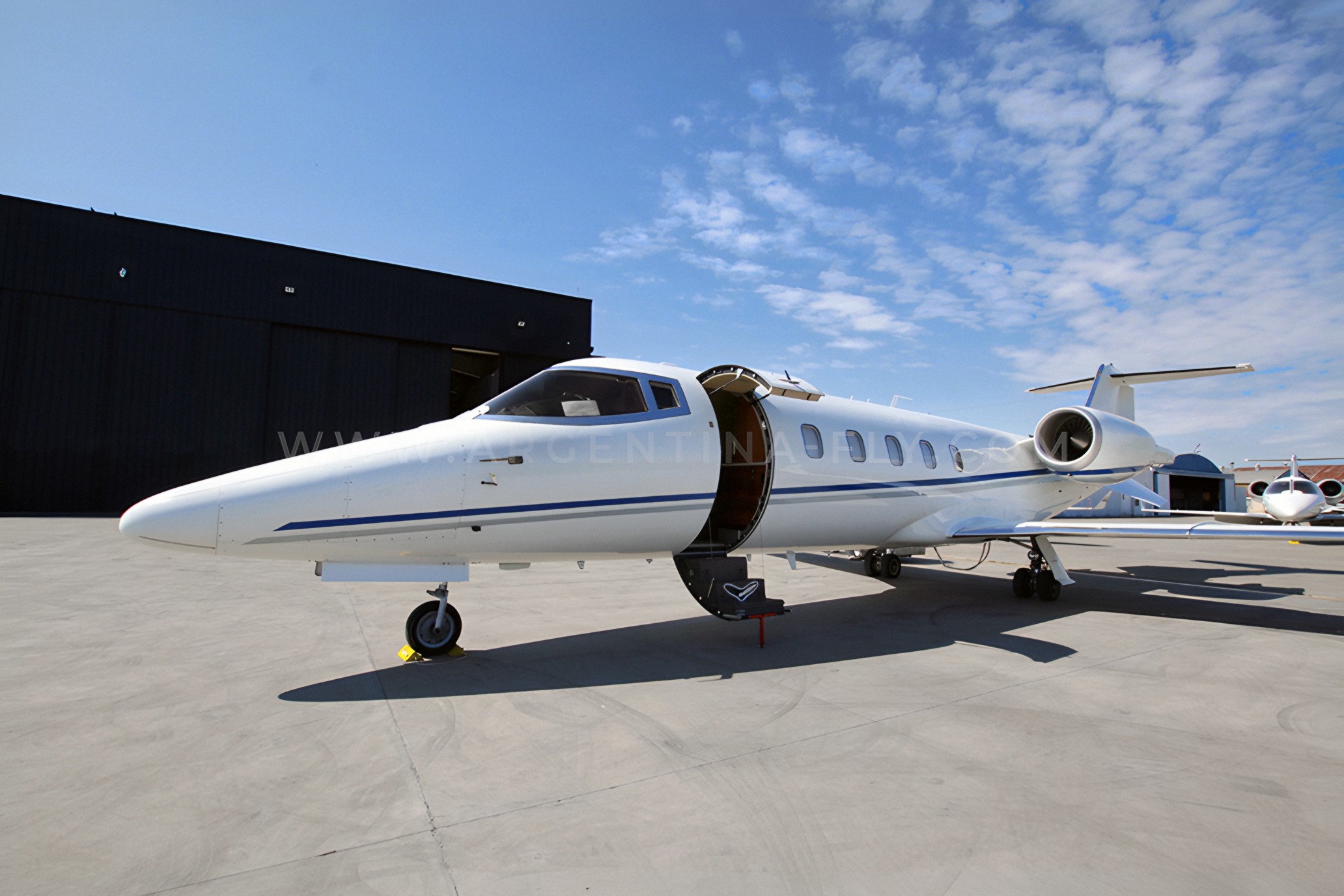
Learjet 60
Midsize jet · 7 passengers · 6 h 50 · 2 options6 h 50flight time
USD 66,250+ international fees
Request a quote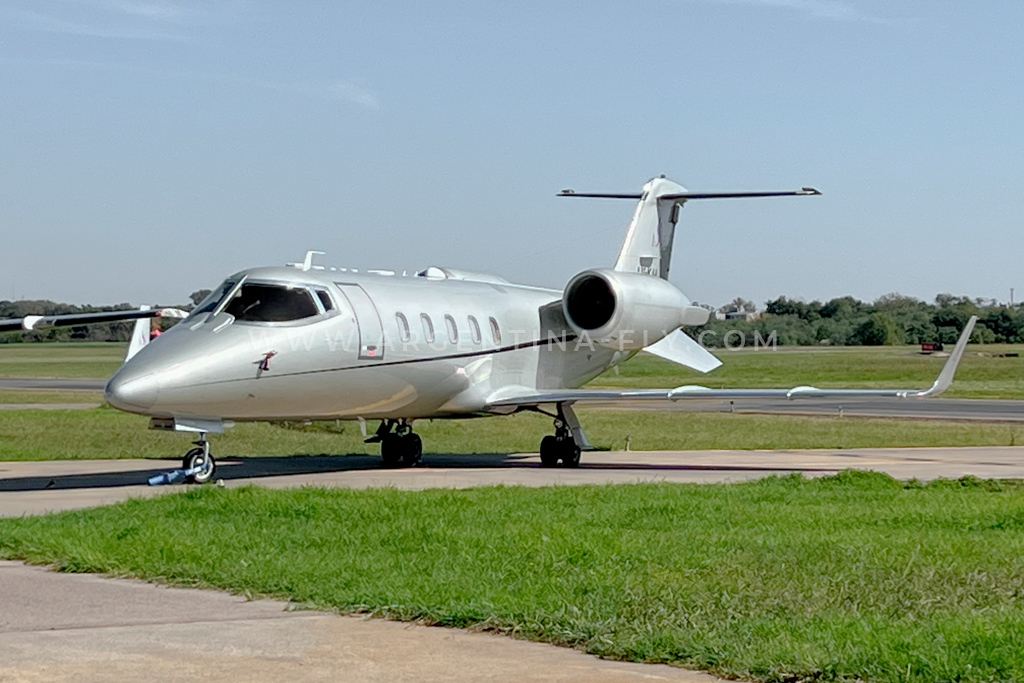
Learjet 60 XR
Midsize jet · 6 passengers · 6 h 456 h 45flight time
USD 69,680+ international fees
Request a quote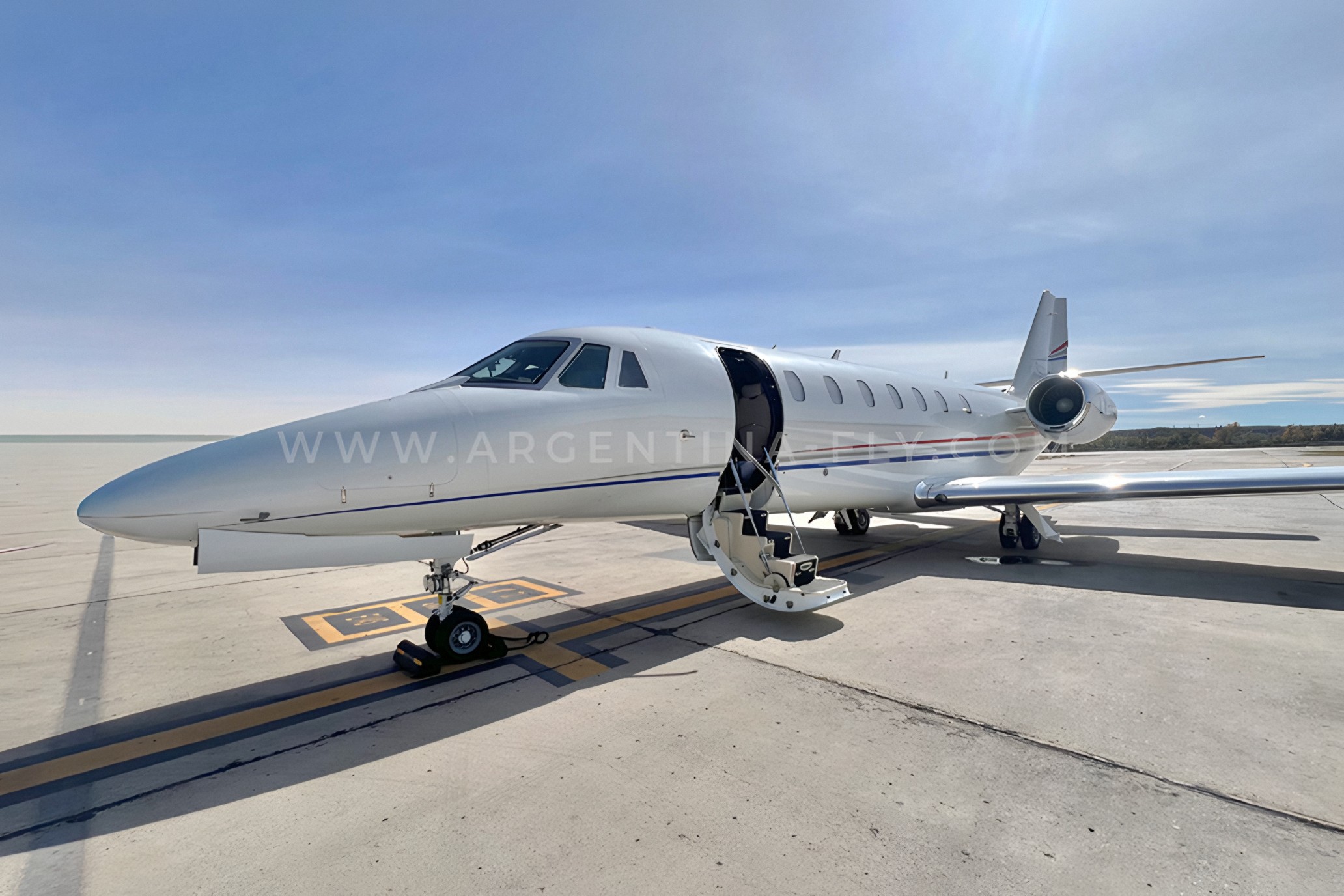
Citation Sovereign
Midsize jet · 8 passengers · 6 h 456 h 45flight time
USD 79,960+ international fees
Request a quote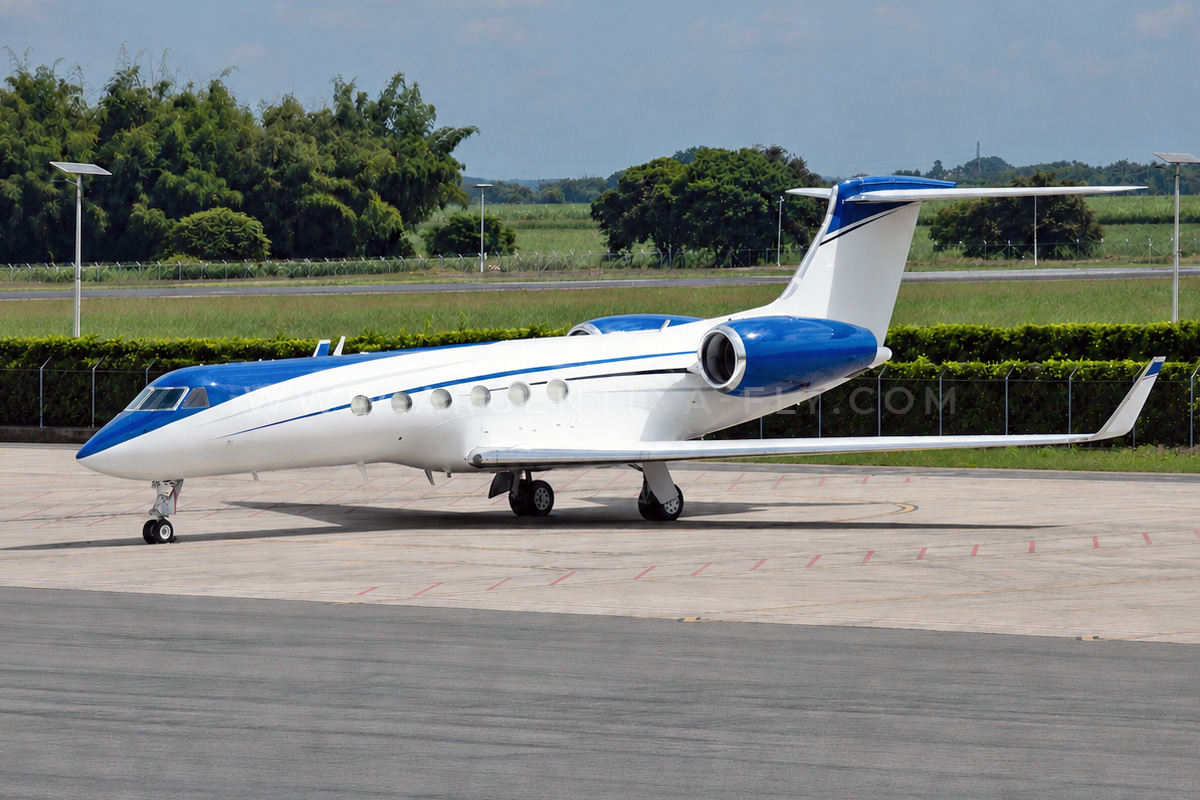
Gulfstream V
Large jet · 14 passengers · 6 h 20 · 2 options6 h 20flight time
USD 99,710+ international fees
Request a quote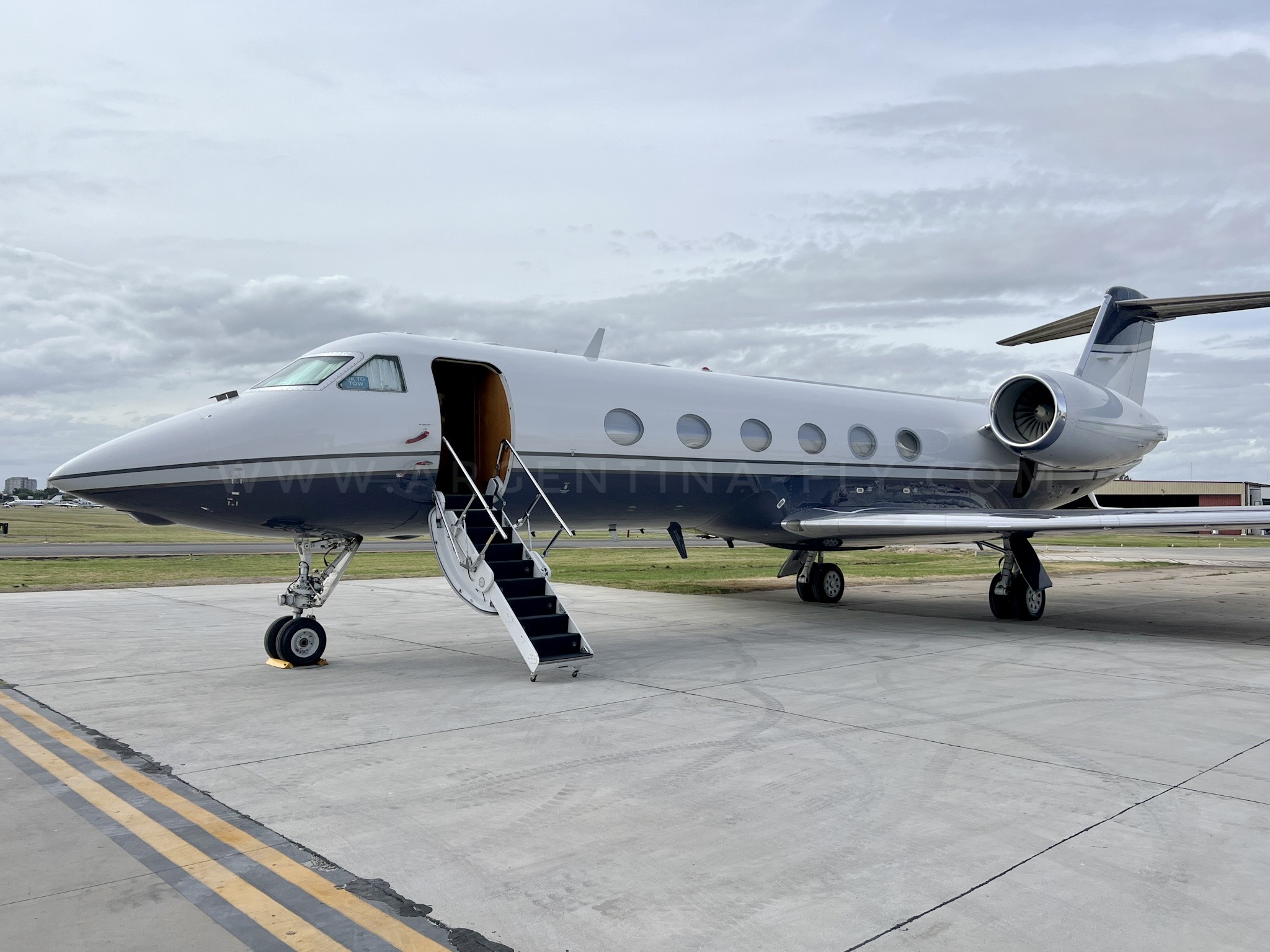
Gulfstream 400
Large jet · 14 passengers · 6 h 356 h 35flight time
USD 108,510+ international fees
Request a quote
Route and airfields
Rate conditions
Please read carefully before requesting a quote.
Prices
Reference fares in US dollars (USD), for the entire aircraft. They may vary with aircraft availability and travel dates. For itineraries with several destinations, please request a tailored quote.
Not included
VAT on flights within Argentina, fees abroad on international flights (airport charges, handling and FBO, among others), and special services on request.
Base airport
Fares are calculated for departure from San Fernando (FDO). Departing from Aeroparque (AEP) or Ezeiza (EZE) may change the fare, depending on where each aircraft is based.
Reference fleet
The aircraft displayed are for reference purposes only and may vary depending on operational availability. Contact us to learn about the available options for your trip.
Rate conditions
Please read carefully before requesting your quotation.
Published prices are provided for reference only.
 Prices
Reference fares in US dollars (USD), for the entire aircraft. They may vary with aircraft availability and travel dates. For itineraries with several destinations, please request a tailored quote.
 Not included
VAT on flights within Argentina, fees abroad on international flights (airport charges, handling and FBO, among others), and special services on request.
 Base airport
Fares are calculated for departure from San Fernando (FDO). Departing from Aeroparque (AEP) or Ezeiza (EZE) may change the fare, depending on where each aircraft is based.
 Reference fleet
The aircraft displayed are for reference purposes only and may vary depending on operational availability. Contact us to learn about the available options for your trip.
Need a personalized quotation?
Request quotation
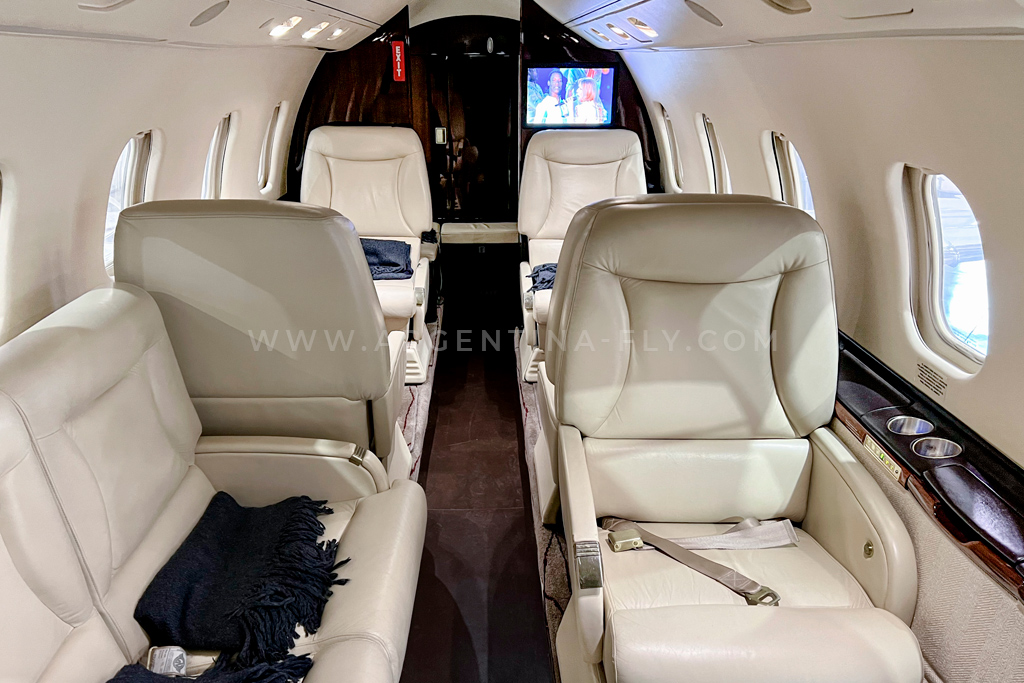
Learjet 60
Midsize jet with a spacious cabin and excellent cruise speed, one of the most requested options for executive flights.
 Capacity
7 passengers
 Lavatory
Yes
 Cabin
Pressurized
 Luggage
Moderate
 Wi-Fi
Portable Starlink
 Safety certifications

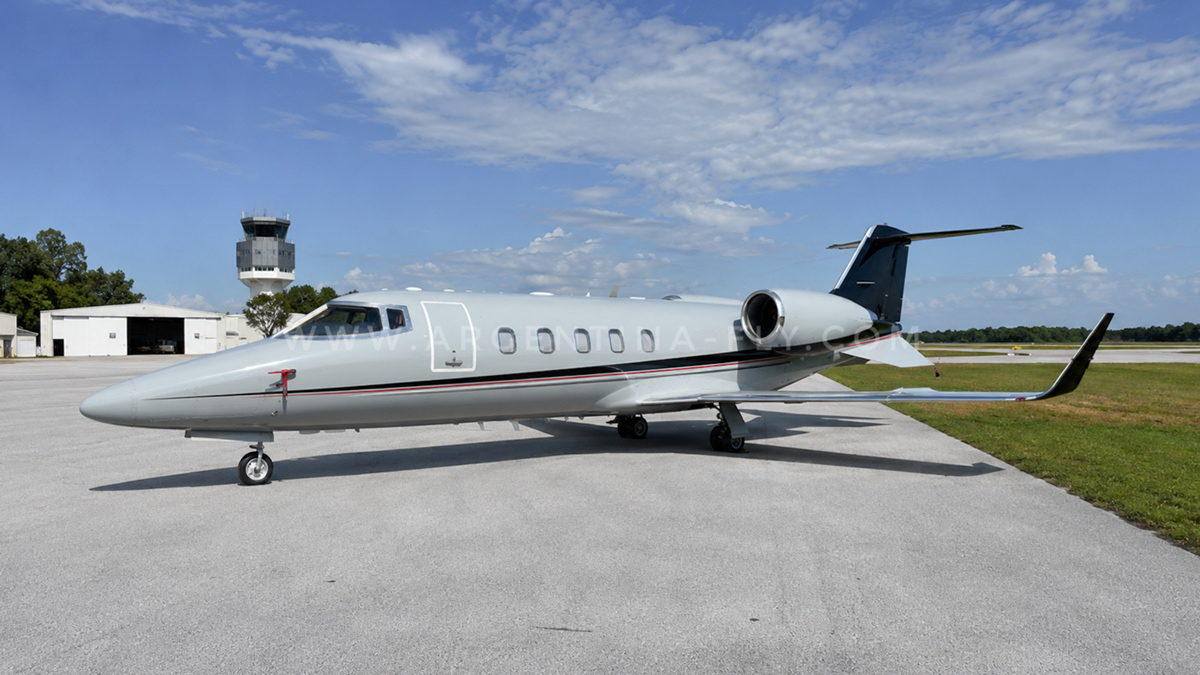
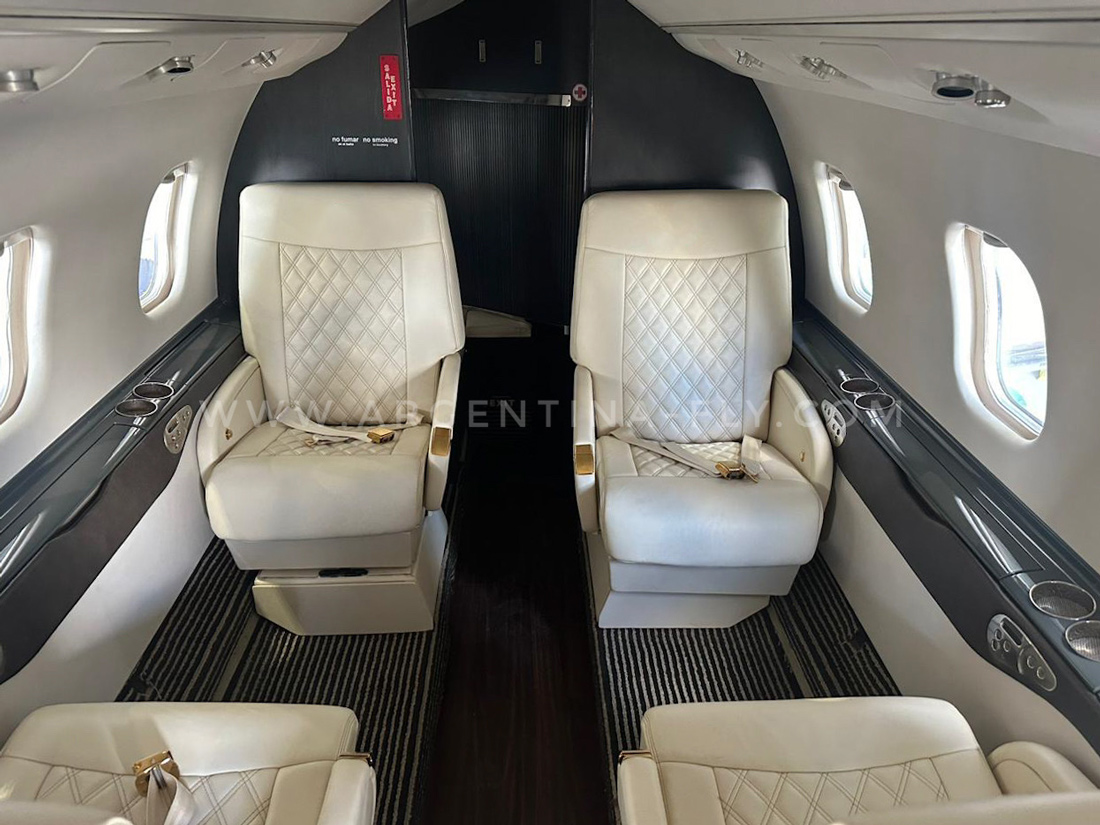
Learjet 60
Midsize jet with a spacious cabin and excellent cruise speed, one of the most requested options for executive flights.
Capacity
7 passengers
Lavatory
Yes
Cabin
Pressurized
Luggage
Standard
Wi-Fi
Not available
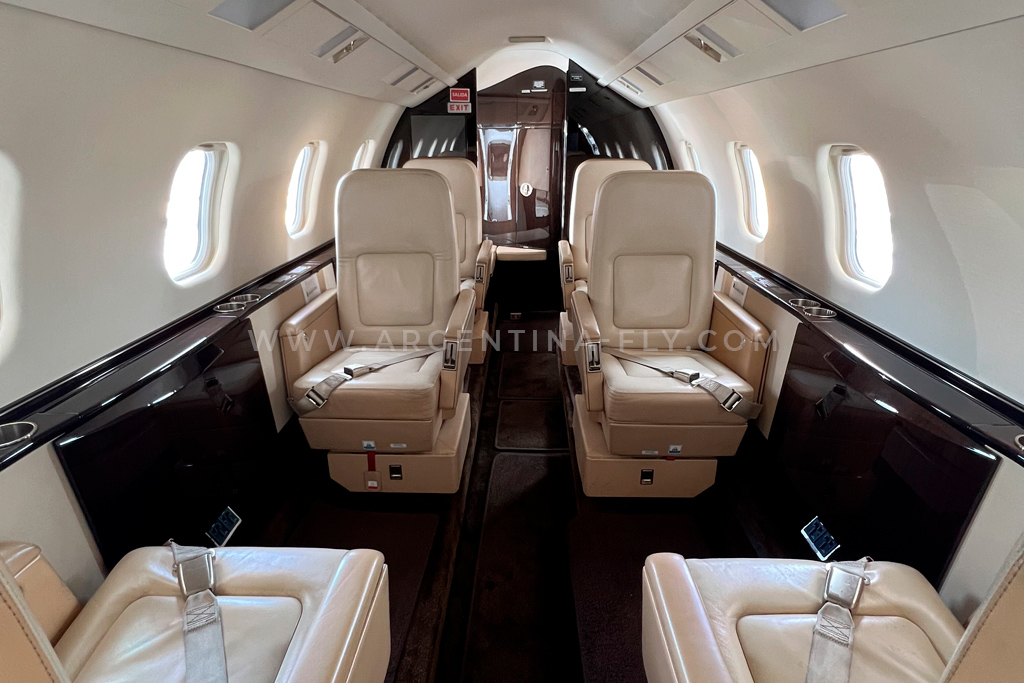
Learjet 60 XR
Enhanced version offering greater range and efficiency while maintaining the speed and comfort of the Learjet 60.
Capacity
6 passengers
Lavatory
Yes
Cabin
Pressurized
Luggage
Moderate
Wi-Fi
Not available
Safety certifications
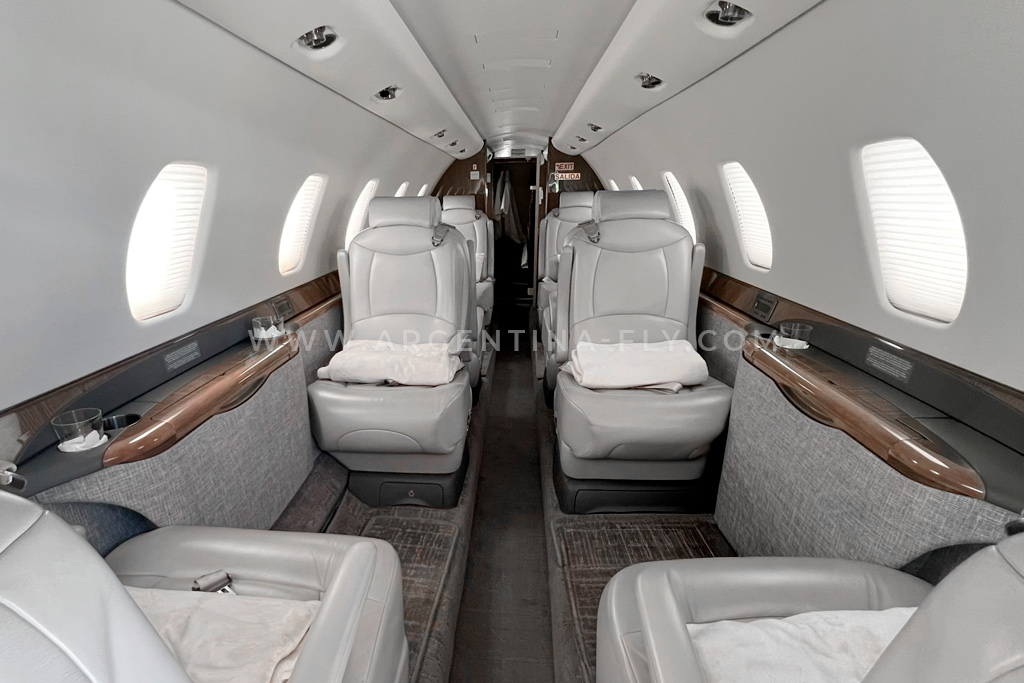
Citation Sovereign
Midsize jet with a spacious cabin, greater range and premium equipment for demanding passengers.
Capacity
8 passengers
Lavatory
Yes
Cabin
Pressurized
Luggage
Generous
Wi-Fi
Portable Starlink (extra cost)
Safety certifications
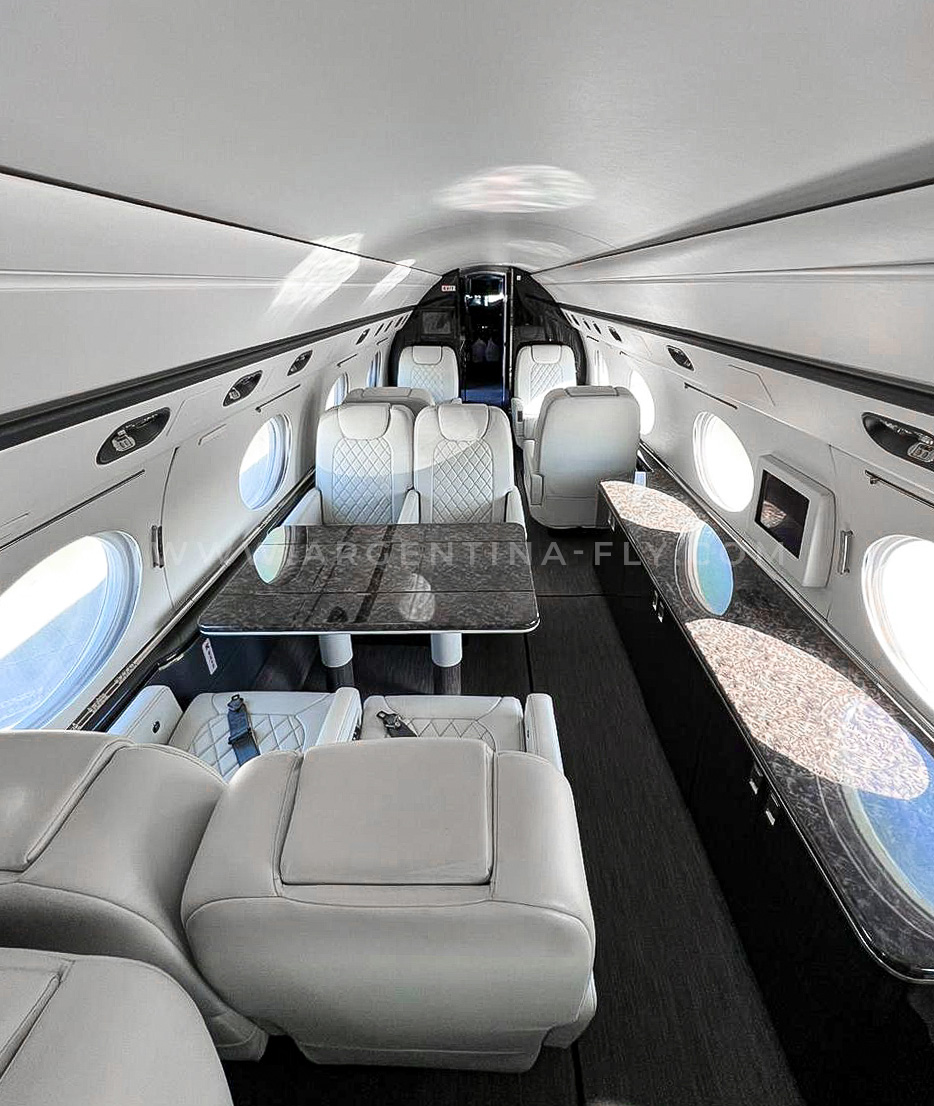
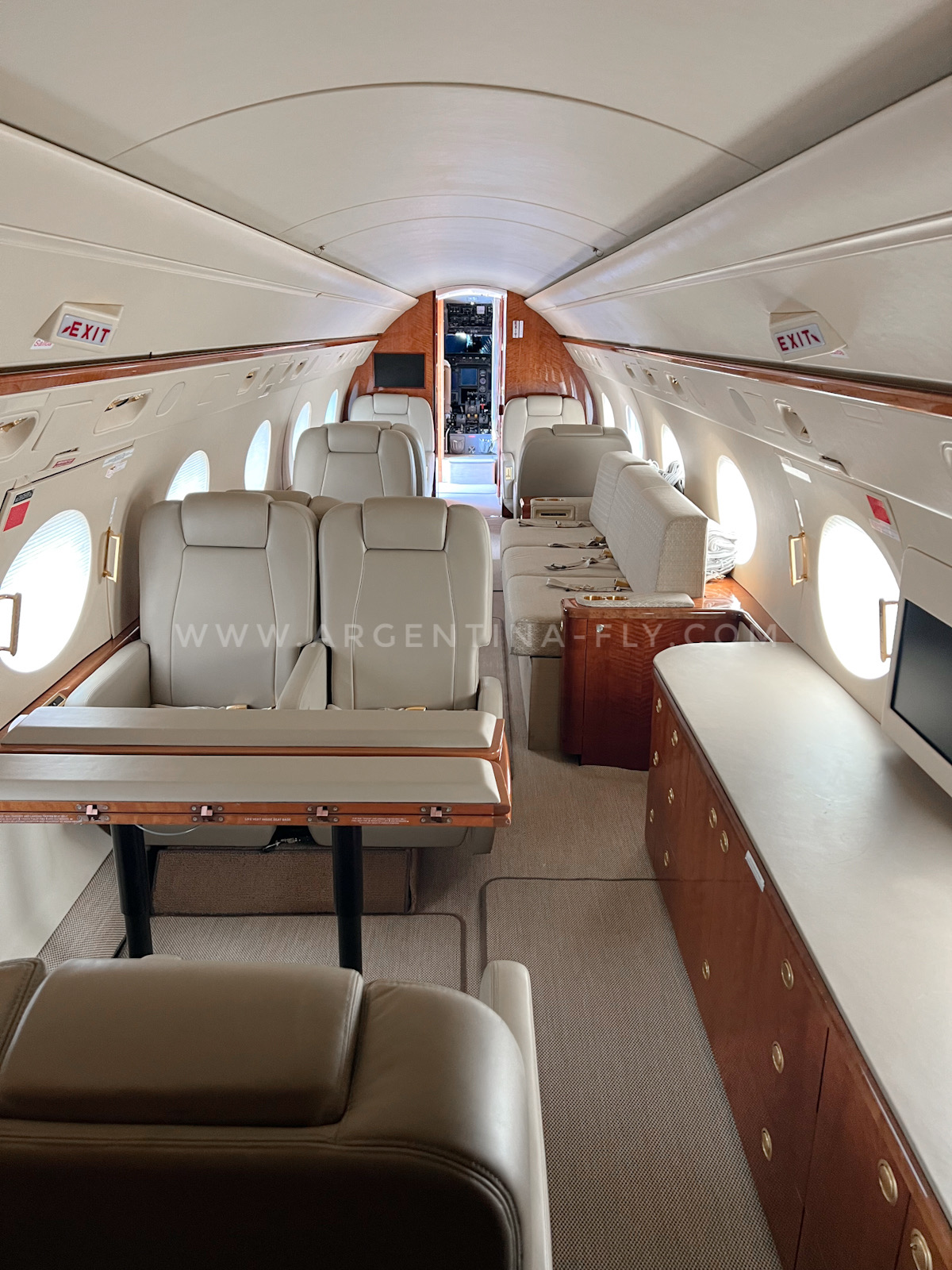
Gulfstream V
Long-range, large-cabin jet with VIP equipment for executive groups demanding the highest level of comfort.
Capacity
14 passengers
Lavatory
Yes
Cabin
Pressurized
Luggage
Spacious
Wi-Fi
Portable Starlink
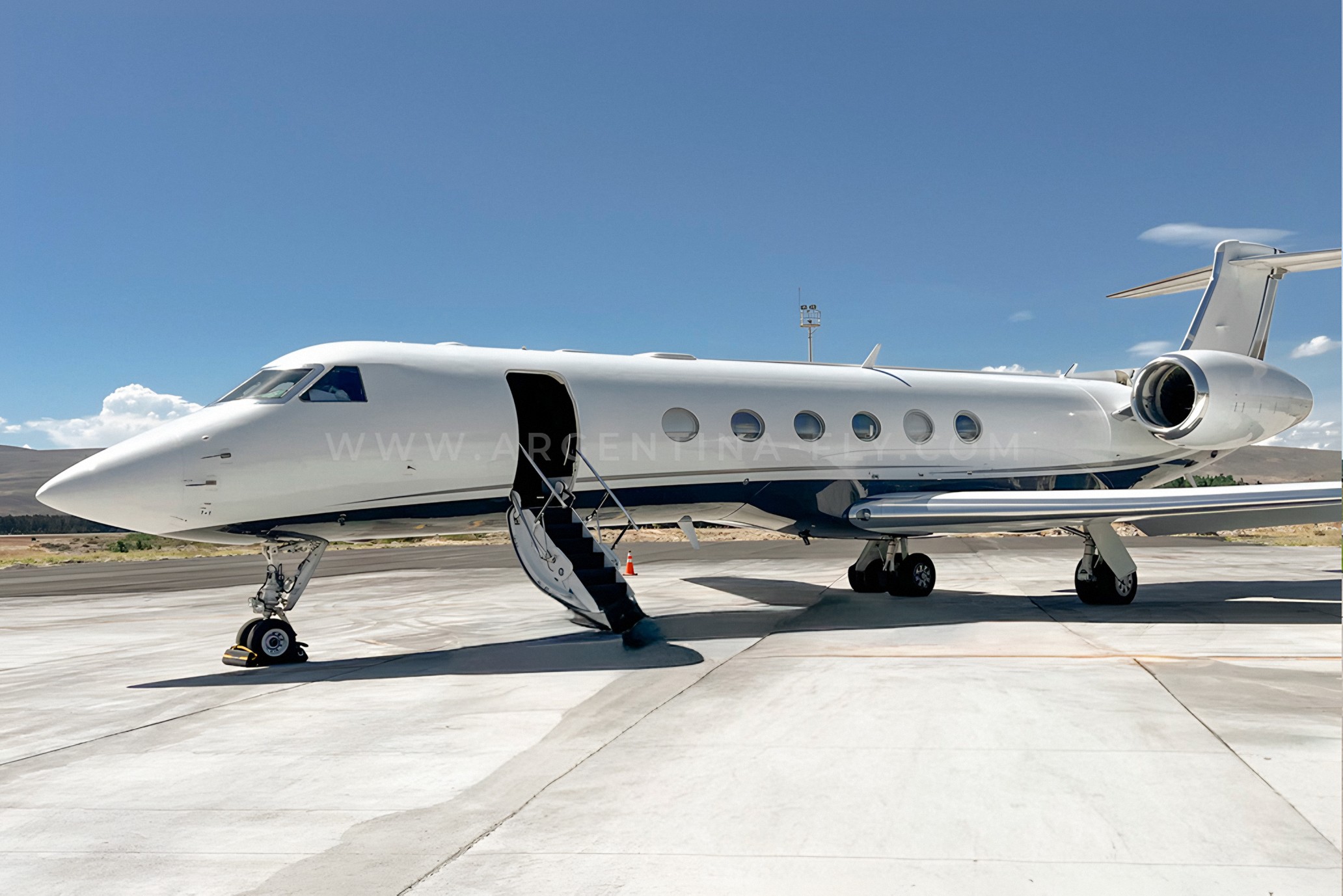
Gulfstream 400
Large jet with an exceptionally spacious cabin and long range, ideal for executive groups requiring maximum comfort.
Capacity
14 passengers
Lavatory
Yes
Cabin
Pressurized
Luggage
Generous
Wi-Fi
Built-in Starlink
Safety certifications
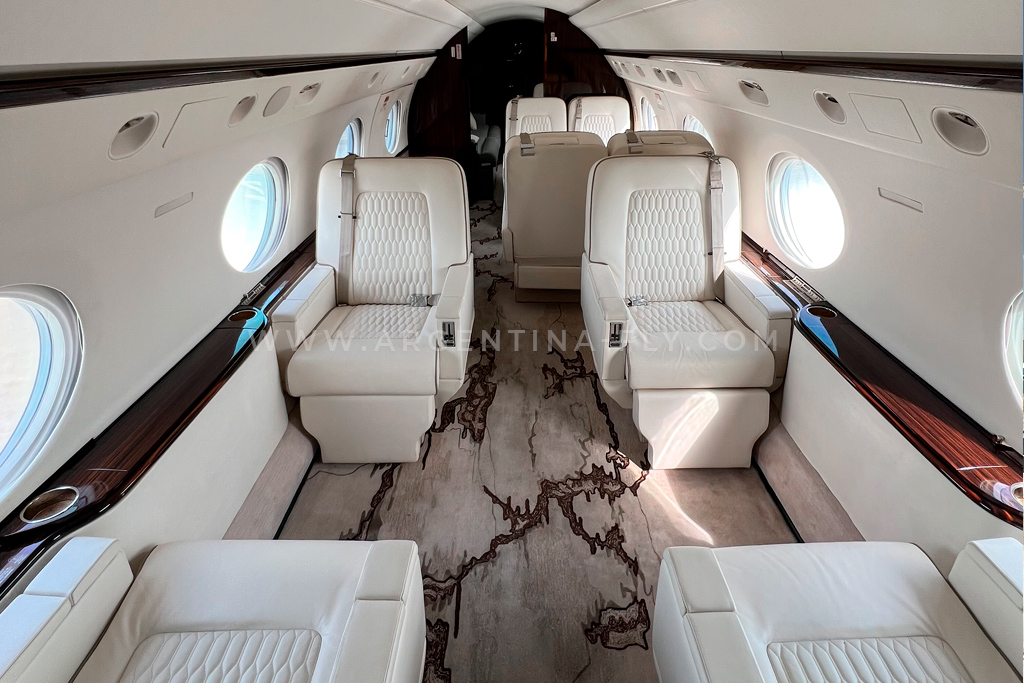
Gulfstream V
Long-range, large-cabin jet with VIP equipment for executive groups demanding the highest level of comfort.
Capacity
14 passengers
Lavatory
Yes
Cabin
Pressurized
Luggage
Generous
Wi-Fi
Built-in Starlink
Safety certifications
Other routes from Buenos Aires
Destinations near Aruba, with the lowest reference fare and the shortest flight time.
Aruba
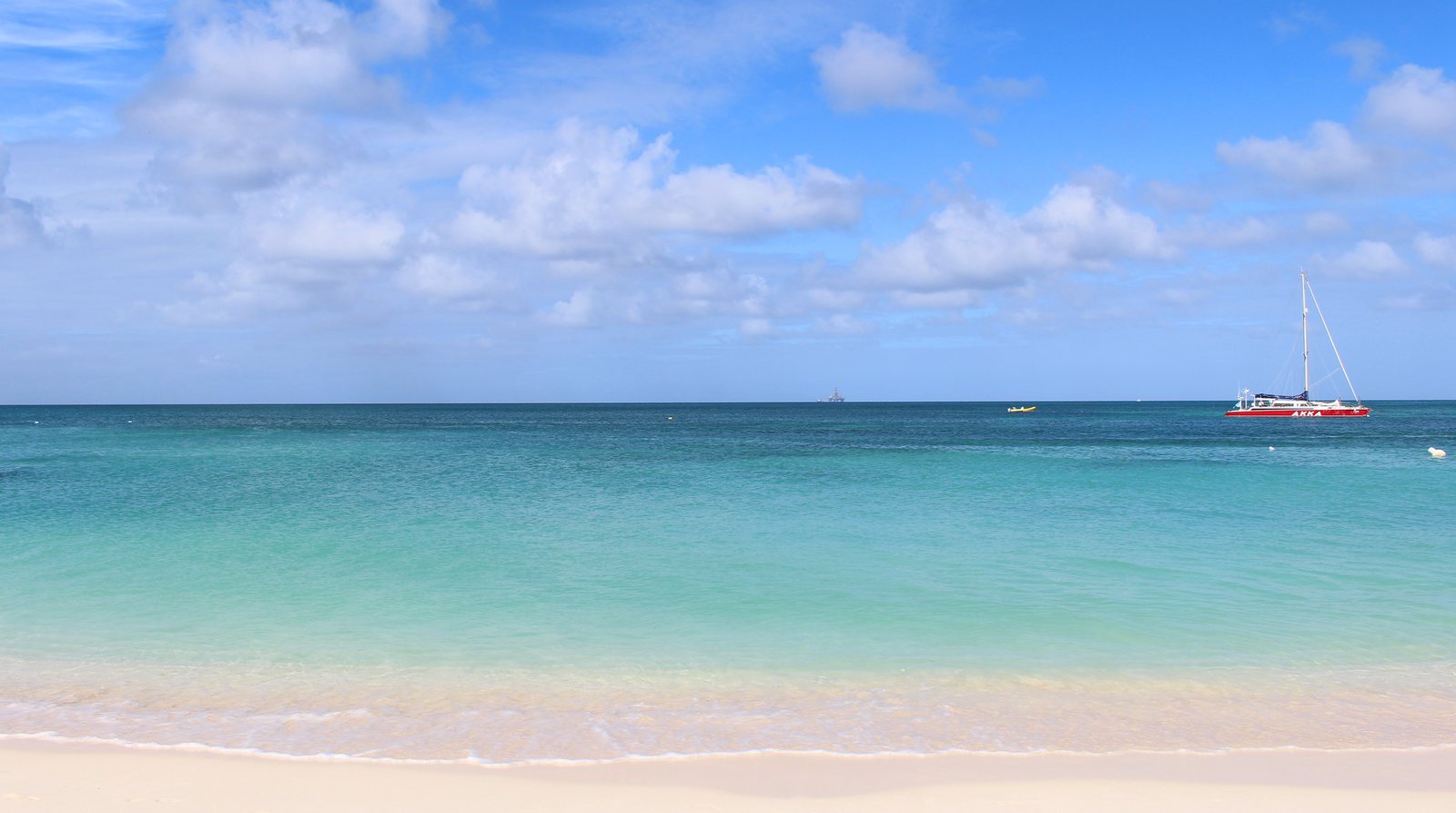
Aruba is an island in the southern Caribbean, about 25 km off the coast of Venezuela, with a dry climate and an east wind all year. On the west side are the white sands of Eagle Beach and Palm Beach and a calm sea for swimming and diving; on the east side, the rugged coast of Arikok National Park, with caves and a natural pool among volcanic rocks. From Buenos Aires it is 5,439 km: a private jet arrives in 6 h 20 to 6 h 50, depending on the aircraft.
Eagle Beach and Palm Beach
The two west-coast beaches, with the island's hotels.
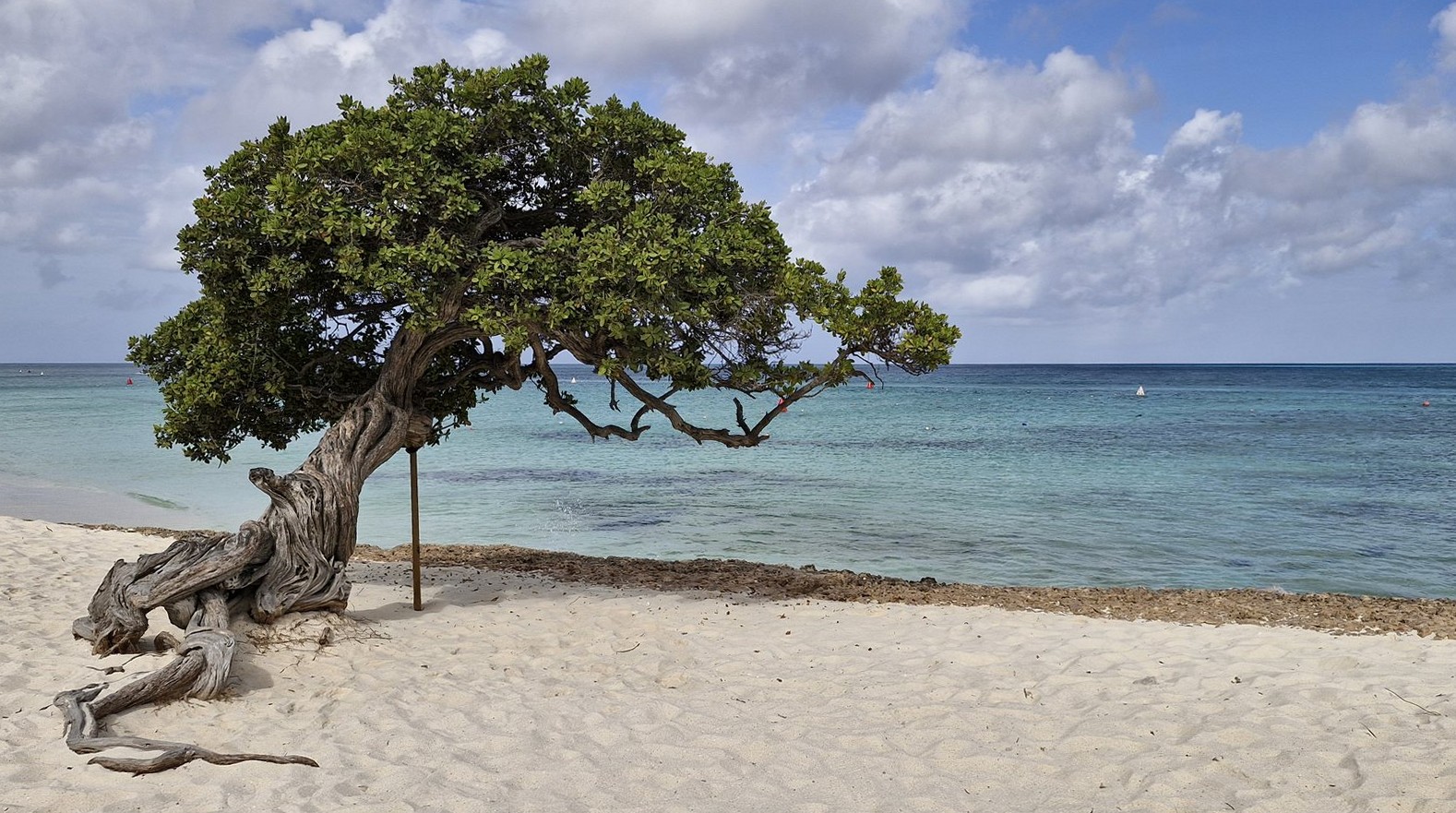
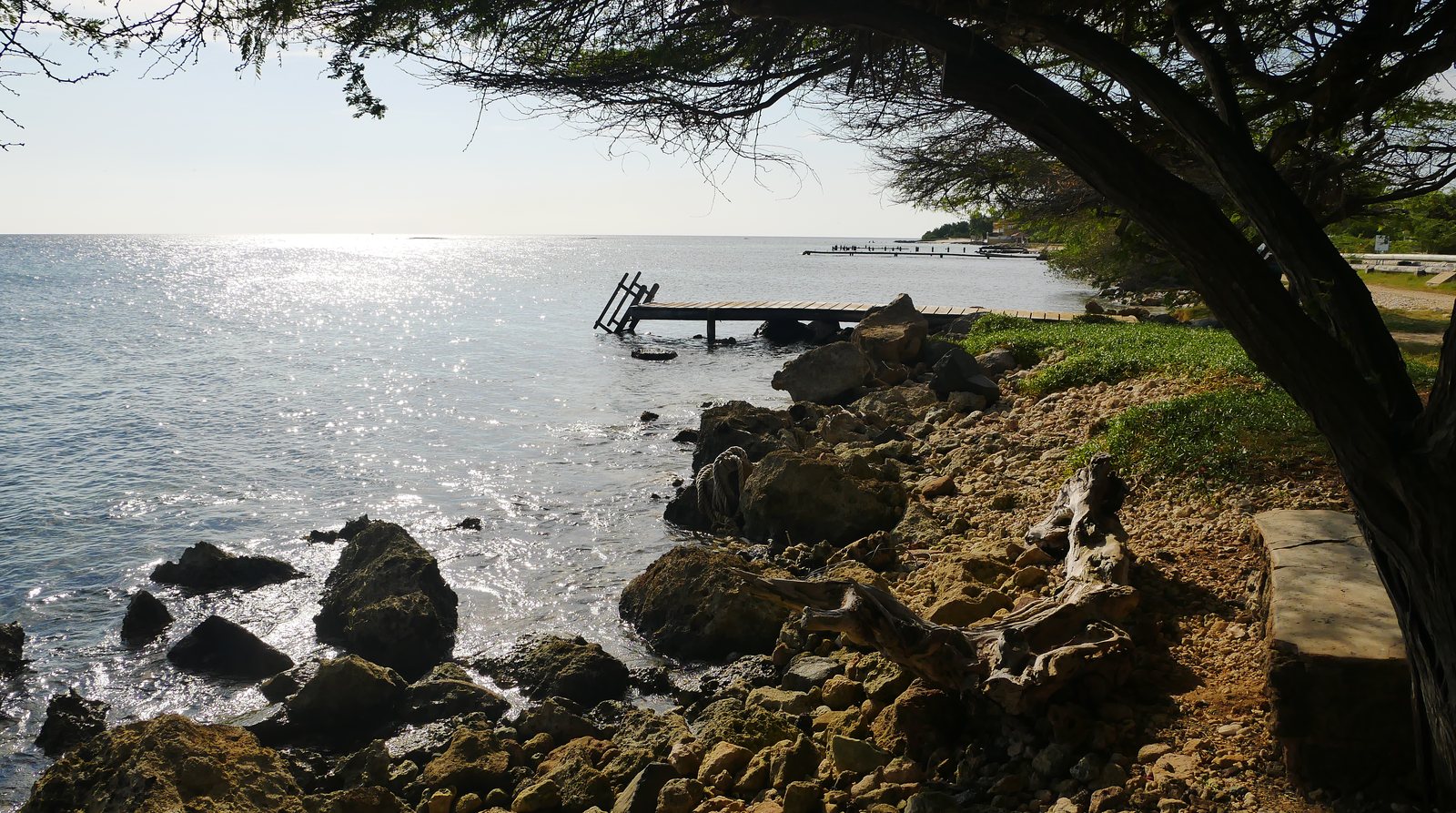
Eagle Beach is a wide white-sand beach with shade, parking and water sports, and low-rise hotels across the road. Here stand the fofoti, trees bent by the wind that point toward the sea. Of the four sea turtle species that nest in Aruba, most of the nests are on this beach.
Farther north, Palm Beach is a strip of about 3 km with the high-rise hotels, piers, restaurants and casinos. The water is calm, good for swimming and snorkeling, and after sunset the area carries on with bars and casinos. In Aruba, all beaches are public.
What to see
- Eagle BeachA wide white-sand beach, with the fofoti trees and low-rise hotels opposite.
- Palm BeachAbout 3 km of sand with the high-rise hotels, piers and calm water.
Where to stay
- Boardwalk Boutique Hotel ArubaAdults only: 49 casitas among gardens, on a former coconut plantation near Palm Beach. Holds two MICHELIN Keys.
- Bucuti & Tara Beach ResortAdults only, on Eagle Beach; CarbonNeutral certified. Recommended by Forbes Travel Guide.
- The Ritz-Carlton, ArubaOn Palm Beach. Recommended by Forbes Travel Guide.
The wind and the north coast
Windsurfing at Hadicurari, snorkeling at Malmok and the California Lighthouse.
Hadicurari, also called Fisherman's Huts, was the island's fishing harbor and today is the beach for windsurfing and kitesurfing, with schools and board rentals; the water is shallow and calm. Every year, in June or July, it hosts the Aruba Hi-Winds windsurfing tournament. Advanced kiters go to Boca Grandi, in the south, near San Nicolas: steady wind, waves and a strong current, so swimming is not recommended.
Along the coast, Malmok alternates limestone terraces with sandy coves and clear water, where catamarans stop for snorkeling; Boca Catalina is one of those bays, with stairs down from the parking lot. Arashi, at the northern tip, has shallow, calm water and shade huts, and faces west, toward the sunset.
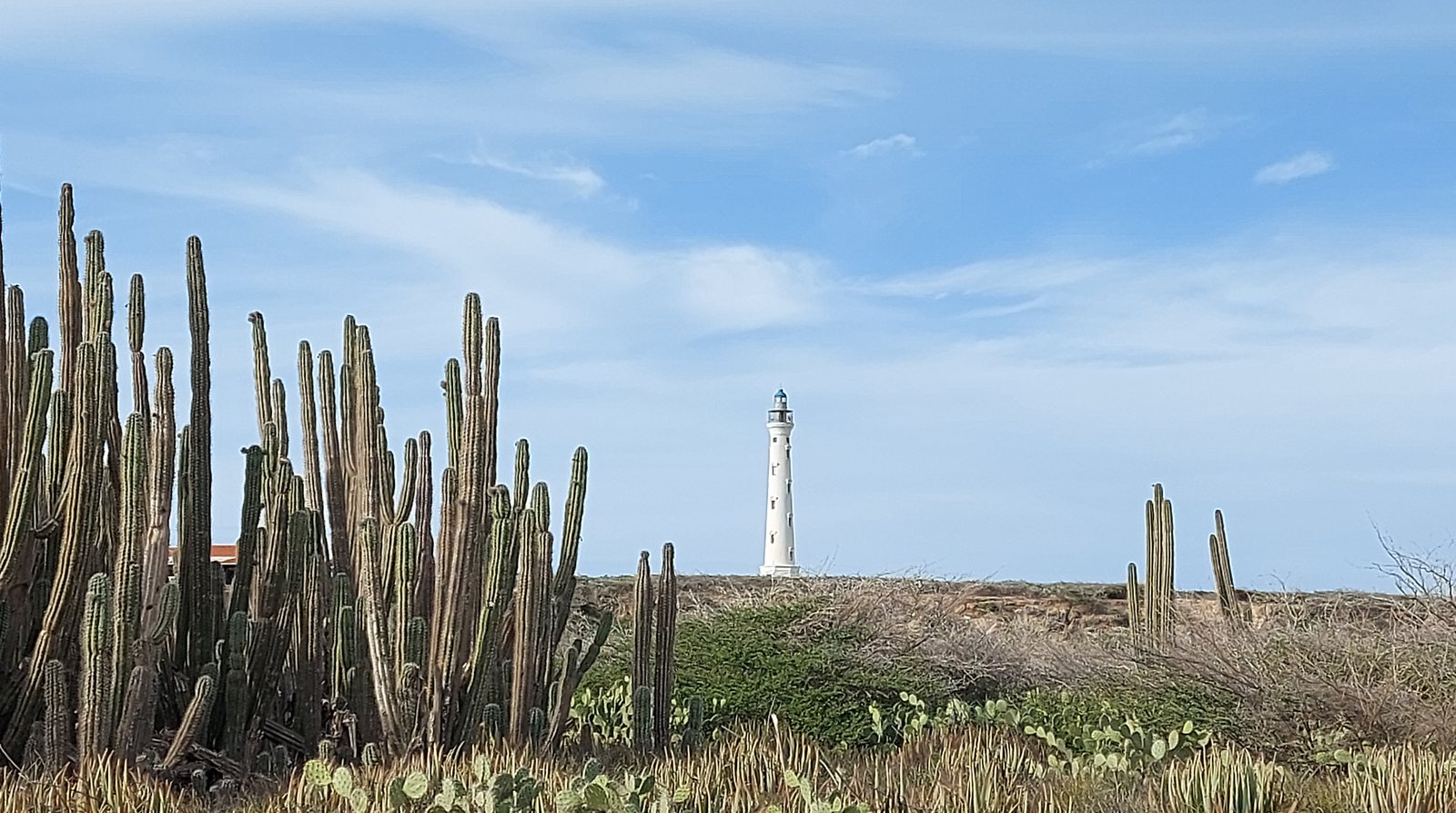
Near Arashi, the California Lighthouse is named after the steamship that sank off that coast; you can climb it, from 9 a.m. to 7 p.m., to see the whole island. Next to it is Tierra del Sol, Aruba's only 18-hole course: par 71, designed by Robert Trent Jones II, with sea views and a desert landscape.
What to see
- Arashi BeachAt the northern tip: shallow, calm water, shade huts and sunset views.
- Boca CatalinaA small bay in Malmok, good for snorkeling.
- Boca GrandiIn the south, near San Nicolas: kitesurfing for experts; strong current.
- California LighthouseOpen for climbing from 9 a.m. to 7 p.m., with views of the whole island.
- Hadicurari (Fisherman's Huts)Windsurfing and kitesurfing; home of the Aruba Hi-Winds.
Golf
- The Links at Divi ArubaNine holes among the villas of Divi Village, by Litten & Viola; open to the public.
- Tierra del SolThe only 18-hole course, par 71, by Robert Trent Jones II, next to the lighthouse.
Under the water
The Antilla wreck, the Mangel Halto reef and the Baby Beach lagoon.
The Antilla was a German freighter scuttled by its own crew during World War II off Malmok. It is about 120 m long, rests at a depth of about 18 m, and much of the hull is still intact, covered in coral; it is dived with the island's dive centers, and can be seen from the surface while snorkeling.
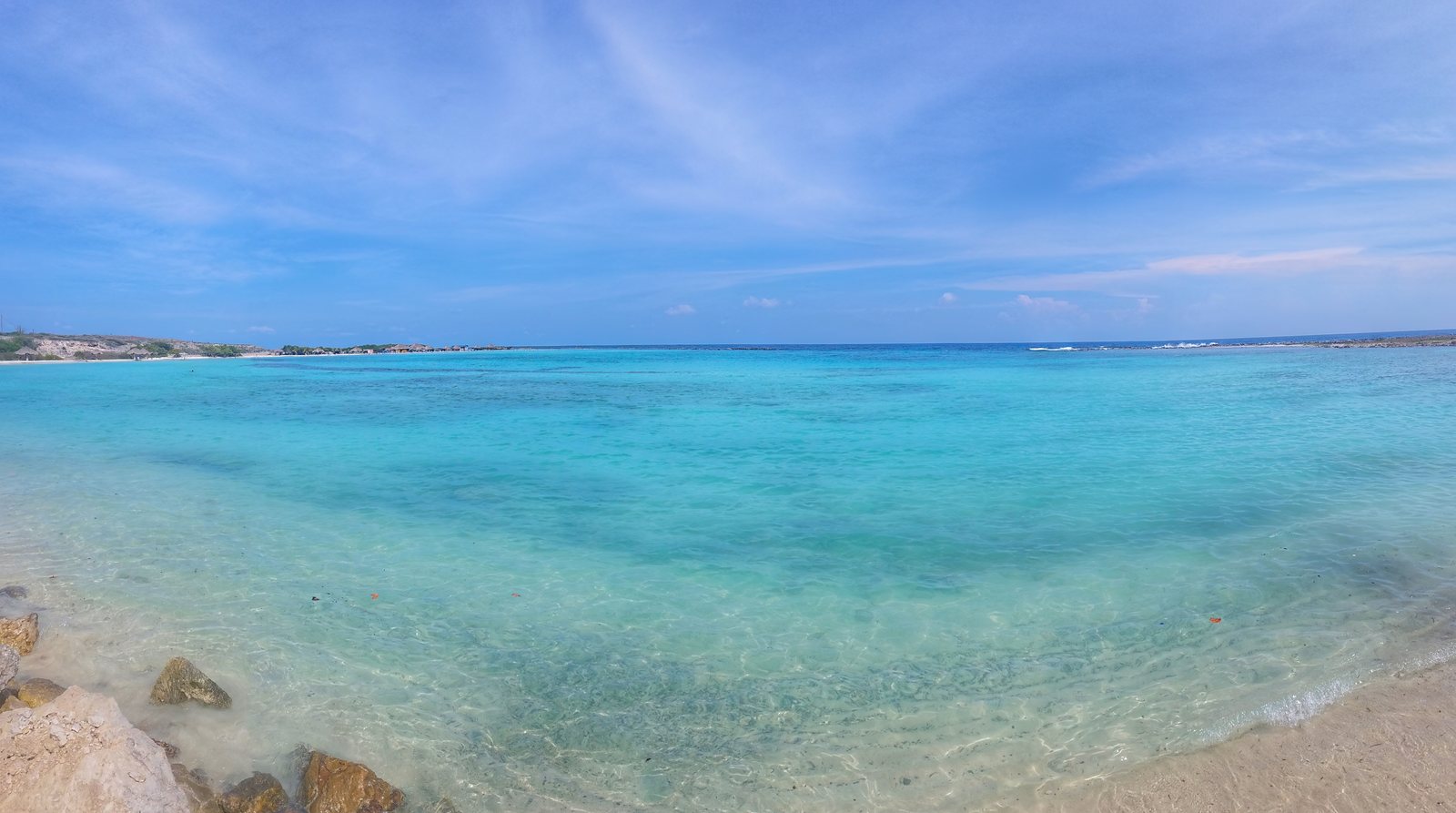
Mangel Halto is a quiet beach among mangroves, with shallow water, a wooden deck and kayak or paddleboard outings. From the shore you can walk to the edge of the reef, which drops to about 33 m: parrotfish, snappers, sea fans and sponges. Near San Nicolas, Baby Beach is a crescent of sand on a calm, shallow lagoon, with snorkel gear rental and a dive center next door.
The Aruba Conservation Foundation manages four marine protected areas, which make up the Parke Marino Aruba, the Aruba marine park.
What to see
- AntillaA German World War II freighter, about 120 m long, at a depth of about 18 m; diving and snorkeling.
- Baby BeachA calm, shallow lagoon near San Nicolas; snorkeling.
- Malmok BeachClear water and a stop for the snorkeling catamarans.
- Mangel HaltoMangroves, kayaking and shore diving to a reef of about 33 m.
Arikok National Park
The natural pool, the caves and the eastern bays.
Arikok National Park covers 34 km² in the northeast, about a fifth of the island: cacti, volcanic rock, quartz diorite and limestone, dry riverbeds and the habitat of the cascabel, the Aruba Island rattlesnake, found only on Aruba. Entry requires a conservation pass, sold at the San Fuego visitor center, open every day from 8 a.m. to 3:30 p.m.
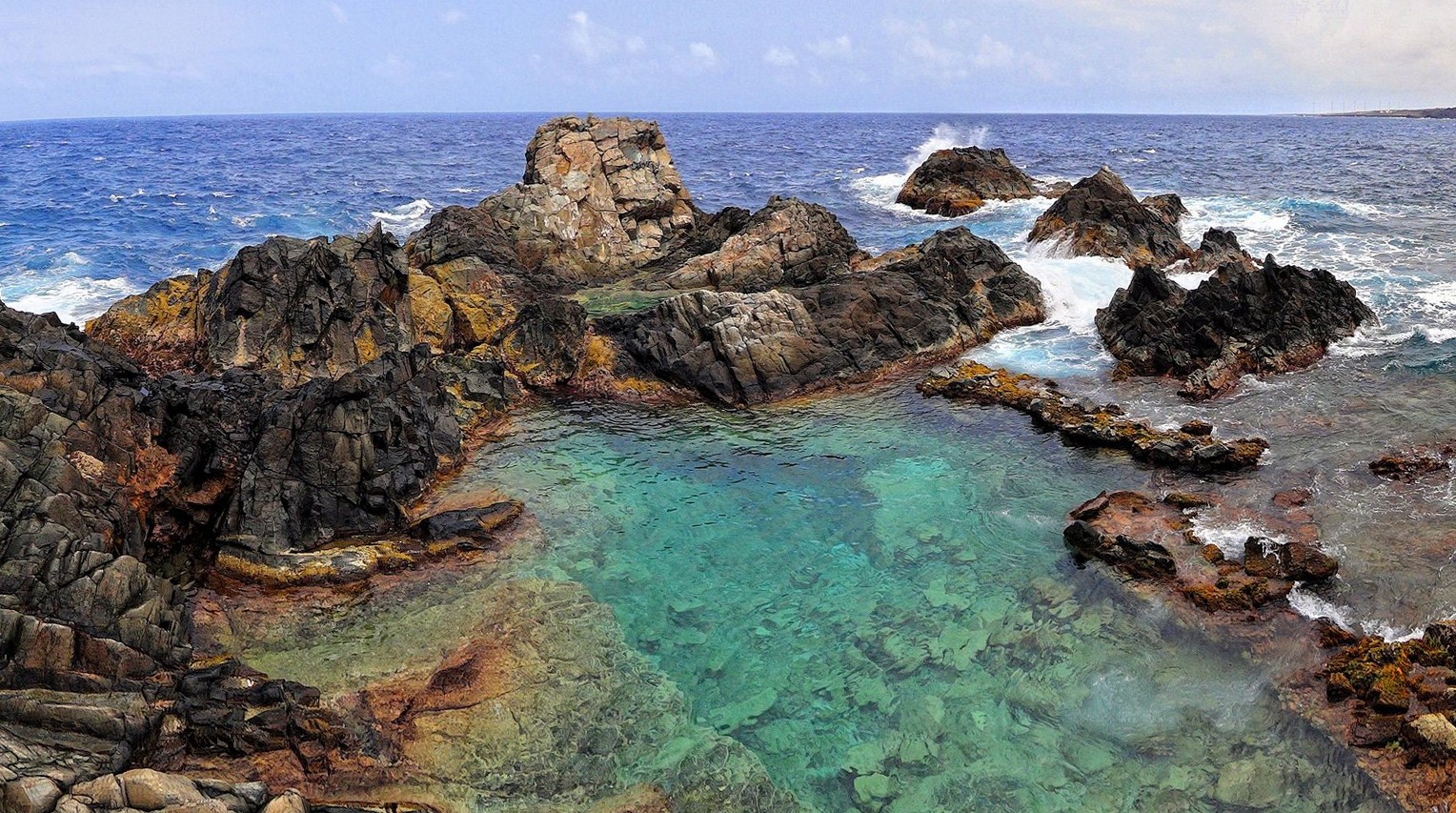
The natural pool, Conchi or Cura di Tortuga, is a seawater pool surrounded by volcanic rock on the east coast. It is reached by 4x4, on horseback or on foot, about 3 to 4 hours round trip: regular cars cannot pass the park checkpoints. It is safe for swimming only when the sea is calm, because waves can break over the rocks.
Among the caves, Fontein holds reddish-brown Arawak drawings on its walls and ceiling; Quadirikiri has two chambers lit by daylight coming through holes in the roof. Both can be visited during park hours, with rangers at the entrance. Along the coast lie secluded bays such as Boca Prins, with its dunes, Dos Playa and Moro.
What to see
- Boca PrinsA bay with dunes on the park's east coast.
- Conchi (Natural Pool)By 4x4, on horseback or on foot; swim only when the sea is calm.
- Dos PlayaA secluded bay on the east coast.
- Fontein caveWith Arawak drawings on the walls and ceiling.
- Quadirikiri caveTwo chambers with natural light coming through the roof.
Oranjestad and the past
Fort Zoutman, the Willem III Tower and the Alto Vista chapel.
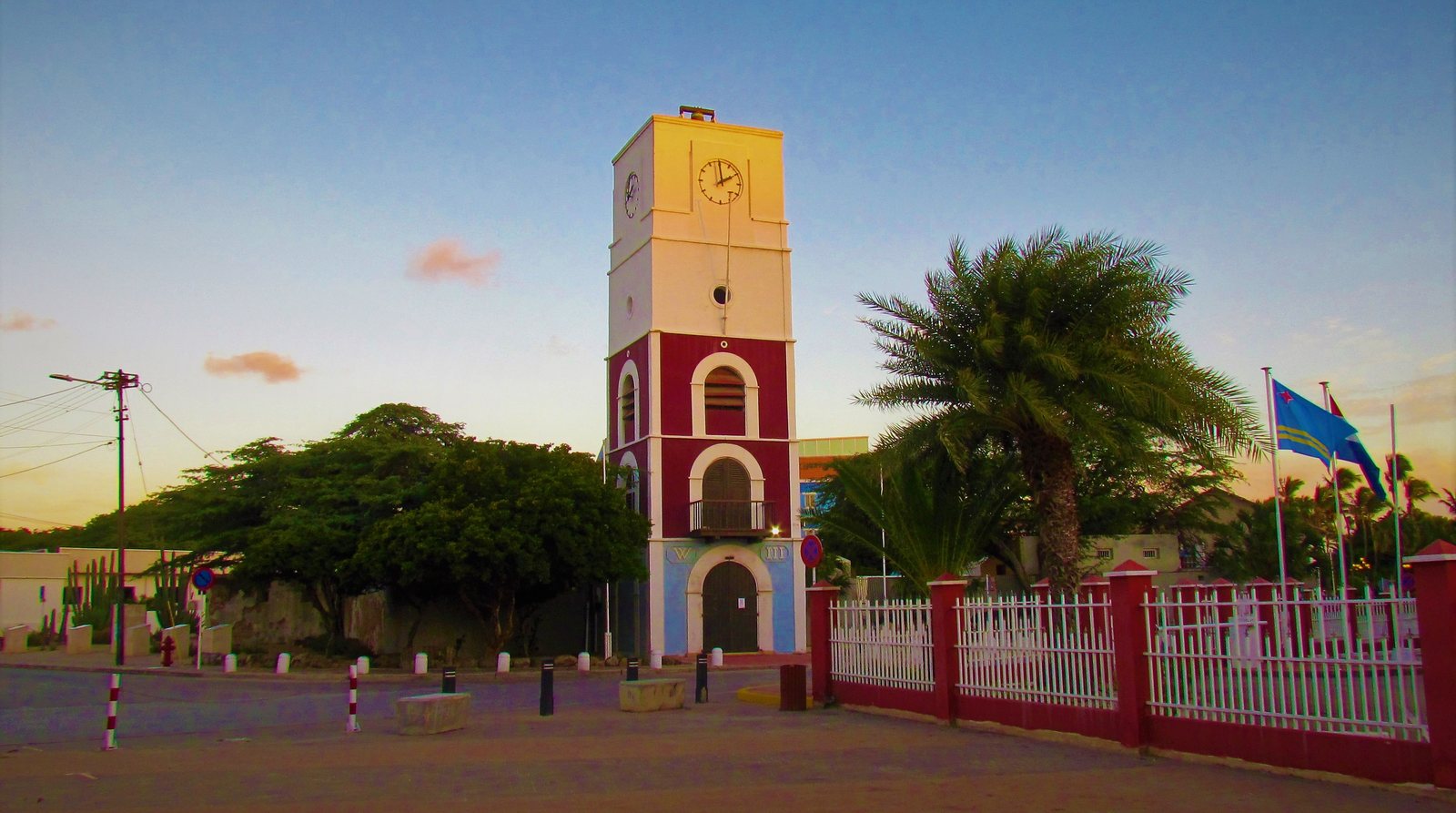
Oranjestad is the capital, with colorful colonial architecture, museums and markets. Fort Zoutman, completed in 1798 to defend the coast, is the oldest building in the city and today is a historical museum; the Willem III Tower, from 1868, served as a lighthouse and public clock until its light went out in 1963. Every Tuesday evening the fort hosts the Bon Bini Festival, a celebration of the island's culture and history.
Renaissance Island is a 16-hectare private island with beaches and flamingos, open only to guests of the Renaissance Wind Creek Aruba Resort, with water taxis every 15 minutes. In the north, the Alto Vista chapel, yellow and surrounded by cacti, dates back to 1750; every January 18 it receives the pilgrimage of Saint Philomena.
What to see
- Alto Vista ChapelA chapel dating back to 1750 on a hill in the north.
- Fort ZoutmanFrom 1798: historical museum and the Bon Bini Festival on Tuesdays.
- Renaissance IslandBeaches and flamingos, for guests of the Renaissance Wind Creek only.
- Willem III TowerFrom 1868, the town's former lighthouse and clock.
Where to eat
Keshi yena, fried fish in Savaneta and a house from 1886.
The national dish is keshi yena: spiced meat or shredded chicken, olives and raisins, baked inside a crust of Gouda or Edam cheese. It comes with funchi, a creamy cornmeal polenta, grilled or fried, and pan bati, a flat, slightly sweet bread served with stews (stoba) and soups.
Savaneta, the island's first capital, is the place for fish: at Zeerover, on a fishermen's pier by the sea, the catch of the day is cleaned and fried in front of you and served in baskets, with one or two kinds a day; cash only. A few steps away, at The Flying Fishbone, the tables sit on the shore, with your feet in the sand or in the water.
For island cooking in a historic house, Papiamento opens in an Aruban manor house from 1886, among gardens; Gasparito, in an old building, serves goat stew, pan bati and funchi among works by local artists.
Tastes of Aruba
- Gasparito Restaurant & Art GalleryAruban cooking and local art in a historic building.
- PapiamentoIn an 1886 manor house, with keshi yena.
- The Flying FishboneIn Savaneta, tables on the shore.
- ZeeroverFried fish on a pier in Savaneta; cash only.
Arrival
From departure to destination.
- Departure
- From San Fernando (FDO), Aeroparque (AEP) or Ezeiza (EZE). The fare may change depending on where each aircraft is based.
- Airport
- Queen Beatrix International (AUA), on the south coast, next to Oranjestad. It has a general aviation terminal (FBO), run by the Aruba Airport Authority, with a passenger lounge, open from 7 a.m. to 11 p.m. Aruban immigration and customs are cleared on arrival.
- Documents
- U.S. and Argentine citizens: a passport valid for the length of the stay, with no visa. Before traveling, every passenger, including babies and children, completes the ED card, the mandatory online embarkation-disembarkation form, starting 7 days before; with it, visitors pay a USD 20 Sustainability Fee (children under 8 are exempt). This information is for guidance only: always confirm entry and health requirements with the official Aruban authorities before you travel.
- ED card
- It is completed only on the official website, edcardaruba.aw, and paid by credit card before arrival.
When to go
The seasons at the destination.
- Year-round
- A steady east wind and average highs of 30 to 33 °C.
- January and February
- The peak months of Carnival, which closes with the Grand Parade in Oranjestad on the Sunday before Ash Wednesday.
- February to June
- The dry season: less than 20 mm of rain a month.
- June or July
- Aruba Hi-Winds, the windsurfing tournament at Hadicurari.
- June 1 to November 30
- Atlantic hurricane season; Aruba lies on the southern edge of the hurricane zone.
- September to January
- The rainy season, with short showers; November is the rainiest month, with 87 mm.
Key facts
Winter January
- Average low
- 24.8°
- Average high
- 30.3°
44.0 mm of rain
Spring April
- Average low
- 26.0°
- Average high
- 31.9°
8.6 mm of rain
Summer July
- Average low
- 26.7°
- Average high
- 32.4°
31.4 mm of rain
Fall October
- Average low
- 26.7°
- Average high
- 32.4°
76.5 mm of rain
- Airport
- Queen Beatrix InternationalIATA / ICAO: AUA / TNCAAruba's international airport, next to Oranjestad; operated by the Aruba Airport Authority
- Category
- Public-use, towered, international
- Distance
- 5,439 kmFlight distance from Buenos Aires
- Annual rainfall
- 451.2 mm30% falls from April to September
Frequently asked questions
Price, flight time, airport, departure and travel documents.
How much does a private flight from Buenos Aires to Aruba cost?
Reference fares for a one-way private flight from Buenos Aires (San Fernando), whole aircraft, start at USD 66,250 for a midsize jet and USD 99,710 for a large jet. Passenger fees or international fees at the destination are added to the fare, depending on the aircraft, as shown on each row. Round trips are calculated in the quote tool according to the length of your stay.
How long is the flight?
Between 6 h 20 and 6 h 50, depending on the aircraft; the fastest jet on the route takes 6 h 20.
Does the flight make a stop?
It depends on the aircraft. Nonstop: the Gulfstream V and the Gulfstream 400. With one fuel stop: the Learjet 60, the Learjet 60 XR and the Citation Sovereign. In the quote tool, each aircraft shows whether it makes a stop.
Which airport does the flight land at?
Queen Beatrix International Airport (AUA / TNCA), next to Oranjestad. It is public-use, towered and international, and has a general aviation terminal (FBO) run by the Aruba Airport Authority. Aruban immigration and customs are cleared on arrival.
What documents do I need to travel to Aruba?
A passport valid for the length of the stay; U.S. and Argentine citizens do not need a visa. In addition, every passenger, including children, completes the ED card before the trip on the official website, edcardaruba.aw, starting 7 days before, and pays with it the USD 20 Sustainability Fee per visitor; children under 8 are exempt. This information is for guidance only: always confirm entry and health requirements with the official Aruban authorities before you travel.
When is the best time to fly to Aruba?
Aruba can be visited year-round: it gets 451 mm of rain a year, and average highs range from 30.3 °C in January to 33.2 °C in August and September. February to June is the dry season, with less than 20 mm a month; from September to January it rains a little more, in short showers. The Atlantic hurricane season runs from June 1 to November 30, and Aruba lies on the southern edge of the hurricane zone.
What is there to do in Aruba besides the beach?
Dive or snorkel at the Antilla wreck and at Mangel Halto; tour Arikok National Park by 4x4 to the natural pool and the Fontein and Quadirikiri caves; windsurf or kitesurf at Hadicurari; play golf at Tierra del Sol, next to the California Lighthouse; and see Fort Zoutman in Oranjestad.
How do I get to the natural pool?
It is inside Arikok National Park, on the east coast, and can be reached only by 4x4, on horseback or on a walk of about 3 to 4 hours round trip; regular cars cannot pass the park checkpoints. Park admission is paid at the San Fuego visitor center, open from 8 a.m. to 3:30 p.m., and swimming is safe only when the sea is calm.
Are the published fares final?
They are estimates. The final quote depends on dates, length of stay, aircraft type and applicable operating fees; on this international flight, international fees are added.
Where does the flight depart from?
Fares are calculated for departure from San Fernando (FDO). Departing from Aeroparque (AEP) or Ezeiza (EZE) may change the fare, depending on where each aircraft is based.

Ready to fly? Let’s talk.
Share the details of your trip and we’ll help you find the aircraft and flight solution best suited to your needs.
- WhatsApp+54 9 11 3080 7775
- Phone+54 9 11 3080 7775
- Emailinfo@argentina-fly.com
For charter operatorsList your aircraft