
- Home
- Flight quote
- Cancún
Private flights to Cancún and the Riviera Maya
Jet from USD 85,730 · 9 h 05, 1 stop
Results:
- Itinerary
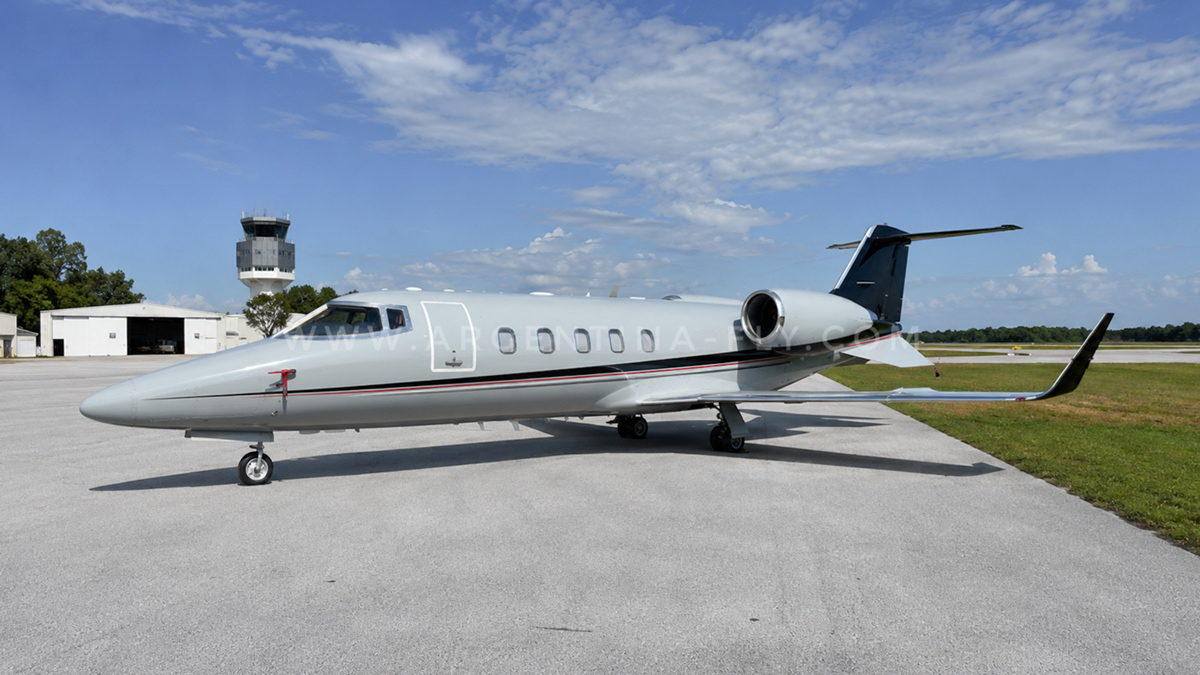
Learjet 60
Midsize jet · 7 passengers · 9 h 05 · 2 options9 h 05flight time
USD 85,730+ international fees
Request a quote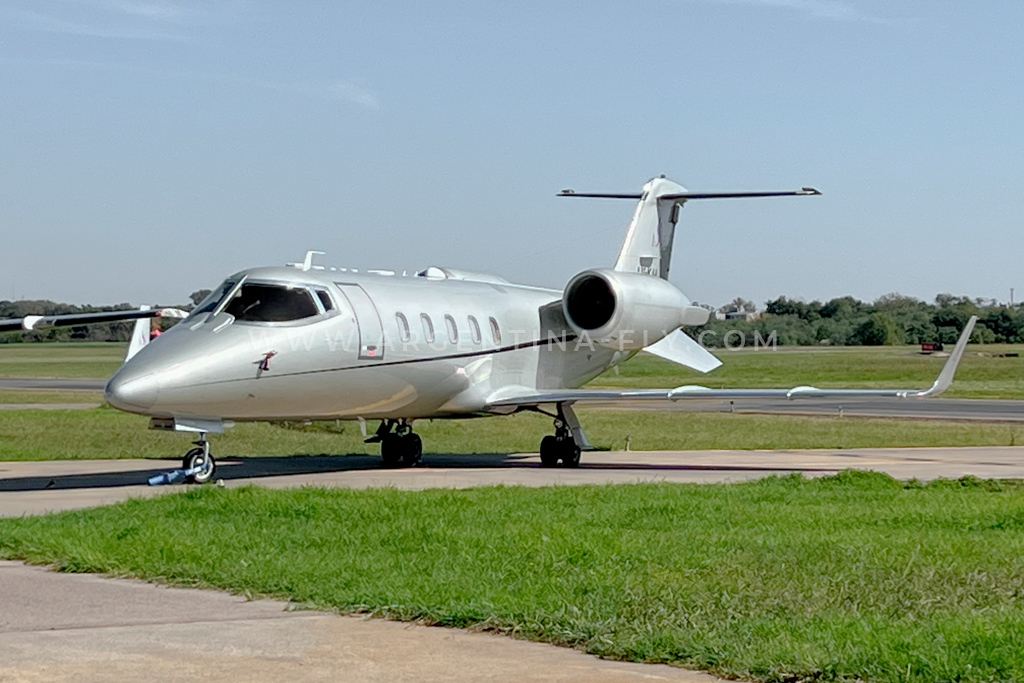
Learjet 60 XR
Midsize jet · 6 passengers · 8 h 558 h 55flight time
USD 90,890+ international fees
Request a quote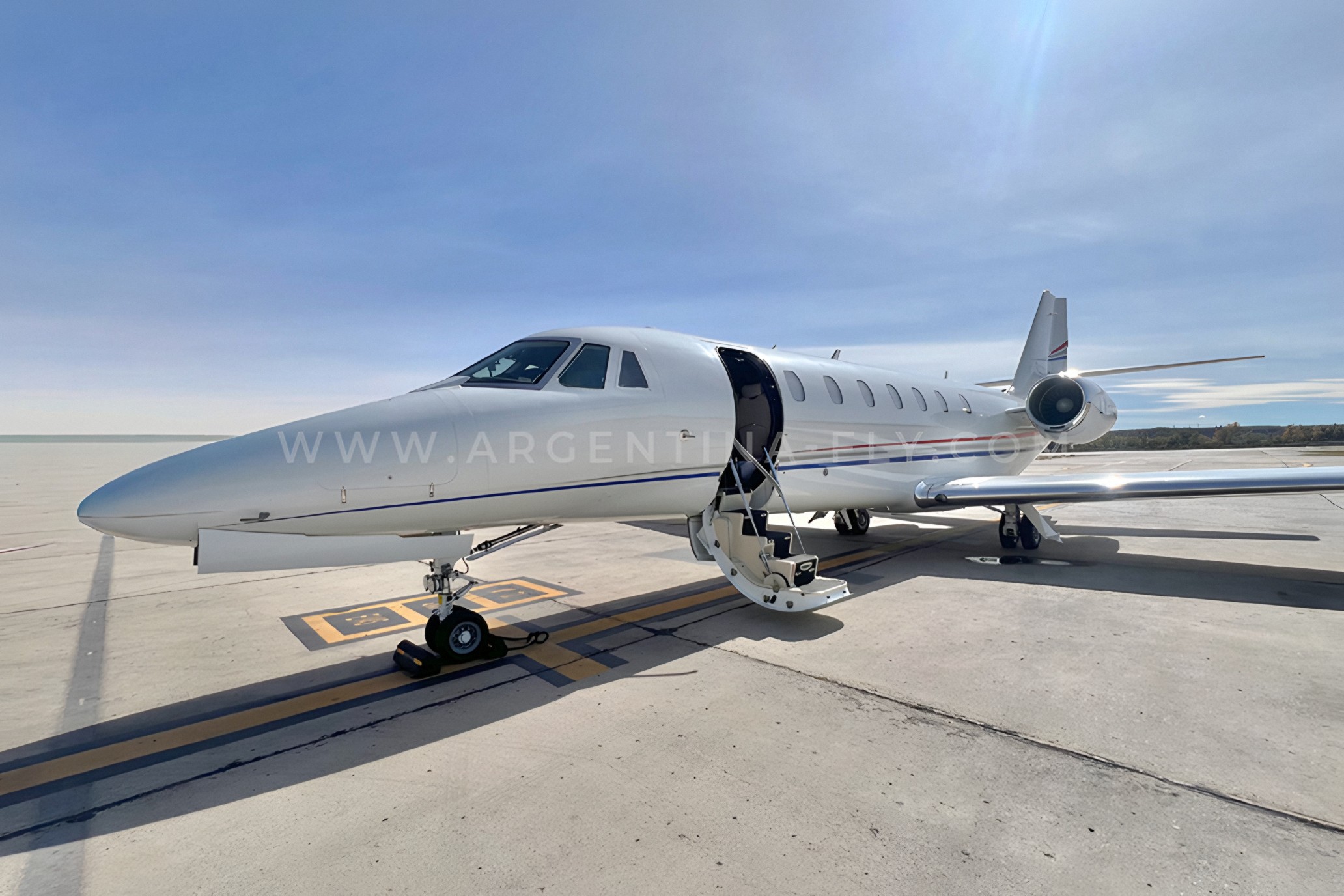
Citation Sovereign
Midsize jet · 8 passengers · 8 h 558 h 55flight time
USD 104,300+ international fees
Request a quote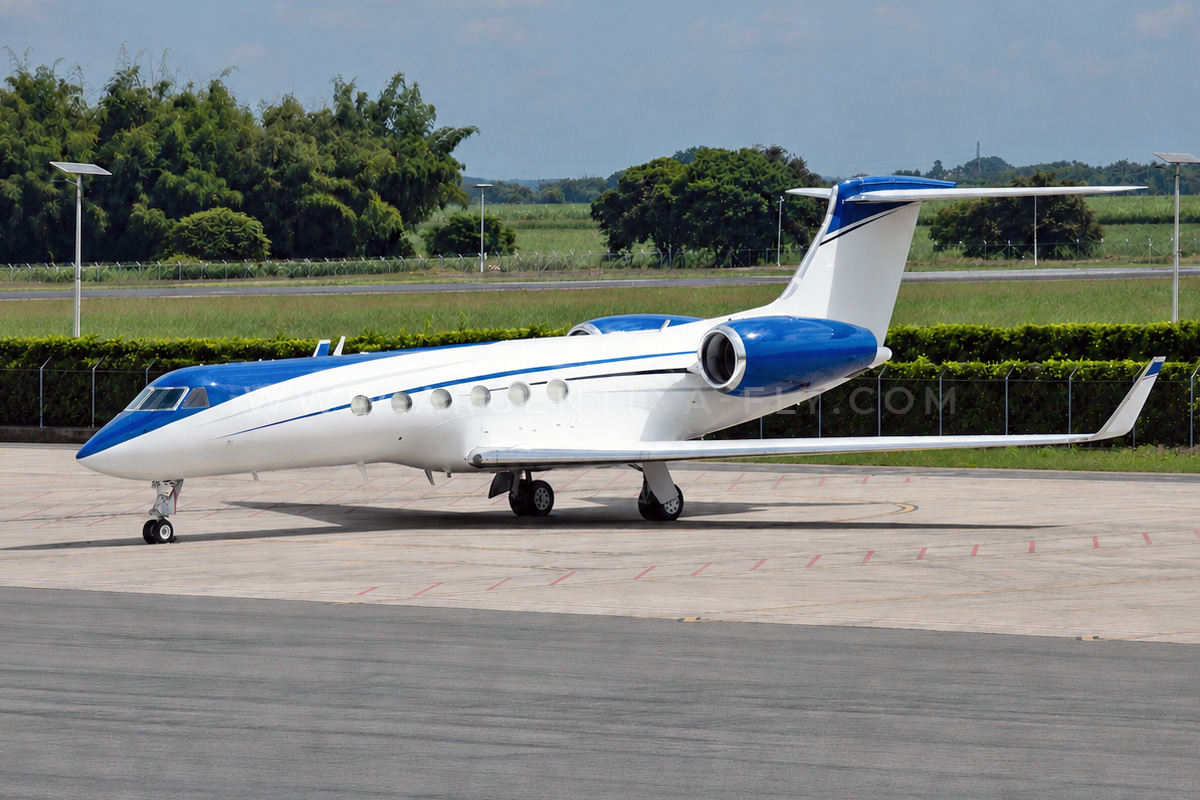
Gulfstream V
Large jet · 14 passengers · 8 h 30 · 2 options8 h 30flight time
USD 128,600+ international fees
Request a quote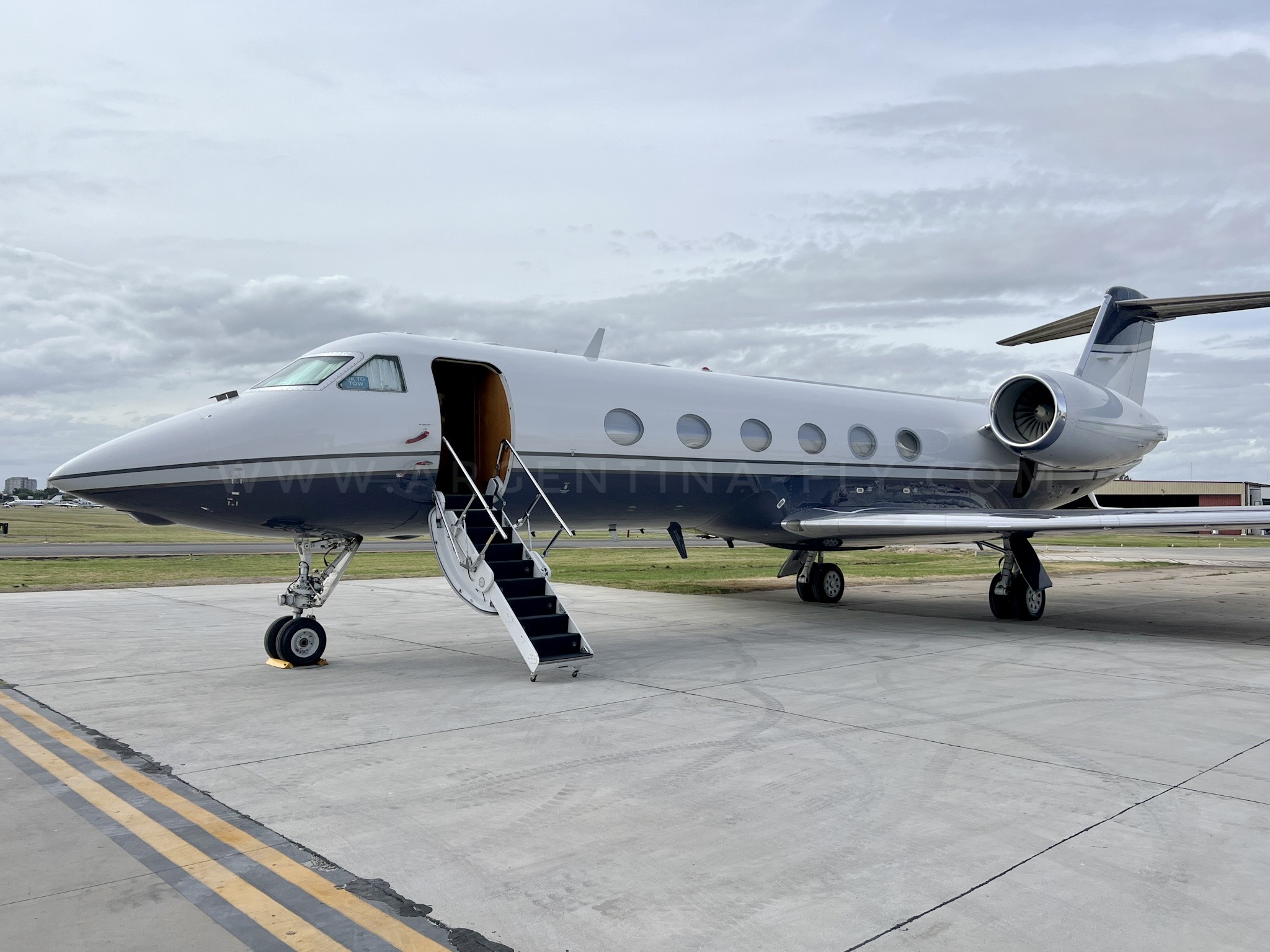
Gulfstream 400
Large jet · 14 passengers · 8 h 458 h 45flight time
USD 141,550+ international fees
Request a quote
Route and airfields
Rate conditions
Please read carefully before requesting a quote.
Prices
Reference fares in US dollars (USD), for the entire aircraft. They may vary with aircraft availability and travel dates. For itineraries with several destinations, please request a tailored quote.
Not included
VAT on flights within Argentina, fees abroad on international flights (airport charges, handling and FBO, among others), and special services on request.
Base airport
Fares are calculated for departure from San Fernando (FDO). Departing from Aeroparque (AEP) or Ezeiza (EZE) may change the fare, depending on where each aircraft is based.
Reference fleet
The aircraft displayed are for reference purposes only and may vary depending on operational availability. Contact us to learn about the available options for your trip.
Rate conditions
Please read carefully before requesting your quotation.
Published prices are provided for reference only.
 Prices
Reference fares in US dollars (USD), for the entire aircraft. They may vary with aircraft availability and travel dates. For itineraries with several destinations, please request a tailored quote.
 Not included
VAT on flights within Argentina, fees abroad on international flights (airport charges, handling and FBO, among others), and special services on request.
 Base airport
Fares are calculated for departure from San Fernando (FDO). Departing from Aeroparque (AEP) or Ezeiza (EZE) may change the fare, depending on where each aircraft is based.
 Reference fleet
The aircraft displayed are for reference purposes only and may vary depending on operational availability. Contact us to learn about the available options for your trip.
Need a personalized quotation?
Request quotation
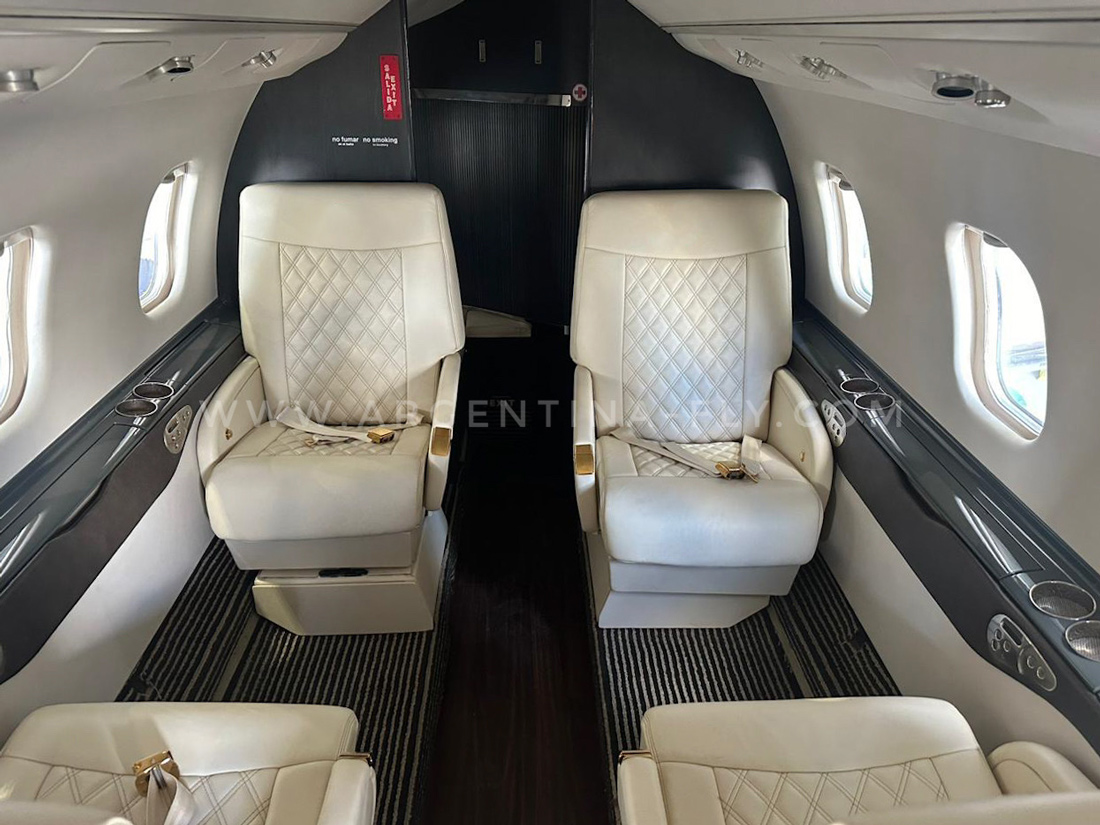
Learjet 60
Midsize jet with a spacious cabin and excellent cruise speed, one of the most requested options for executive flights.
 Capacity
7 passengers
 Lavatory
Yes
 Cabin
Pressurized
 Luggage
Standard
 Wi-Fi
Not available

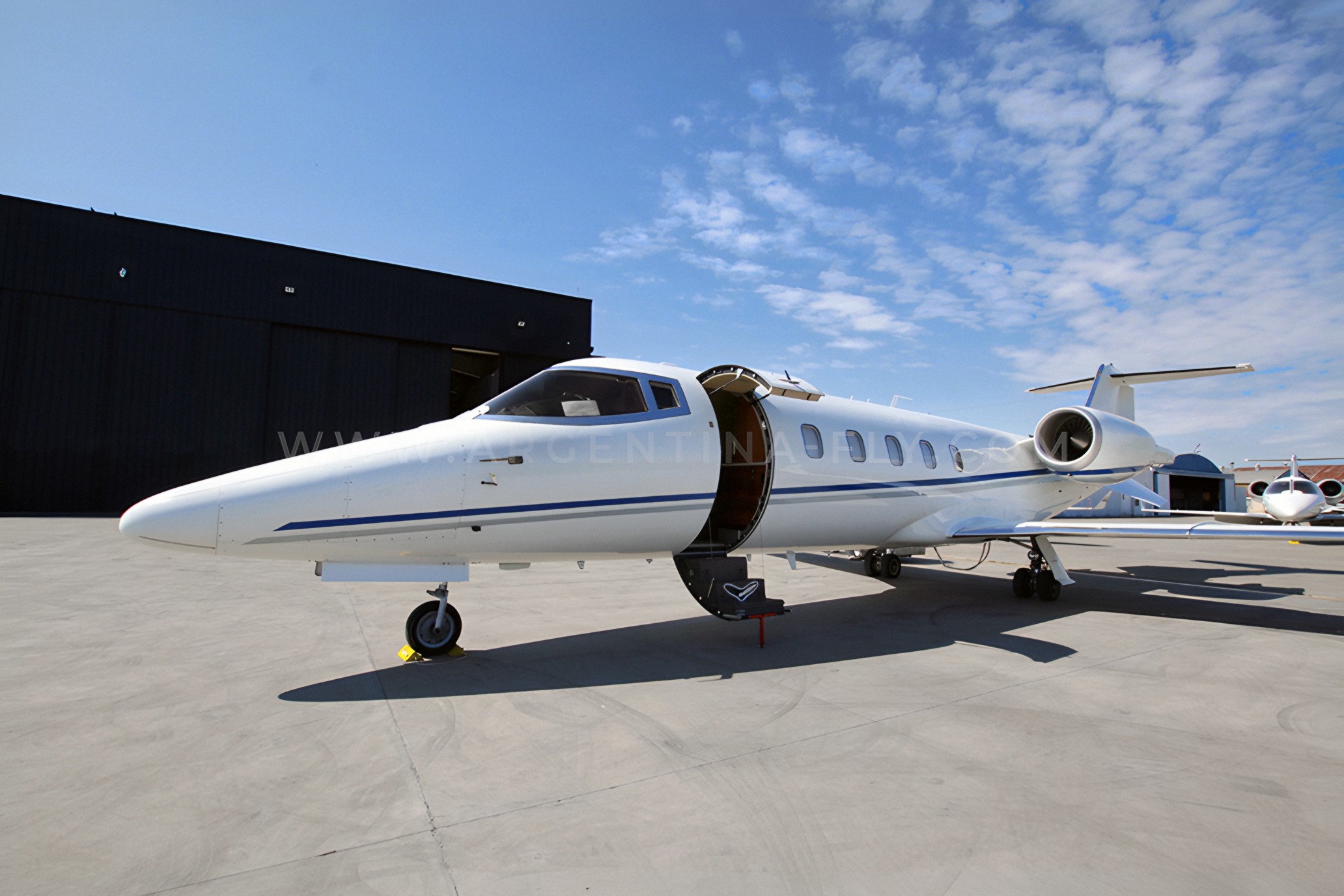
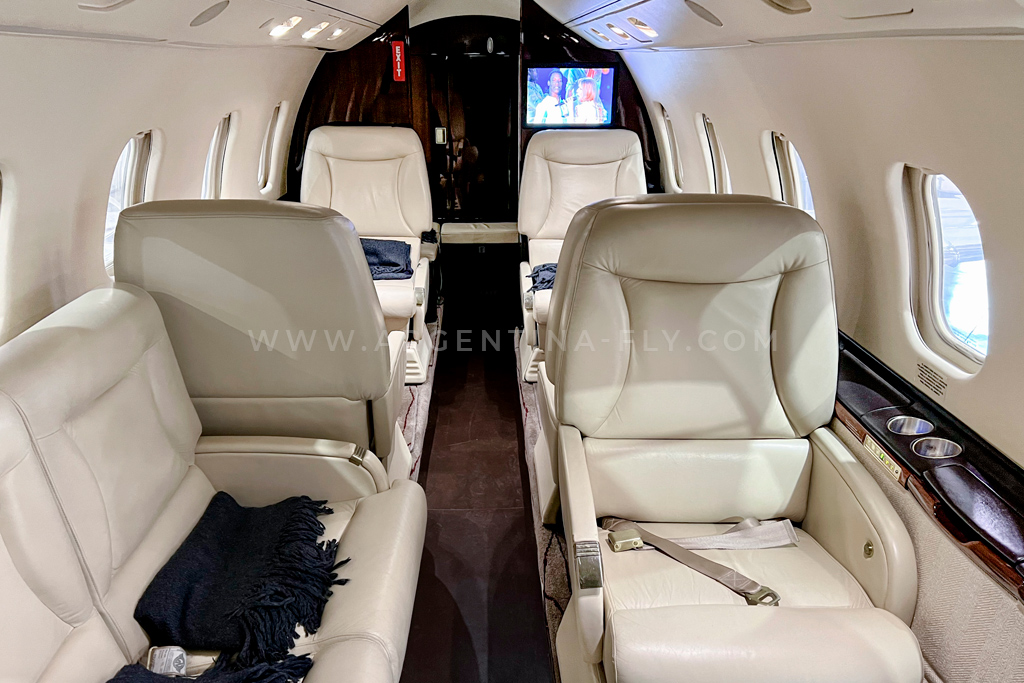
Learjet 60
Midsize jet with a spacious cabin and excellent cruise speed, one of the most requested options for executive flights.
Capacity
7 passengers
Lavatory
Yes
Cabin
Pressurized
Luggage
Moderate
Wi-Fi
Portable Starlink
 Safety certifications
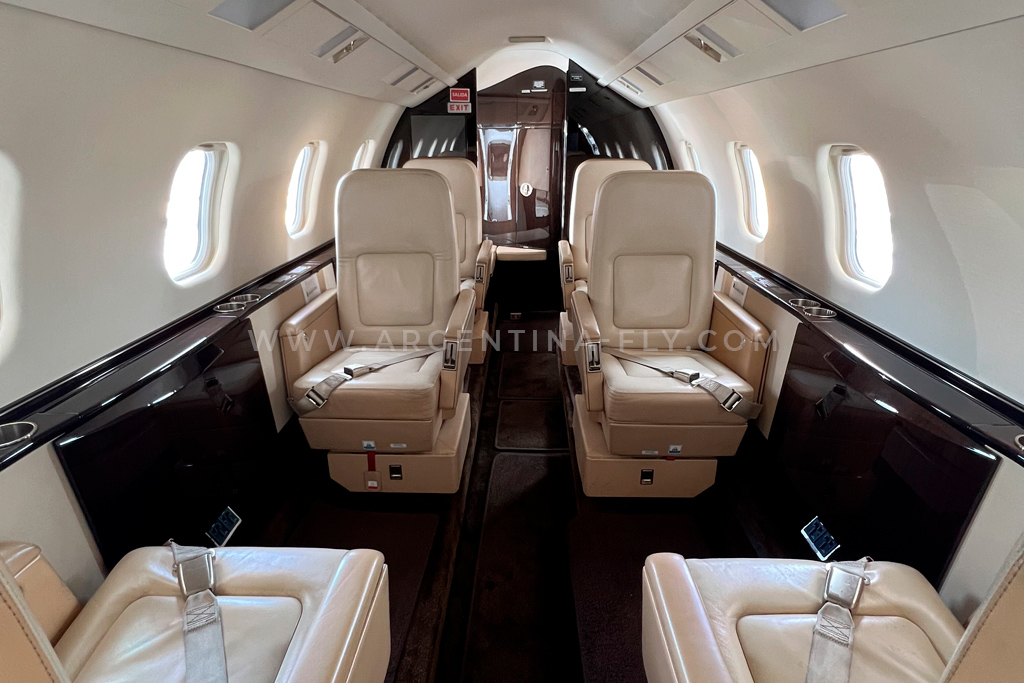
Learjet 60 XR
Enhanced version offering greater range and efficiency while maintaining the speed and comfort of the Learjet 60.
Capacity
6 passengers
Lavatory
Yes
Cabin
Pressurized
Luggage
Moderate
Wi-Fi
Not available
Safety certifications
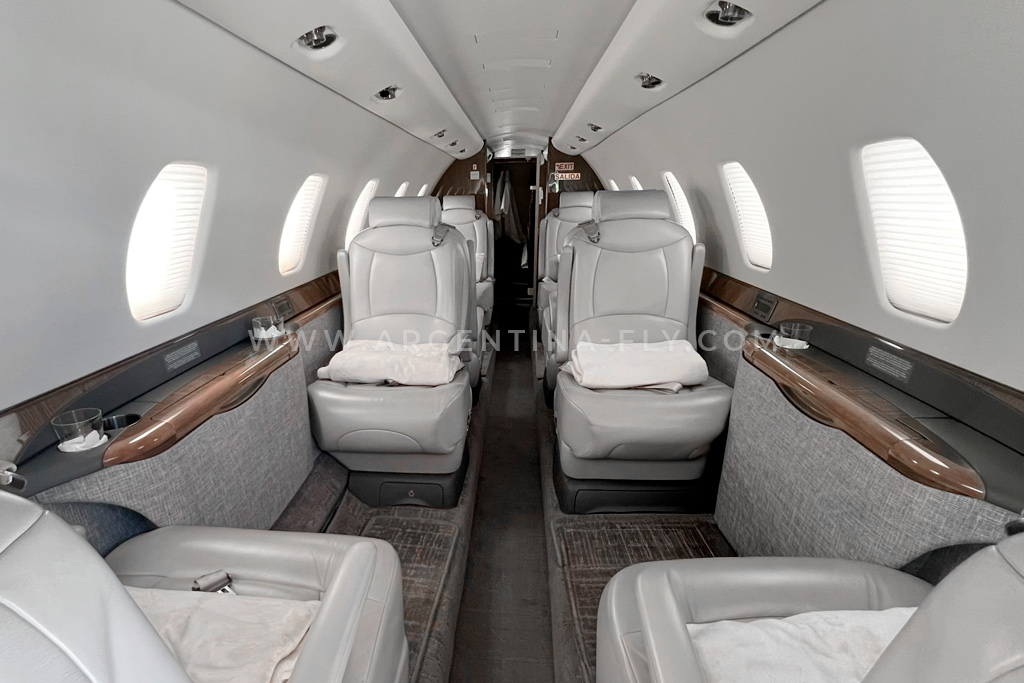
Citation Sovereign
Midsize jet with a spacious cabin, greater range and premium equipment for demanding passengers.
Capacity
8 passengers
Lavatory
Yes
Cabin
Pressurized
Luggage
Generous
Wi-Fi
Portable Starlink (extra cost)
Safety certifications
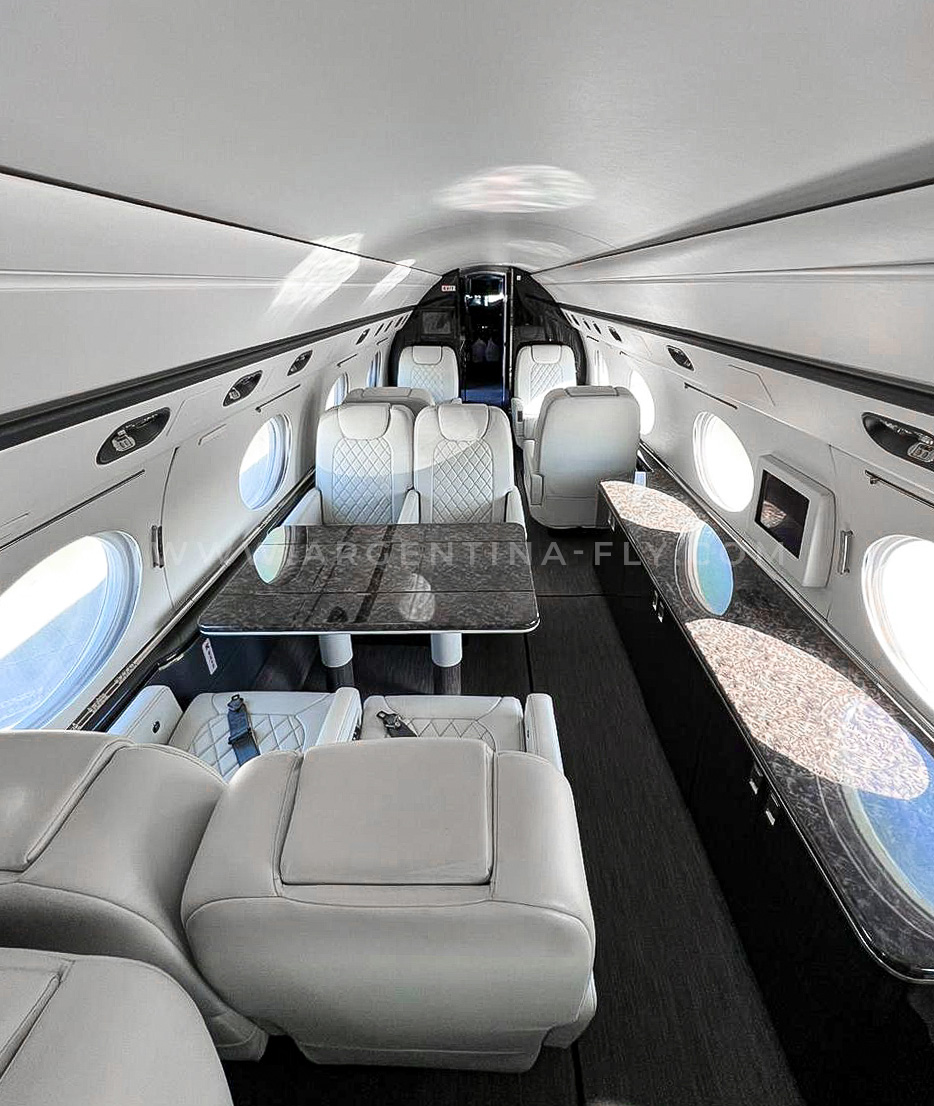
Gulfstream V
Long-range, large-cabin jet with VIP equipment for executive groups demanding the highest level of comfort.
Capacity
14 passengers
Lavatory
Yes
Cabin
Pressurized
Luggage
Spacious
Wi-Fi
Portable Starlink
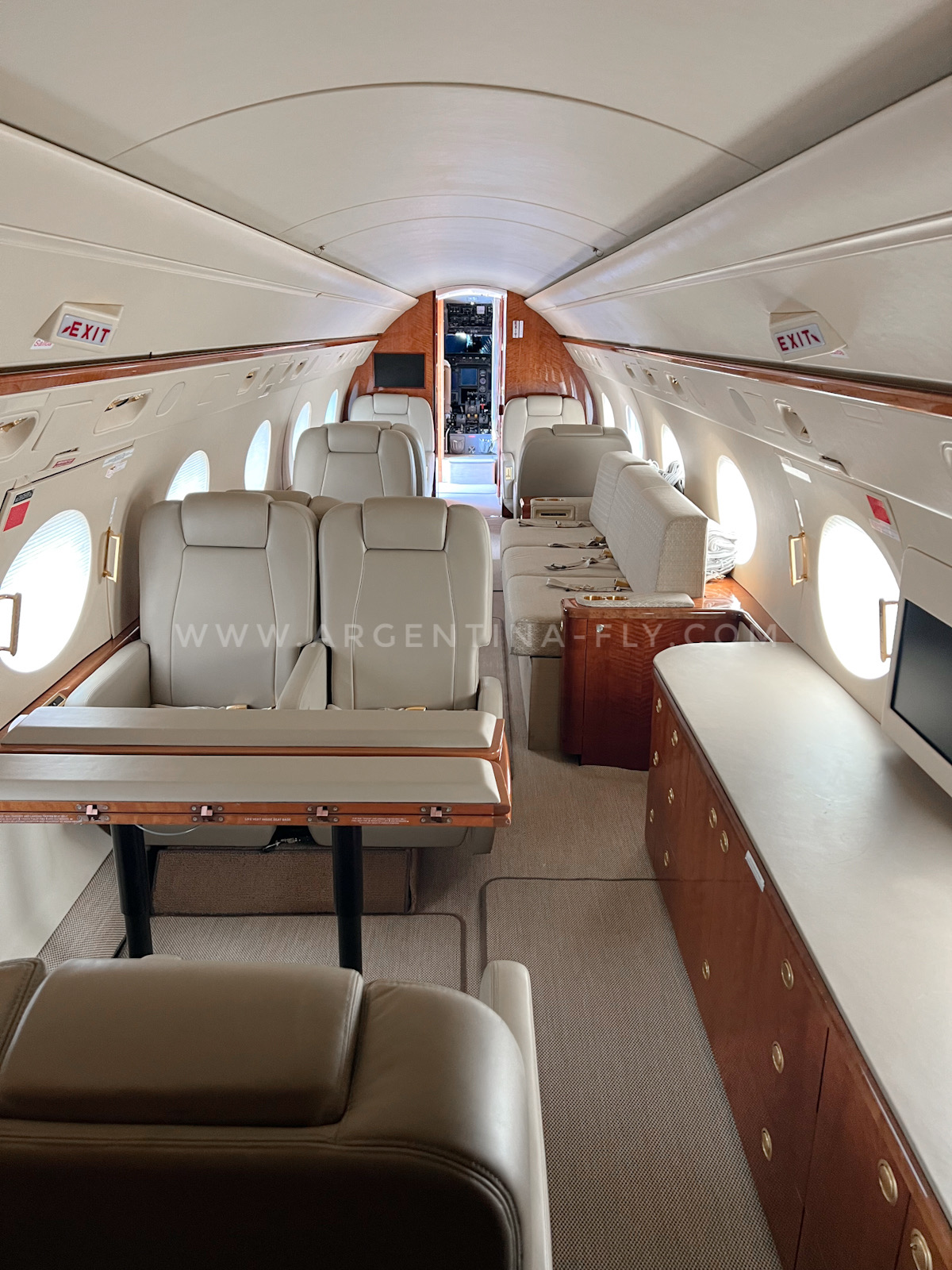
Gulfstream 400
Large jet with an exceptionally spacious cabin and long range, ideal for executive groups requiring maximum comfort.
Capacity
14 passengers
Lavatory
Yes
Cabin
Pressurized
Luggage
Generous
Wi-Fi
Built-in Starlink
Safety certifications
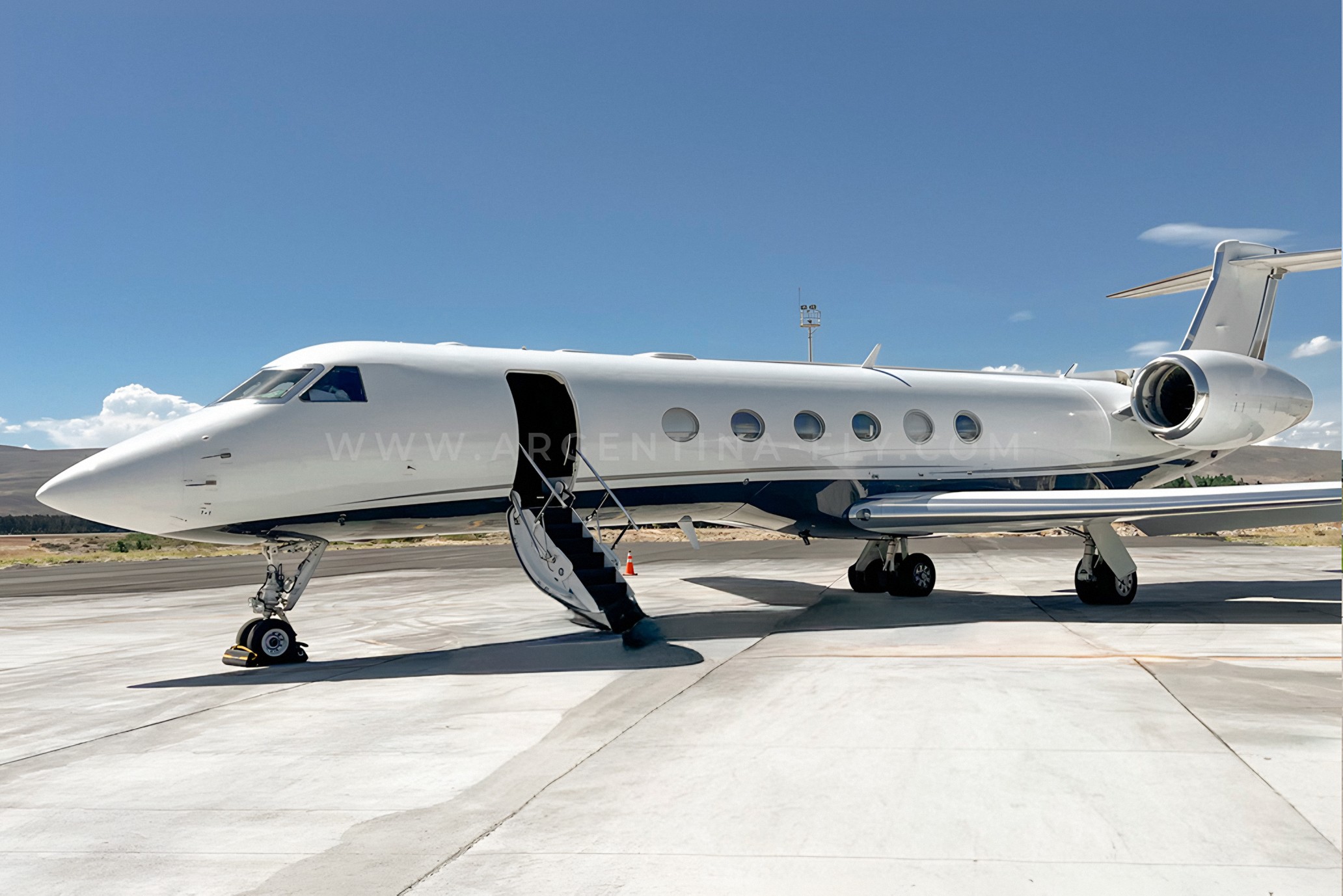
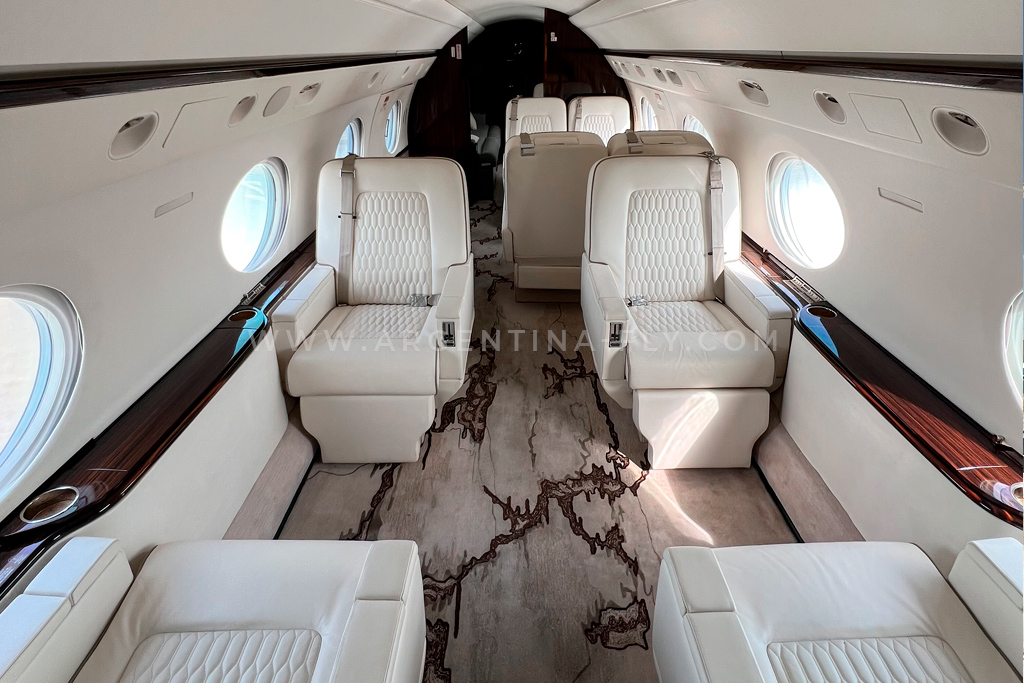
Gulfstream V
Long-range, large-cabin jet with VIP equipment for executive groups demanding the highest level of comfort.
Capacity
14 passengers
Lavatory
Yes
Cabin
Pressurized
Luggage
Generous
Wi-Fi
Built-in Starlink
Safety certifications
Other routes from Buenos Aires
Destinations near Cancún, with the lowest reference fare and the shortest flight time.
Cancún
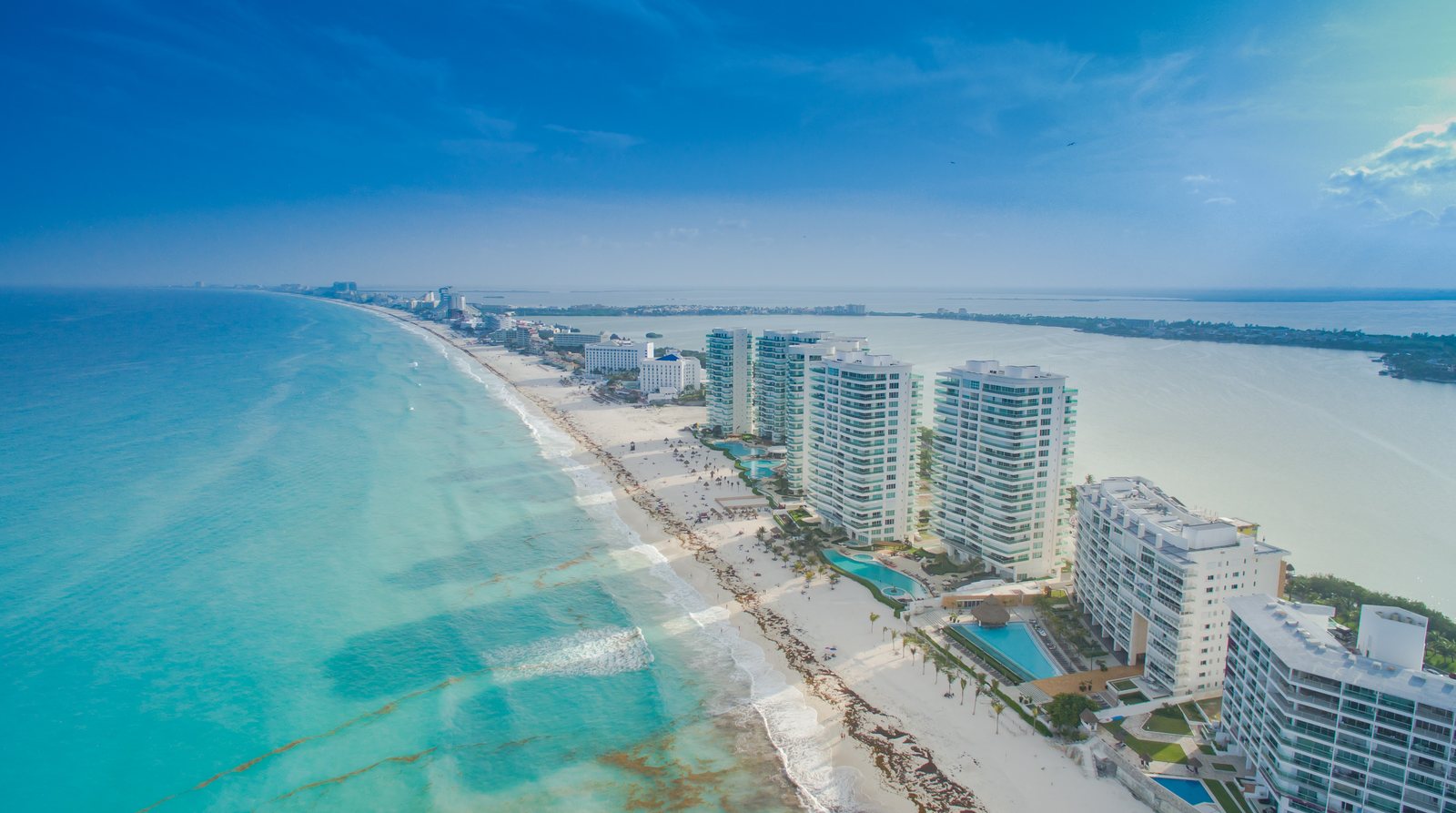
From Cancún airport, the coast of Quintana Roo opens in three directions: to the east, the Hotel Zone between the Caribbean and the Nichupté Lagoon, with ferries to Isla Mujeres; to the south, the Riviera Maya, from Puerto Morelos to Tulum, with reef, cenotes and a Maya city on a clifftop; inland, Cobá and Chichén Itzá. Holbox lies to the north, and Cozumel faces Playa del Carmen. From Buenos Aires it is 7,078 km: a private jet arrives in 8 h 30 to 9 h 05, depending on the aircraft.
The Hotel Zone and Isla Mujeres
The strip between the Caribbean and the Nichupté Lagoon, and an island twenty minutes away by ferry.
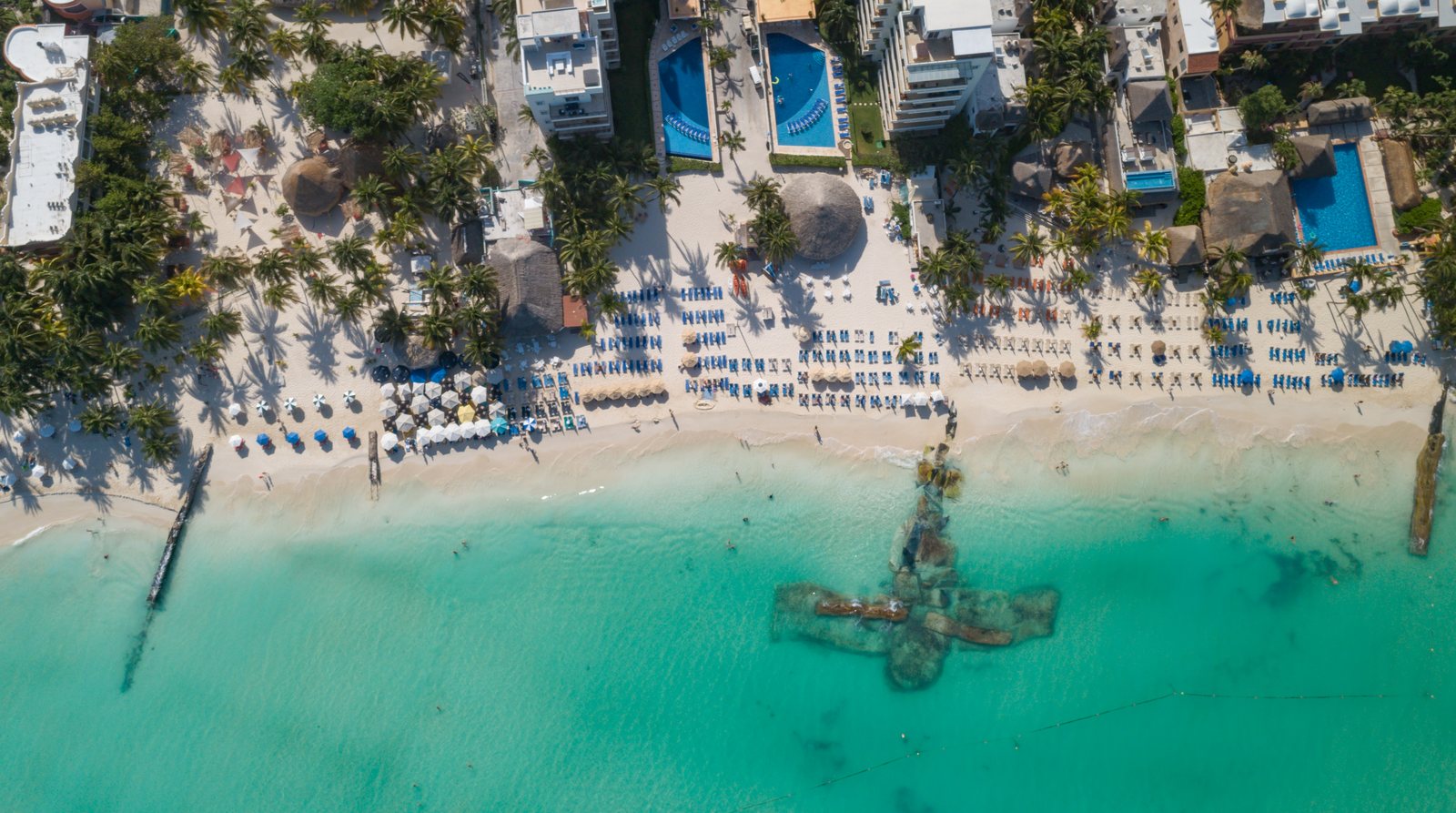
The Hotel Zone runs between the Caribbean Sea and the Nichupté Lagoon, about twenty minutes from the airport. All beaches are public: the first ones, such as Langosta, Tortugas, Caracol and Gaviota Azul, have gentle waves; farther south, Chac Mool, Marlín, Ballenas and Delfines get bigger waves and concentrate the water sports.
At kilometer 18 of Kukulcán Boulevard is El Rey, a former Maya port with two plazas and remains of mural painting; it is open every day from 8 a.m. to 5 p.m. At kilometer 16.5, the Museo Maya de Cancún is open Tuesday to Sunday from 9 a.m. to 5 p.m., and through it you enter the San Miguelito archaeological site. Off Punta Cancún and Punta Nizuc, the reef has been a national park since 1996; between Cancún and Isla Mujeres, MUSA, the Underwater Museum of Art, gathers more than 500 submerged sculptures.
Isla Mujeres is seven kilometers long and is reached in about twenty minutes by ferry from Puerto Juárez or from the Hotel Zone terminals. Playa Norte has shallow water and gentle waves; at the other end, Punta Sur, the easternmost point of Mexico, holds the remains of the Maya temple of Ixchel on twenty-meter cliffs. 30 km to the north, Isla Contoy is an uninhabited national park with more than 210 recorded bird species.
What to see
- El ReyA former Maya port at km 18 of the Hotel Zone; every day, 8 a.m. to 5 p.m.
- Isla ContoyAn uninhabited national park 30 km north of Isla Mujeres; a bird sanctuary.
- MUSAUnderwater Museum of Art between Cancún and Isla Mujeres, with more than 500 sculptures.
- Museo Maya de CancúnRun by INAH, Mexico's national institute of anthropology and history, at km 16.5; Tuesday to Sunday, with access to San Miguelito.
- Playa NorteOn Isla Mujeres: white sand, shallow water and gentle waves.
- Punta SurThe easternmost point of Mexico, with the temple of Ixchel on the cliff.
The Riviera Maya
From Puerto Morelos to Tulum on Federal Highway 307: reef, sea turtles and MICHELIN Key resorts.
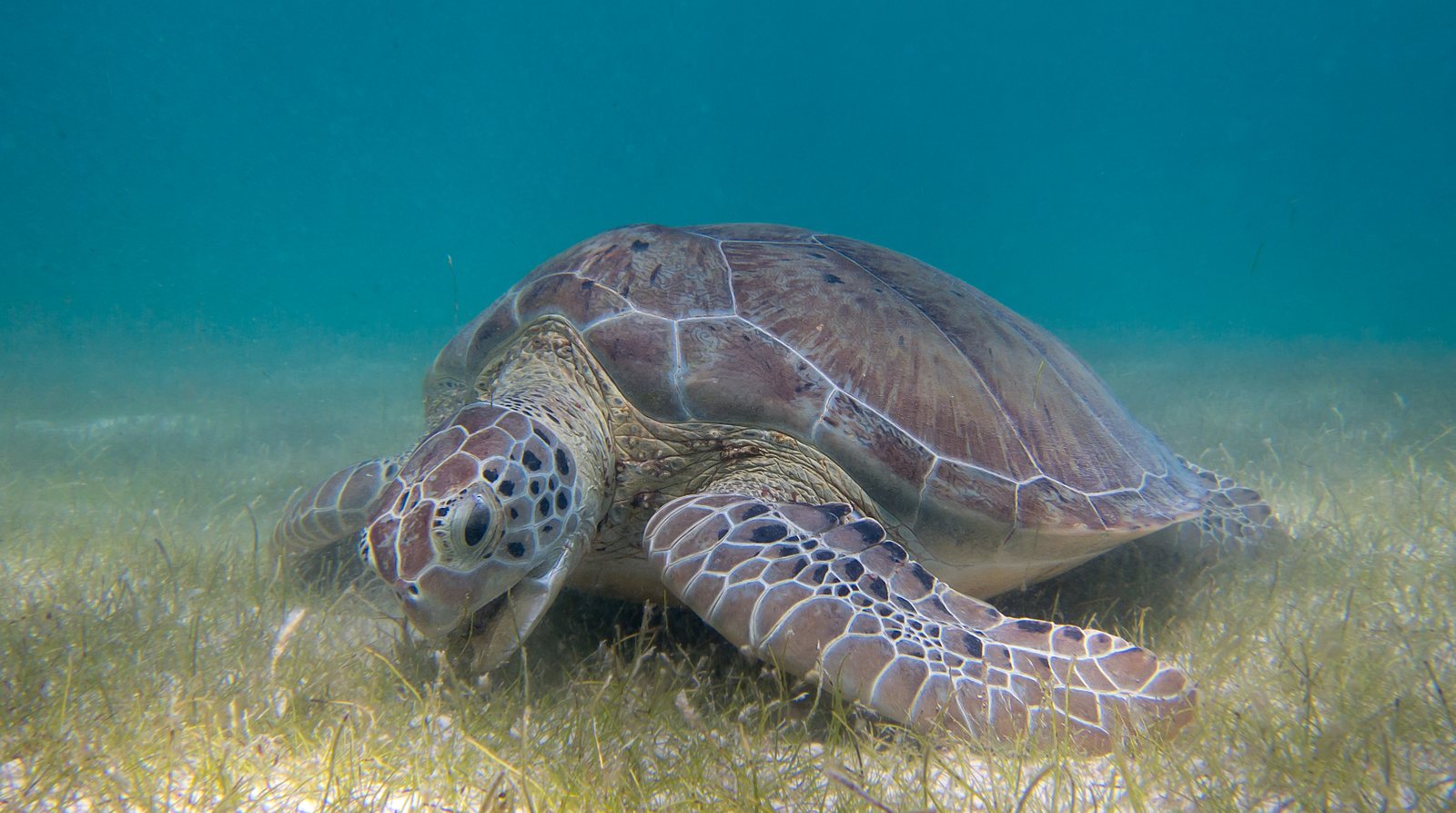
Puerto Morelos, about twenty minutes from the airport, is a fishing village with a lighthouse that has leaned since Hurricane Beulah in 1967. Offshore, the Puerto Morelos Reef National Park protects the stretch of the Mesoamerican Reef closest to the coast: it acts as a breakwater, and snorkeling trips leave from the pier, with local guides and in small groups.
Farther south come Playa del Carmen, Xpu-Há, Paamul, Akumal Bay, known for its sea turtles, and Xcacel-Xcacelito, a turtle sanctuary. The drive from Puerto Morelos to Tulum on Highway 307 takes just over an hour.
In the MICHELIN Guide, Hotel Esencia, in Xpu-Há, is the only hotel in the Mexican Caribbean with Three Keys; Rosewood Mayakoba, Banyan Tree Mayakoba, Etéreo and Maroma hold two. For dining, Cocina de Autor Riviera Maya, at the Grand Velas, and Le Chique, at Hotel Xcaret Arte, each hold one MICHELIN Star.
Where to stay
- Banyan Tree MayakobaIn Mayakoba, among mangroves and lagoons, in Playa del Carmen. Holds two MICHELIN Keys; Forbes Travel Guide Four-Star.
- Chablé MaromaIn Punta Maroma. Holds one MICHELIN Key.
- Etéreo, Auberge Resorts CollectionIn Kanai, Playa del Carmen. Holds two MICHELIN Keys.
- Hotel EsenciaIn Xpu-Há, the former home of an Italian duchess. Holds three MICHELIN Keys; Forbes Travel Guide Five-Star.
- Maroma, A Belmond HotelAt km 51 of the Cancún-Tulum highway. Holds two MICHELIN Keys; Forbes Travel Guide Five-Star.
- NIZUC Resort & SpaIn Punta Nizuc, Cancún. Holds one MICHELIN Key; Forbes Travel Guide Five-Star.
- Rosewood MayakobaIn Mayakoba, Playa del Carmen. Holds two MICHELIN Keys; Forbes Travel Guide Five-Star.
In the MICHELIN Guide
- Axiote Cocina de MéxicoIn Playa del Carmen; Bib Gourmand.
- Cocina de Autor Riviera MayaAt the Grand Velas Riviera Maya; one Star.
- Le ChiqueAt Hotel Xcaret Arte; one Star.
- Punta CorchoFish and seafood in Puerto Morelos; Bib Gourmand.
Tulum, Cobá and Sian Ka'an
The walled city above the sea, the pyramid in the jungle and a World Heritage reserve.
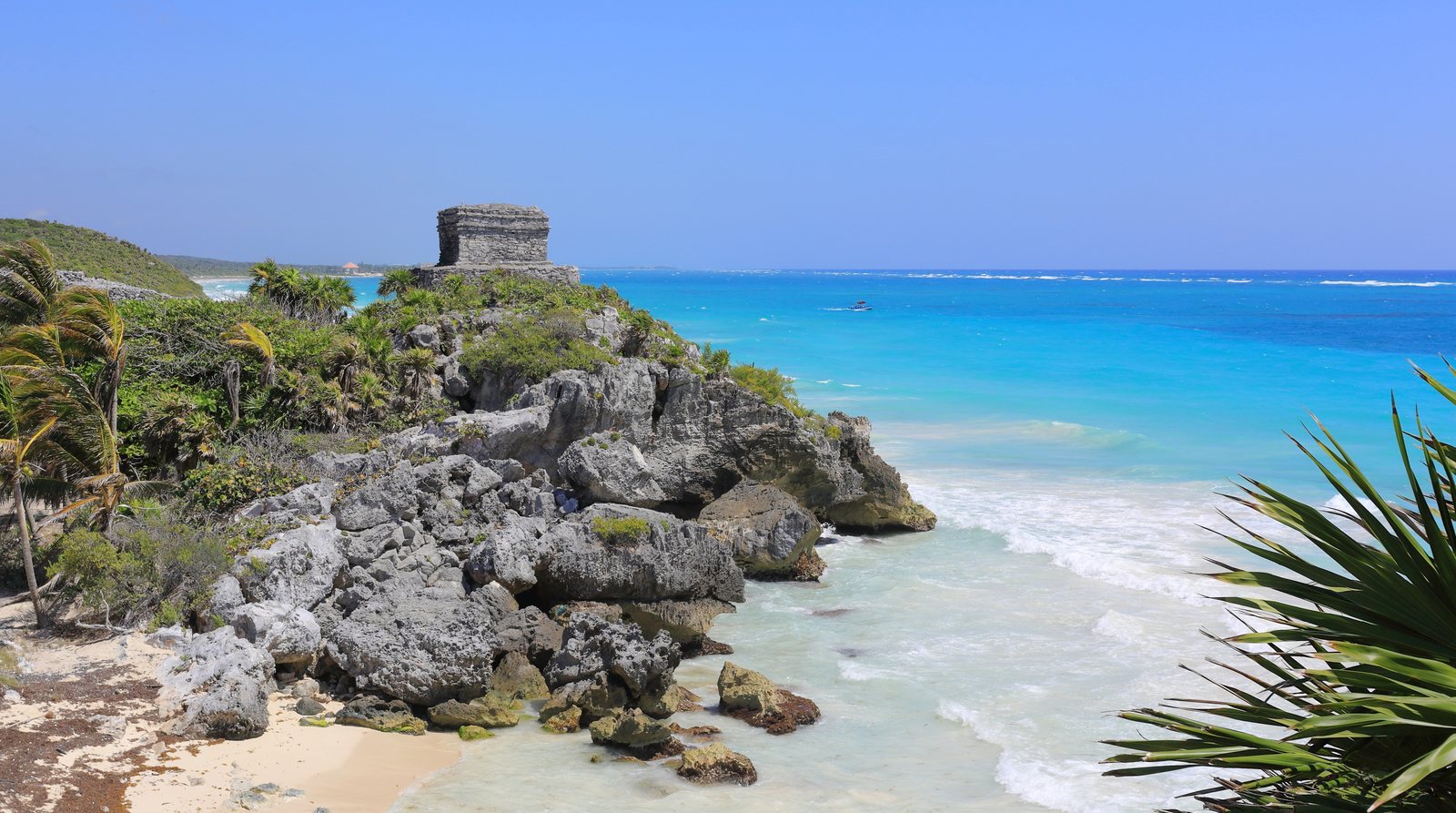
Tulum was one of the main Maya cities of the 13th and 14th centuries: a walled coastal city on the highest part of the coast, whose Temple of the Frescoes preserves mural paintings. The archaeological site is open every day from 8 a.m. to 5 p.m., with last entry at 3:30 p.m., and lies within Tulum National Park, which charges its own admission.
Cobá is inland, between two lagoons in the jungle, with the Nohoch Mul pyramid. It is reached on Highway 307 and State Highway 109; it is open every day from 8 a.m. to 5 p.m., with last entry at 4 p.m.
To the south, Sian Ka'an, «origin of the sky» in Maya, has been a UNESCO World Heritage Site since 1987: 528,000 hectares of tropical forest, mangrove, marsh and barrier reef, with more than 300 bird species. Its canals, opened by the Maya for trade, are explored by boat and by swimming, always with authorized operators. Inside the reserve, beside the lagoon, is the Muyil archaeological site.
What to see
- CobáBetween two lagoons in the jungle, with the Nohoch Mul pyramid; open every day.
- MuyilA former Maya port beside the lagoon, inside Sian Ka'an.
- Sian Ka'anA biosphere reserve and World Heritage Site since 1987; visited with authorized operators.
- Tulum archaeological siteThe walled city on the cliff; every day, 8 a.m. to 5 p.m.
Where to stay in Tulum
- La Zebra, a Small Luxury HotelOn the beach. Holds one MICHELIN Key.
- Wakax HaciendaA boutique hotel around a cenote. Holds two MICHELIN Keys.
Chichén Itzá
The former Maya capital of Yucatán, a World Heritage Site since 1988.
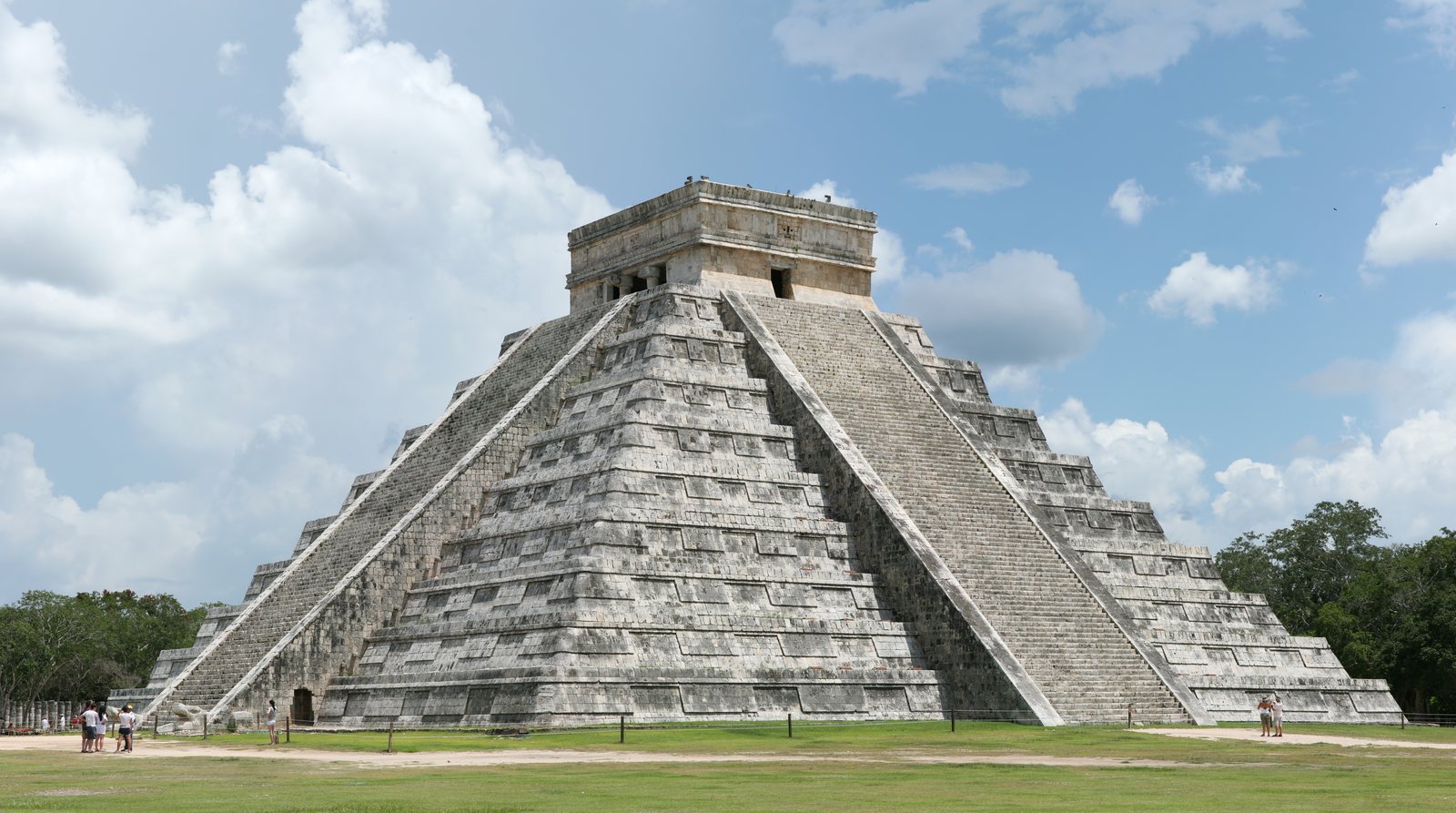
At its height, Chichén Itzá had up to 50,000 inhabitants. Its main structure, El Castillo, is a temple associated with Kukulkán: at the spring and fall equinoxes, the shadow of the serpent descends its stairway. Around the Great Leveling, the large artificial platform at the heart of the site, stand the Ball Court, the Temple of the Warriors and the Platform of Venus; El Caracol, with its round base, was an observatory, and a sacbé, a Maya causeway, links the plaza with the Sacred Cenote.
It is in Yucatán, on Federal Highway 180 between Mérida and Cancún, with the turnoff at Pisté. It is open every day from 8 a.m. to 4 p.m., with last entry at 3 p.m.; from 11 a.m. to 2 p.m. it gives priority to agency groups. The Gran Museo de Chichén Itzá is open from 8 a.m. to 5 p.m., and the Tren Maya has a Mérida–Chichén Itzá route.
What to see
- Ball CourtOn the Great Leveling, beside El Castillo.
- El CaracolThe observatory with a round base.
- El CastilloThe temple of Kukulkán, where the equinoxes play out.
- Gran Museo de Chichén ItzáMonday to Sunday, 8 a.m. to 5 p.m.
- Sacred CenoteLinked to the main plaza by a sacbé.
The cenotes
Freshwater sinkholes of the underground river network that runs beneath the coast.
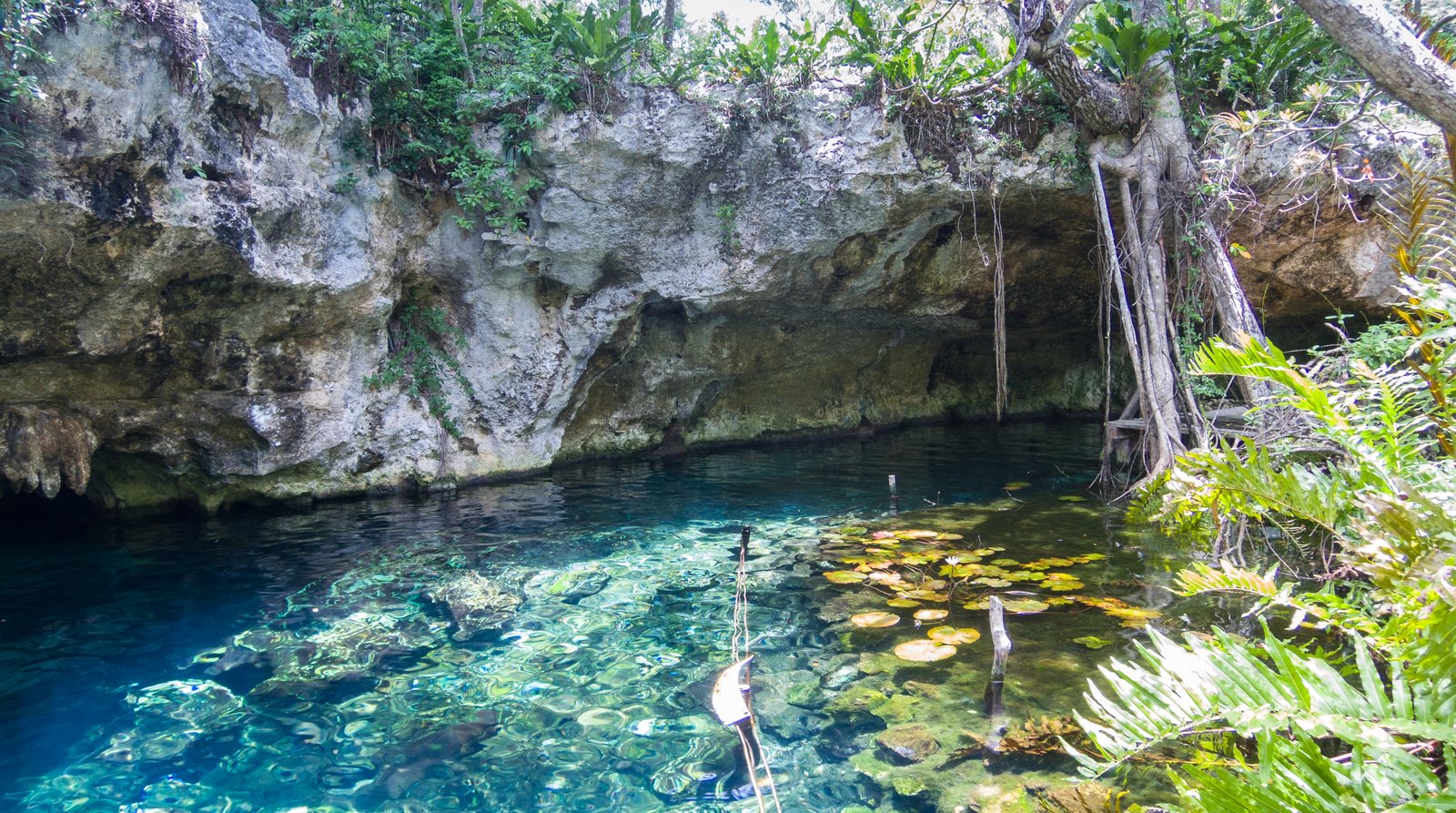
Beneath the whole Riviera Maya runs a network of cenotes and underground rivers. People swim and snorkel in them, and divers explore their caverns among stalactites. Near Tulum, Gran Cenote and Calavera are a few minutes from town on the road to Cobá, and Dos Ojos, to the north, on Highway 307; Jardín del Edén and Cenote Azul are on the same stretch of coast.
In Puerto Morelos begins the Ruta de los Cenotes, a road into the jungle with dozens of open, semi-open and cave cenotes, such as Zapote, Siete Bocas, Kin Ha, La Noria, Las Mojarras and Verde Lucero. At the entrance to town, the Jardín Botánico Dr. Alfredo Barrera Marín, a botanical garden, gathers the flora of the coastal forest, with trails through the mangrove.
What to see
- Dos OjosNorth of Tulum, on Highway 307; snorkeling and cavern diving.
- Gran CenoteA few minutes from Tulum, on the road to Cobá.
- Jardín Botánico Dr. Alfredo Barrera MarínAt the entrance to Puerto Morelos, with trails through the mangrove.
- Ruta de los CenotesFrom Puerto Morelos into the jungle: open, semi-open and cave cenotes.
Cozumel and the reef
The island of coral walls, across from Playa del Carmen.
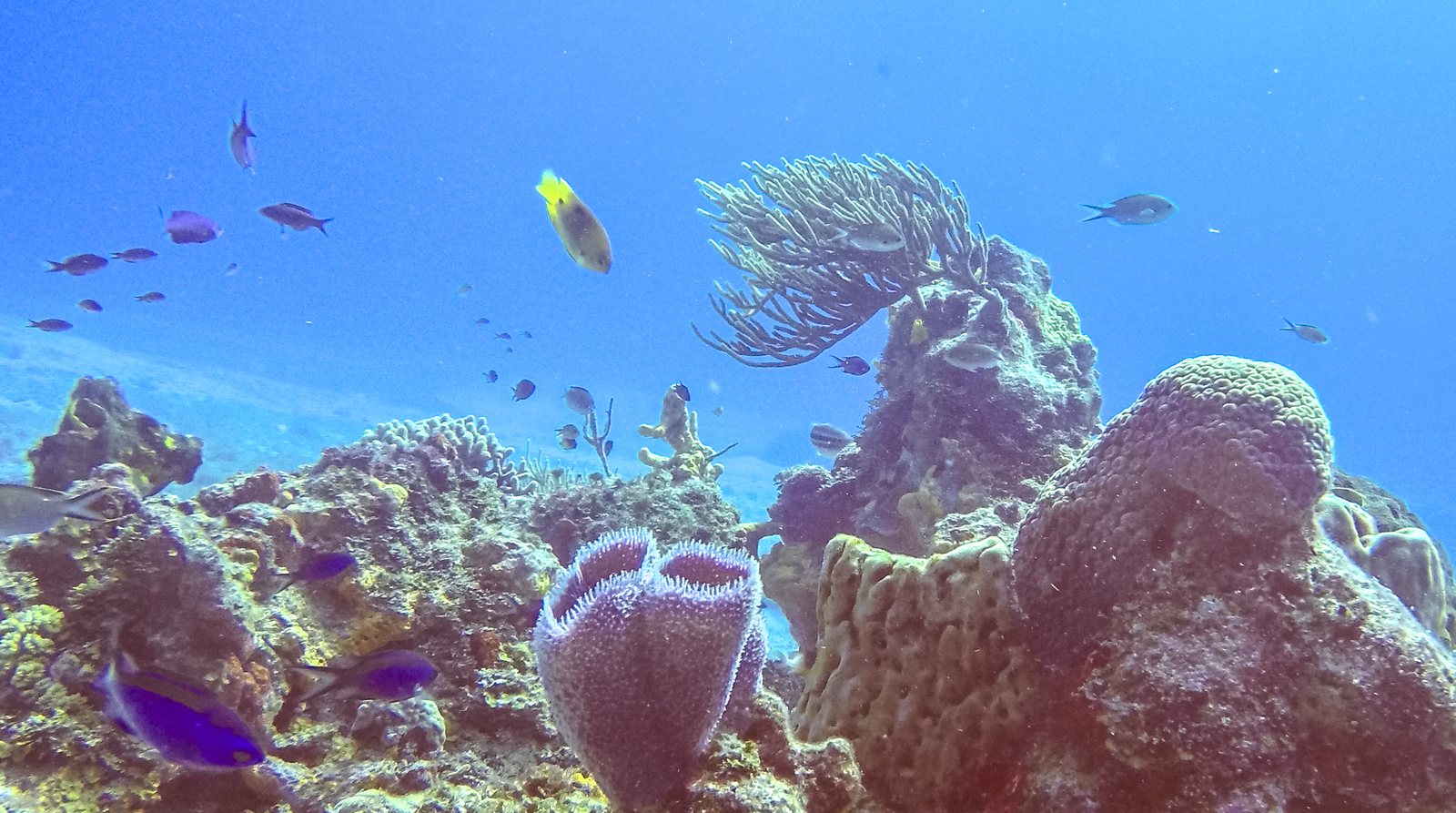
Cozumel lies across from Playa del Carmen, about 45 minutes by ferry, and has its own international airport, ten minutes from San Miguel. Its reefs have been a national park since 1996, covering almost 12,000 hectares: on the west coast, Palancar, Colombia and Santa Rosa have coral walls and water with excellent visibility. At Chankanaab the reef is so close to shore that it can be explored by snorkeling, and El Cielo, a sandbar with starfish, is reached by boat.
In the center of the island, San Gervasio was the sanctuary of Ixchel, goddess of fertility, which Maya women reached by canoe. To the south, the Punta Sur park brings together the Faro Celarain lighthouse, Laguna Colombia and open beaches. From December to March you can see eagle rays, and from May to October sea turtles nest.
What to see
- ChankanaabA reef right off the shore, inside the Cozumel Reefs National Park.
- El CieloA sandbar with starfish; reached by boat.
- PalancarCoral walls on the west coast.
- Punta SurFaro Celarain lighthouse, Laguna Colombia and open beaches.
- San GervasioThe Maya sanctuary of Ixchel, in the center of the island.
Holbox and the whale shark
An island of sand streets in the Yum Balam protected area.
Holbox is about 40 km long and 2 km wide and lies within the Yum Balam Flora and Fauna Protection Area. It has no paved streets or private cars: you get around on foot, by bike or by golf cart. The ferry leaves from Chiquilá, about two and a half hours by road from Cancún airport, and crosses in about twenty minutes.
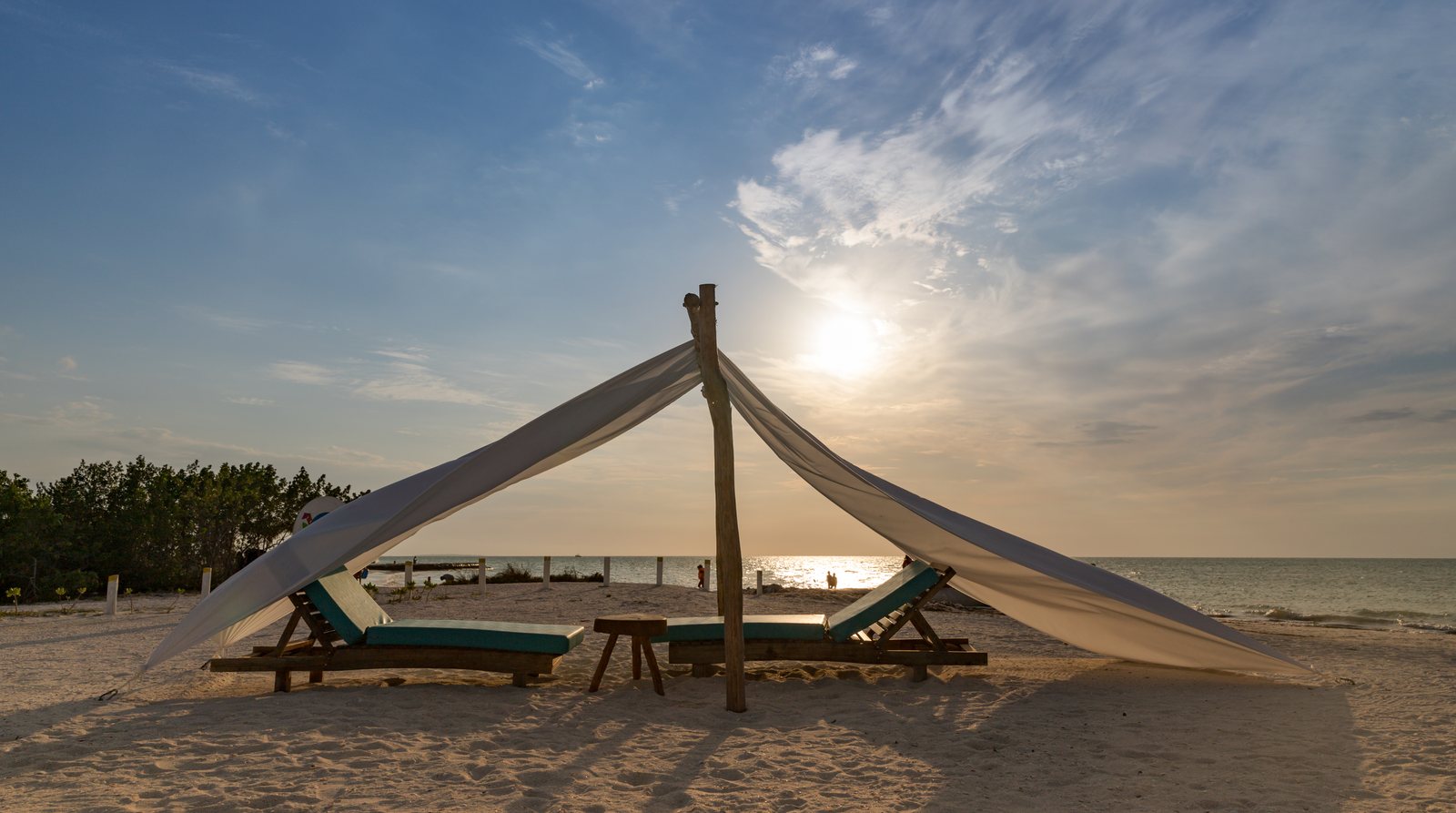
The whale shark comes to these waters every year; its viewing season runs from May 15 to September 17, with authorized operators, and trips also leave from Isla Mujeres. Flamingos can be seen from April to October at Punta Mosquito, on the north coast; Punta Cocos, just over two kilometers from the village, is the place for sunset.
What to see
- Punta CocosJust over two kilometers from the village; the sunset spot.
- Punta MosquitoSandbars on the north coast, with flamingos from April to October.
- Three Islands tourIsla Pájaros, the Yalahau freshwater spring and Isla Pasión.
Arrival
From departure to destination.
- Departure
- From San Fernando (FDO), Aeroparque (AEP) or Ezeiza (EZE). The fare may change depending on where each aircraft is based.
- Airport
- Cancún International (CUN), south of the city and about twenty minutes from the Hotel Zone. Operated by ASUR, with an FBO terminal for general aviation; immigration and customs are cleared on arrival.
- Documents
- U.S. citizens: a passport valid at the time of entry; no visa for tourist visits of up to 180 days. Argentine citizens: a valid passport, also without a visa for up to 180 days; other nationalities, depending on the country. On arrival, travelers complete the Forma Migratoria Múltiple (FMM), Mexico's immigration entry form, which is kept until departure. This information is for guidance only: always confirm entry and health requirements with the official Mexican authorities before you travel.
- Visitax
- Foreign tourists pay a contribution to the state of Quintana Roo; it is paid online on the state government's official portal.
When to go
The seasons at the destination.
- December to April
- The months with the most pleasant weather; from February to April less than 60 mm of rain falls per month, with 38.7 mm in March.
- December to March
- Sailfish off Isla Mujeres and eagle rays in Cozumel.
- March and September
- Equinoxes: the shadow of the serpent descends El Castillo at Chichén Itzá.
- May to September
- Whale shark season, from May 15 to September 17.
- May to October
- Sea turtles nest on the beaches of the coast and Cozumel.
- June 1 to November 30
- Atlantic hurricane season. October is the rainiest month, with 277 mm.
Key facts
Winter January
- Average low
- 20.0°
- Average high
- 28.7°
103.8 mm of rain
Spring April
- Average low
- 22.9°
- Average high
- 33.1°
42.3 mm of rain
Summer July
- Average low
- 25.0°
- Average high
- 34.8°
67.0 mm of rain
Fall October
- Average low
- 23.7°
- Average high
- 32.2°
277.1 mm of rain
- Airport
- Cancún InternationalIATA / ICAO: CUN / MMUNSouth of the city, about 20 minutes from the Hotel Zone; operated by ASUR, with an FBO terminal
- Category
- Public-use, towered, international
- Distance
- 7,078 kmFlight distance from Buenos Aires
- Annual rainfall
- 1,371.3 mm48% falls from April to September
Frequently asked questions
Price, flight time, airport, departure and travel documents.
How much does a private flight from Buenos Aires to Cancún cost?
Reference fares for a one-way private flight from Buenos Aires (San Fernando), whole aircraft, start at USD 85,730 for a midsize jet and USD 128,600 for a large jet. Passenger fees or international fees at the destination are added to the fare, depending on the aircraft, as shown on each row. Round trips are calculated in the quote tool according to the length of your stay.
How long is the flight?
Between 8 h 30 and 9 h 05, depending on the aircraft; the fastest jet on the route takes 8 h 30.
Is the flight nonstop?
It depends on the aircraft. Nonstop: the Gulfstream V. With one fuel stop: the Learjet 60, the Learjet 60 XR, the Citation Sovereign and the Gulfstream 400. In the quote tool, each aircraft shows whether it makes a stop.
Which airport does the flight land at?
Cancún International Airport (CUN / MMUN), south of the city and about twenty minutes from the Hotel Zone. It is public-use, towered and international; it is operated by ASUR, which has an FBO terminal for general aviation, and Mexican immigration and customs are cleared on arrival.
What documents do I need to travel to Mexico?
U.S. citizens need a passport valid at the time of entry and no visa for tourist visits of up to 180 days. Argentine citizens need a valid passport and no visa for tourist visits of up to 180 days. For other nationalities it depends on the country; holders of a valid U.S. visa do not need one either. On arrival, travelers complete the Forma Migratoria Múltiple (FMM), Mexico's immigration entry form, which is kept until departure, and in Quintana Roo foreign tourists pay the Visitax. This information is for guidance only: always confirm entry and health requirements with the official Mexican authorities before you travel.
What is the Visitax?
It is a contribution the state of Quintana Roo charges every foreign tourist, children included, whatever their destination within the state, Cozumel included. It is paid online on the state government's official portal, with the passport number, and the receipt with a QR code can be downloaded again later.
When is the best time to fly to Cancún and the Riviera Maya?
From December to April, the months with the most pleasant weather; from February to April less than 60 mm of rain falls per month. May to September is whale shark season, and from May to October sea turtles nest. The Atlantic hurricane season runs from June 1 to November 30, and October is the rainiest month.
What is there to do in Cancún and the Riviera Maya besides the beach?
Visit the archaeological sites of Tulum, Cobá and Chichén Itzá; swim in cenotes such as Gran Cenote or Dos Ojos; dive the reefs of Cozumel or snorkel in Puerto Morelos; explore the canals of Sian Ka'an; and, from May to September, swim with the whale shark from Holbox or Isla Mujeres.
Are the published fares final?
They are estimates. The final quote depends on dates, length of stay, aircraft type and applicable operating fees; on this international flight, international fees are added.
Where does the flight depart from?
Fares are calculated for departure from San Fernando (FDO). Departing from Aeroparque (AEP) or Ezeiza (EZE) may change the fare, depending on where each aircraft is based.

Ready to fly? Let’s talk.
Share the details of your trip and we’ll help you find the aircraft and flight solution best suited to your needs.
- WhatsApp+54 9 11 3080 7775
- Phone+54 9 11 3080 7775
- Emailinfo@argentina-fly.com
For charter operatorsList your aircraft