
- Home
- Flight quote
- Coronel Suárez
Private flights to Coronel Suárez
From USD 3,970 · 1 h 40 flight time
Results:
- Itinerary
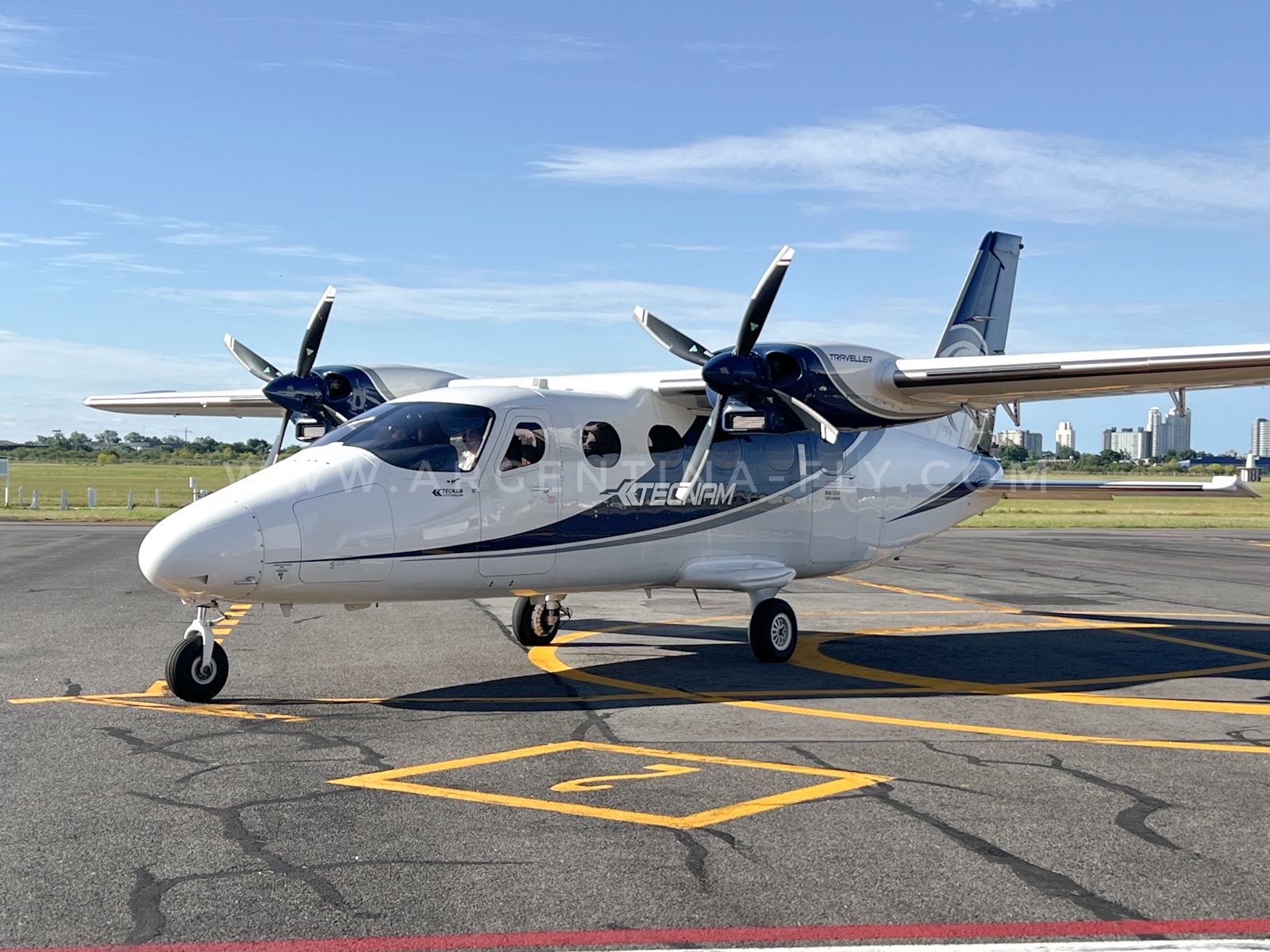
Tecnam Traveller
Piston aircraft · 9 passengers · 1 h 401 h 40flight time
USD 3,970+ VAT 10.5%
Request a quote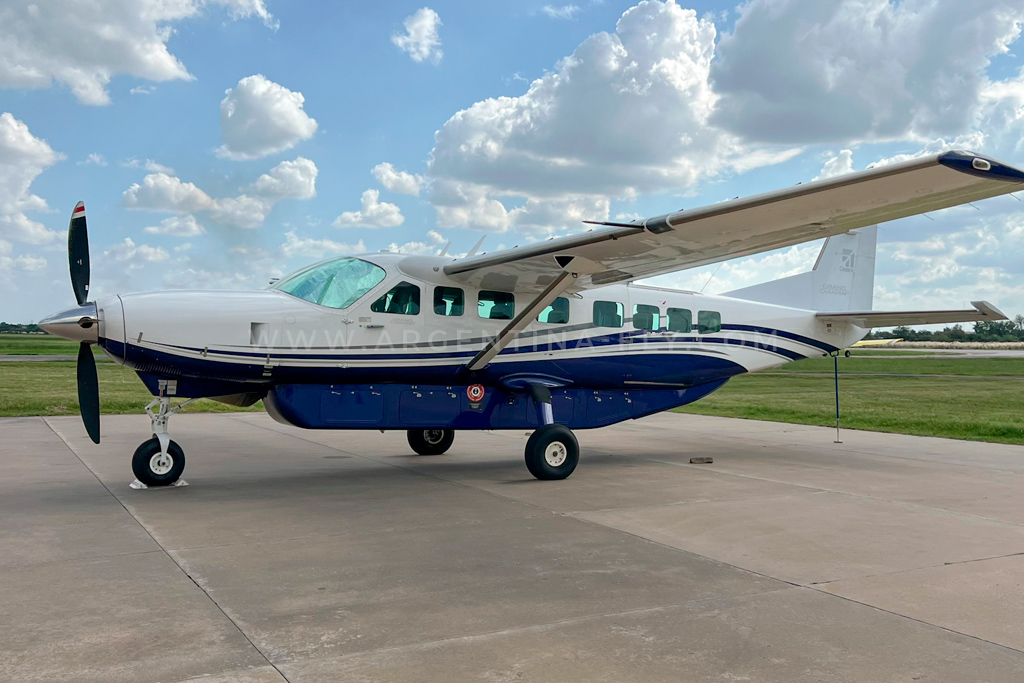
Cessna Grand Caravan
Turboprop · 9 passengers · 1 h 451 h 45flight time
USD 4,070+ VAT 10.5%
Request a quote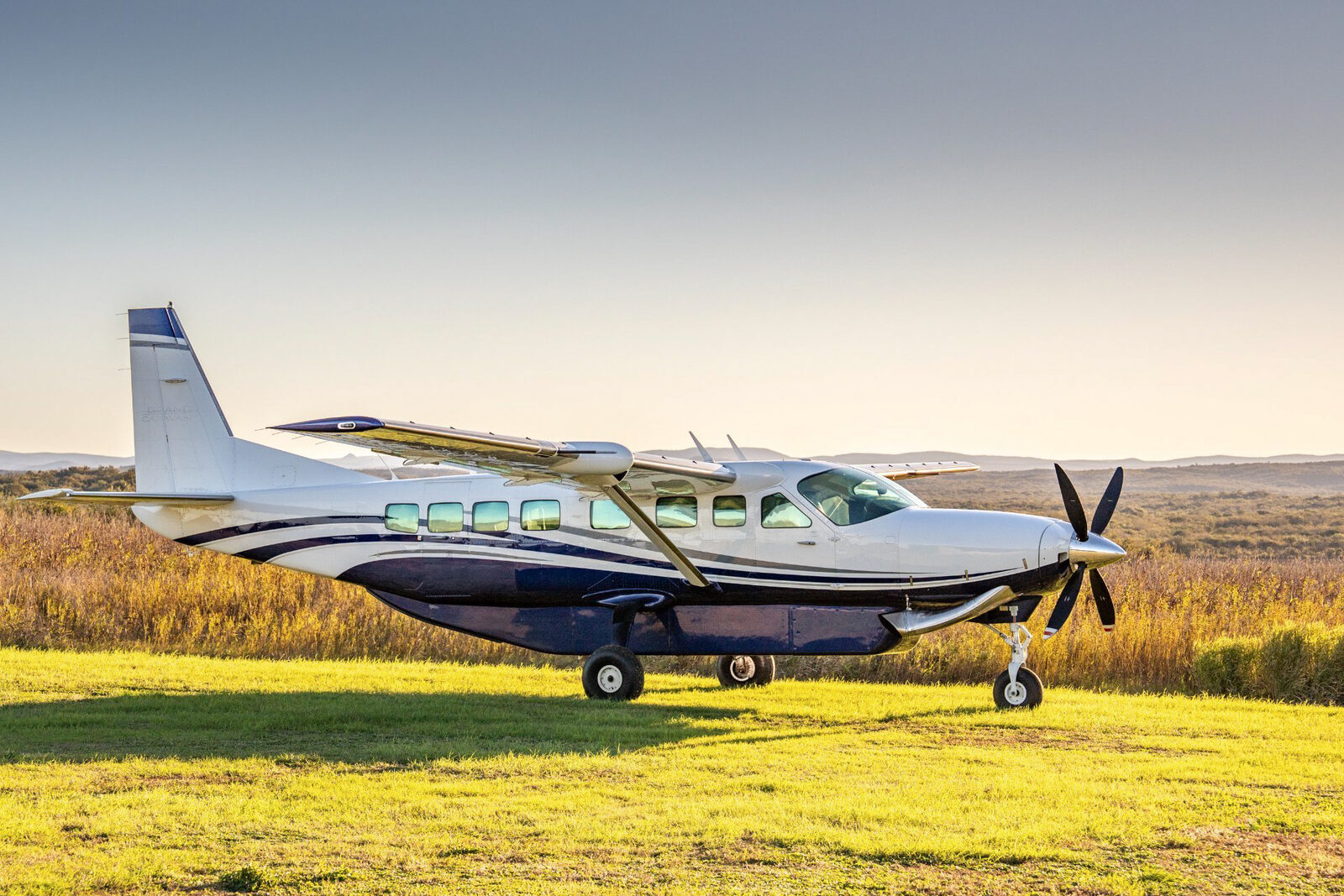
Cessna Grand Caravan Ex
Turboprop · 9 passengers · 1 h 351 h 35flight time
USD 4,350+ VAT 10.5%
Request a quote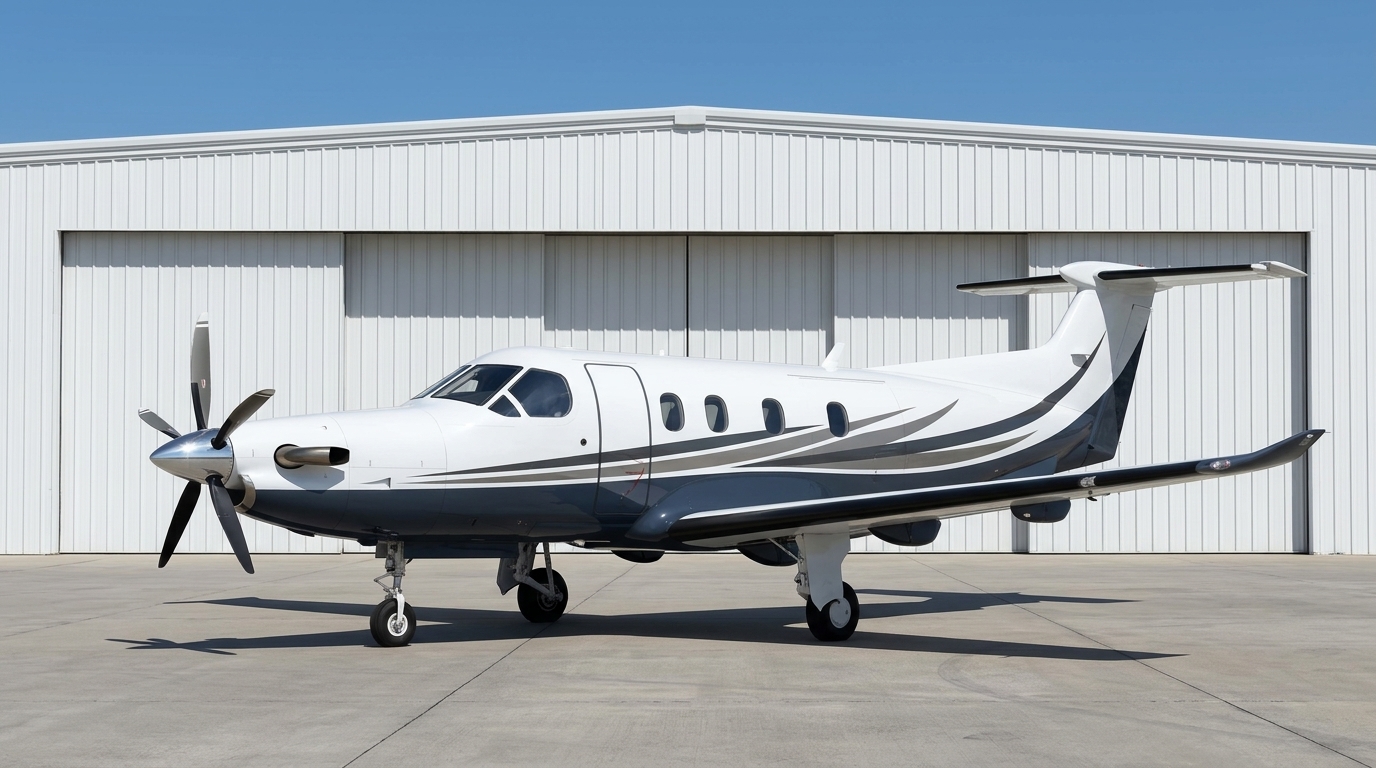
Pilatus PC12 Pro
Turboprop · 8 passengers · 1 h 101 h 10flight time
USD 4,530+ VAT 10.5%
Request a quote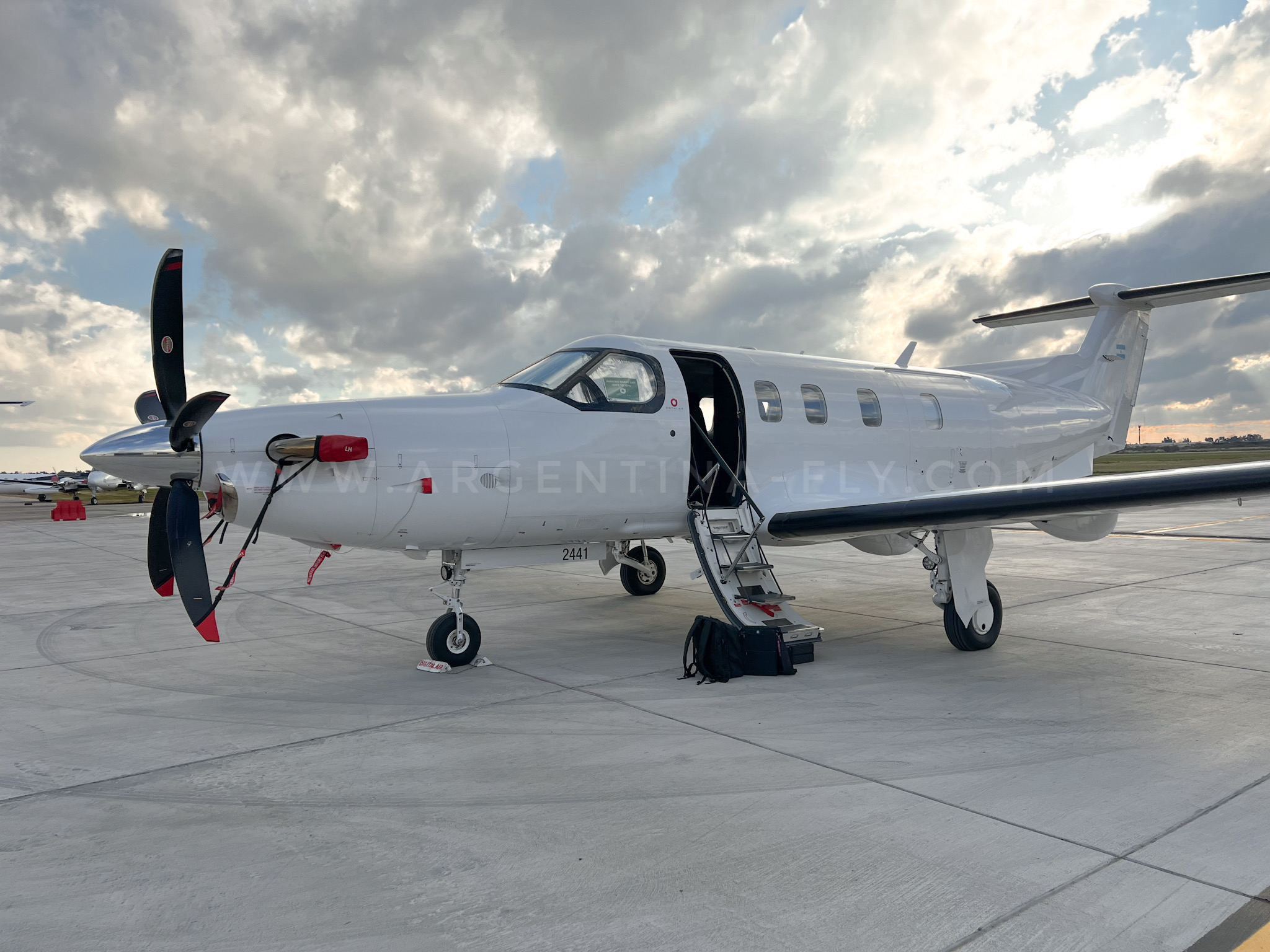
Pilatus PC-12
Turboprop · 8 passengers · 1 h 101 h 10flight time
USD 4,700+ VAT 10.5%
Request a quote
Route and airfields
Rate conditions
Please read carefully before requesting a quote.
Prices
Reference fares in US dollars (USD), for the entire aircraft. They may vary with aircraft availability and travel dates. For itineraries with several destinations, please request a tailored quote.
Not included
VAT on flights within Argentina, fees abroad on international flights (airport charges, handling and FBO, among others), and special services on request.
Base airport
Fares are calculated for departure from San Fernando (FDO). Departing from Aeroparque (AEP) or Ezeiza (EZE) may change the fare, depending on where each aircraft is based.
Reference fleet
The aircraft displayed are for reference purposes only and may vary depending on operational availability. Contact us to learn about the available options for your trip.
Rate conditions
Please read carefully before requesting your quotation.
Published prices are provided for reference only.
 Prices
Reference fares in US dollars (USD), for the entire aircraft. They may vary with aircraft availability and travel dates. For itineraries with several destinations, please request a tailored quote.
 Not included
VAT on flights within Argentina, fees abroad on international flights (airport charges, handling and FBO, among others), and special services on request.
 Base airport
Fares are calculated for departure from San Fernando (FDO). Departing from Aeroparque (AEP) or Ezeiza (EZE) may change the fare, depending on where each aircraft is based.
 Reference fleet
The aircraft displayed are for reference purposes only and may vary depending on operational availability. Contact us to learn about the available options for your trip.
Need a personalized quotation?
Request quotation
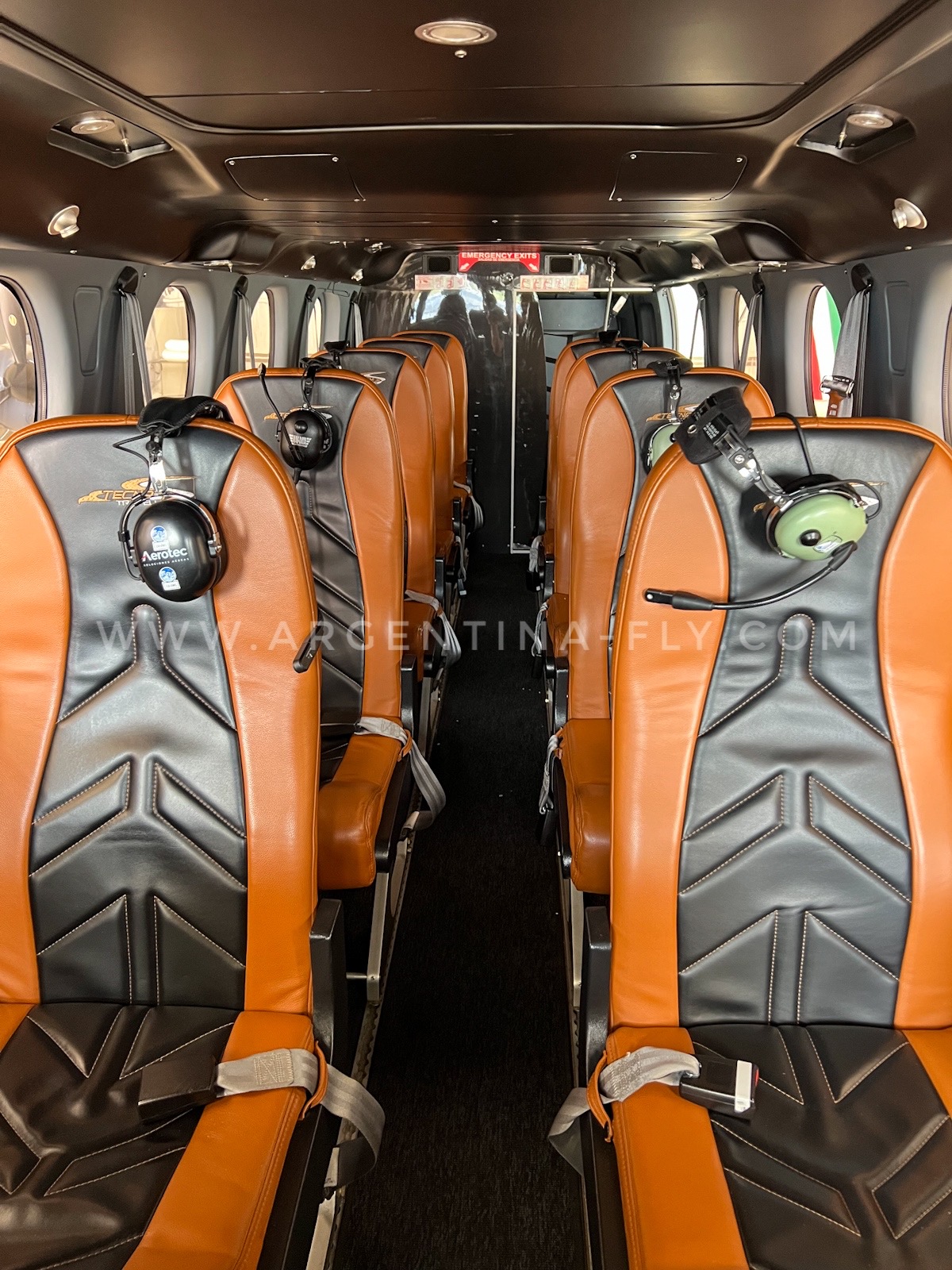
Tecnam Traveller
High-capacity twin-engine aircraft, ideal for group transfers with up to 9 passengers.
 Capacity
9 passengers
 Lavatory
Not available
 Cabin
Non-pressurized
 Luggage
Moderate
 Wi-Fi
Not available

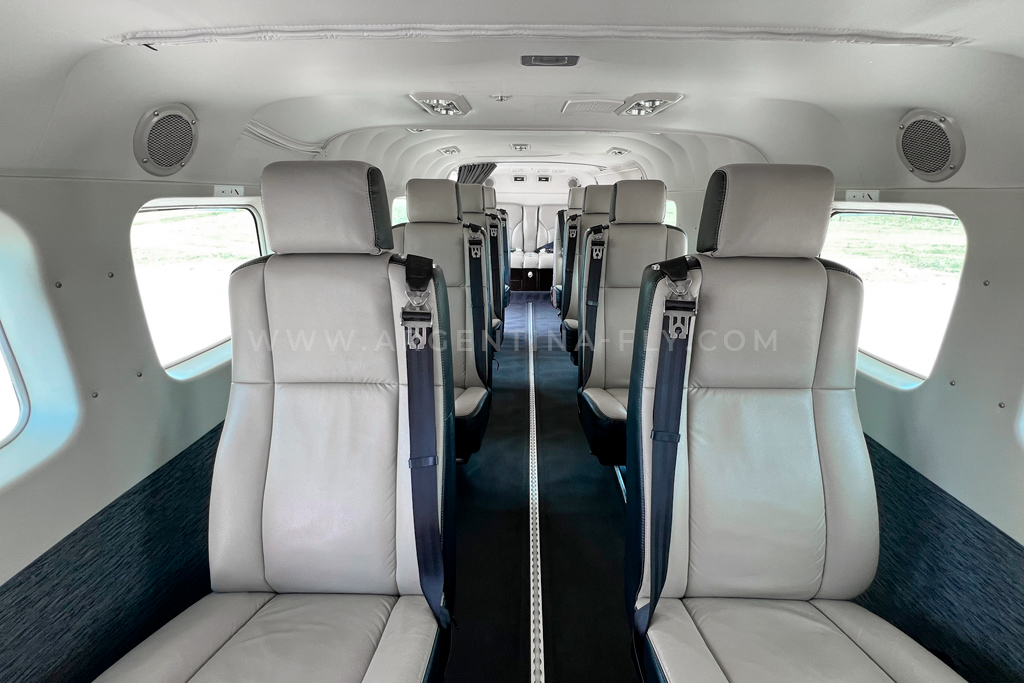
Cessna Grand Caravan
Versatile turboprop with generous payload capacity and a comfortable cabin, ideal for groups and flights to destinations with short runways.
Capacity
9 passengers
Lavatory
Not available
Cabin
Non-pressurized
Luggage
Moderate
Wi-Fi
Portable Starlink
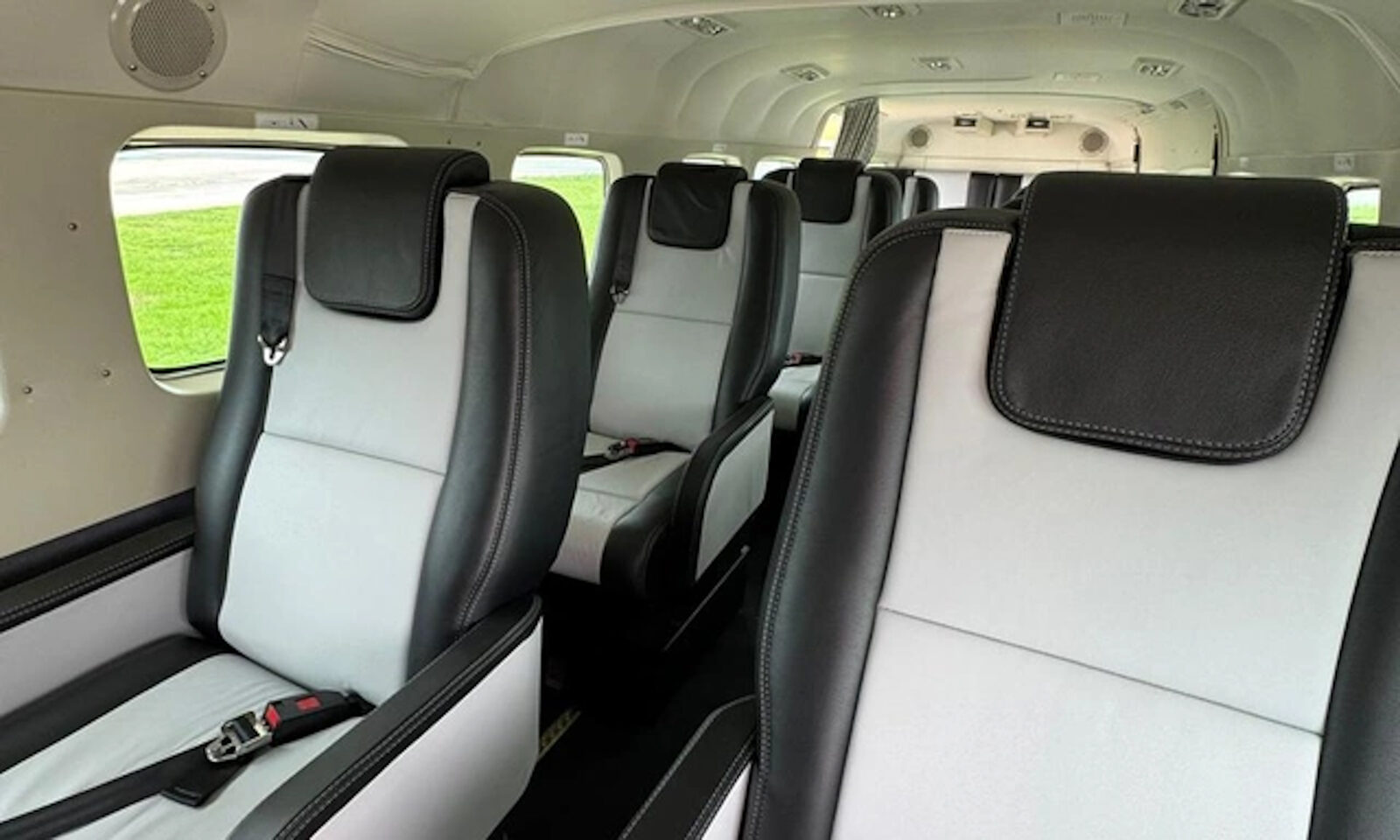
Cessna Grand Caravan Ex
Versatile turboprop with generous payload capacity and a comfortable cabin, ideal for groups and flights to destinations with short runways.
Capacity
9 passengers
Lavatory
Not available
Cabin
Not pressurized
Luggage
Standard
Wi-Fi
Portable Starlink
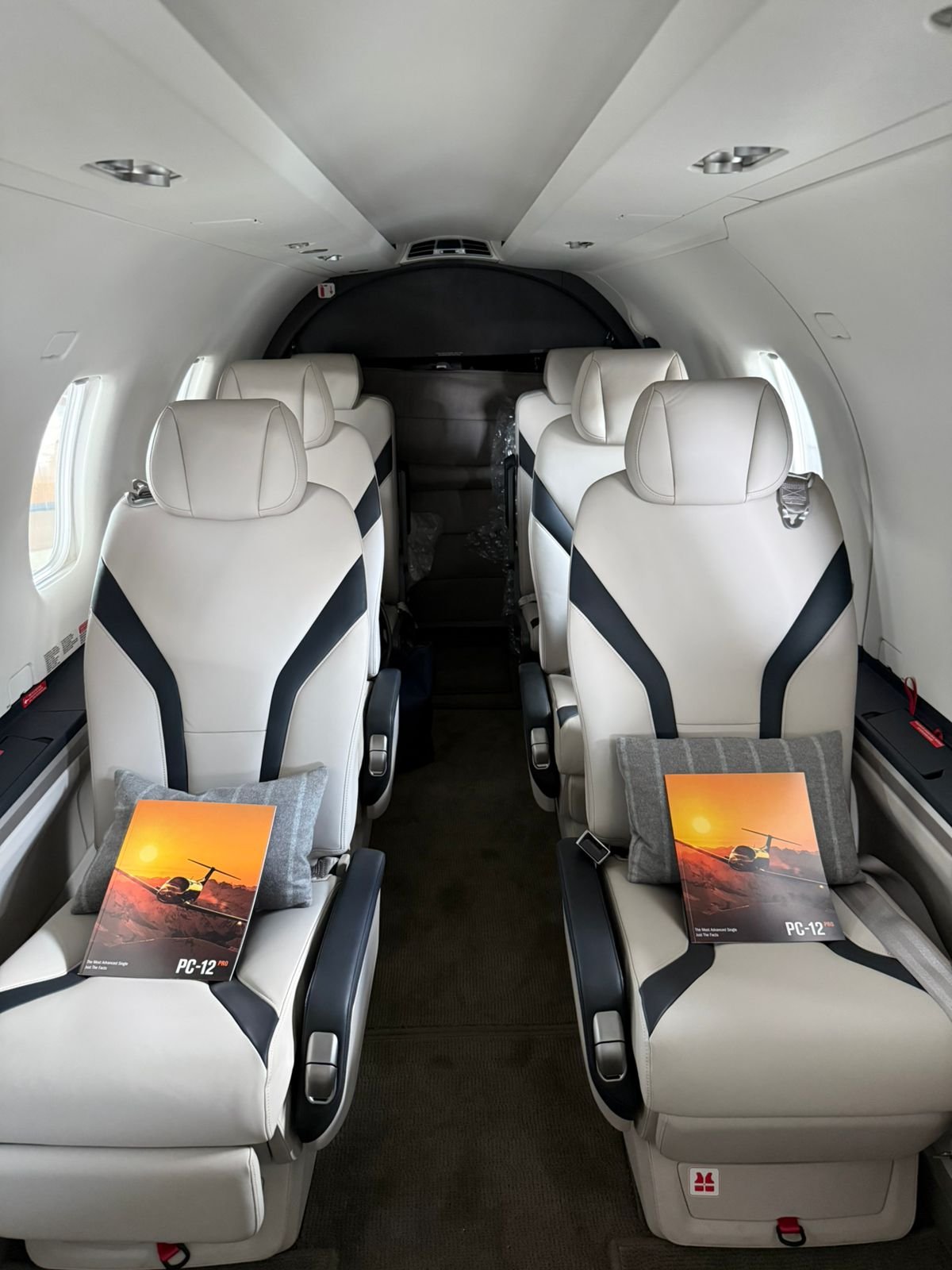
Pilatus PC12 Pro
High-performance single-engine turboprop in executive configuration, with a spacious cabin and latest-generation technology.
Capacity
8 passengers
Lavatory
Not available
Cabin
Pressurized
Luggage
Standard
Wi-Fi
Portable Starlink
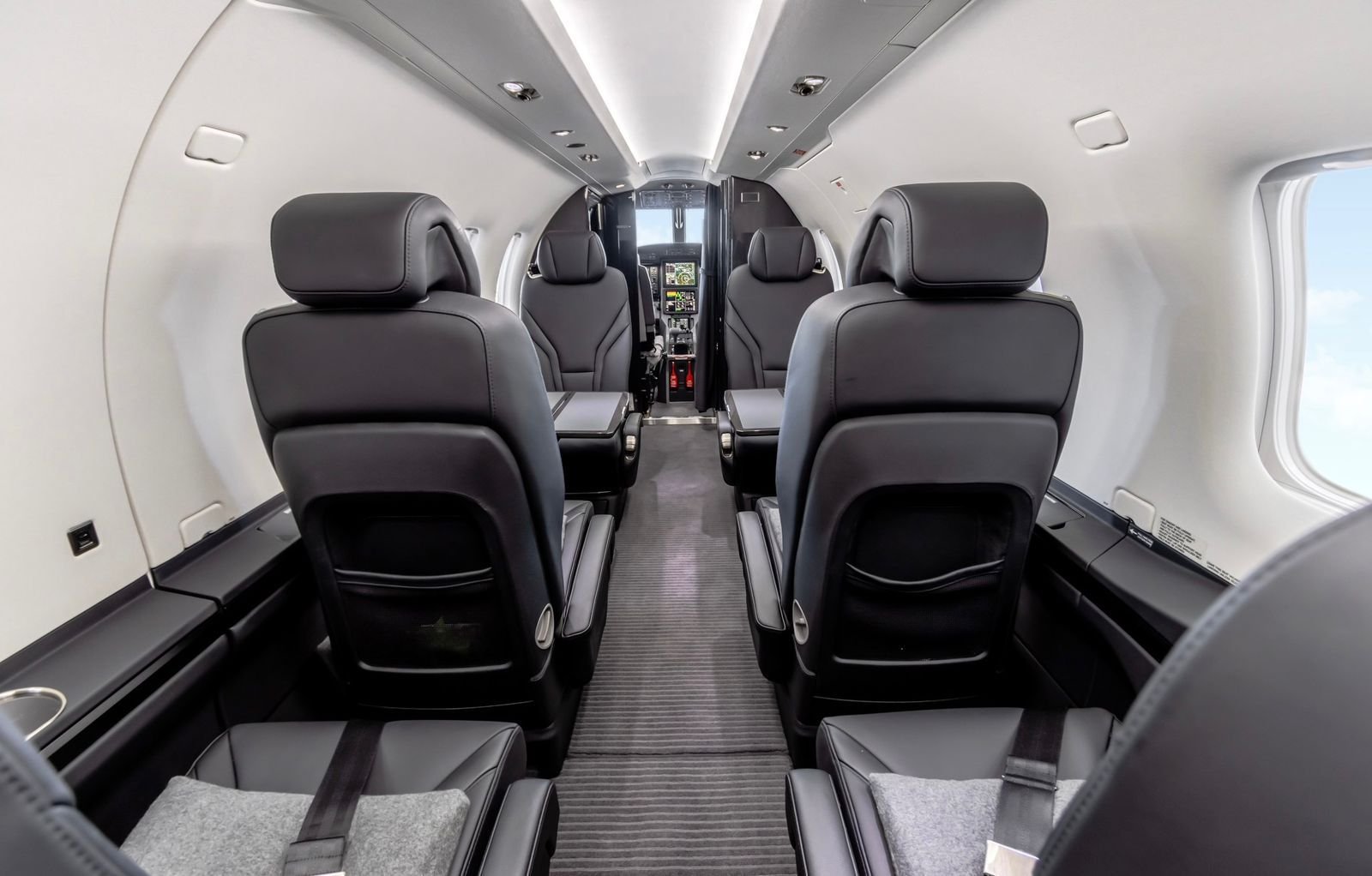
Pilatus PC-12
High-performance single-engine turboprop in executive configuration, with a spacious cabin and latest-generation technology.
Capacity
8 passengers
Lavatory
Not available
Cabin
Pressurized
Luggage
Standard
Wi-Fi
Portable Starlink
Other routes from Buenos Aires
Destinations near Coronel Suárez, with the lowest reference fare and the shortest flight time.
Coronel Suárez
Coronel Suárez is the seat of a 5,985 km² farming and ranching district (partido) in southwestern Buenos Aires province that reaches the Ventania hills. It calls itself the Capital Nacional del Polo, Argentina's national polo capital: its club, founded in 1929, has seven fields and organizes the Copa Manuel Belgrano, on the Asociación Argentina de Polo calendar. A few kilometers away, Santa Trinidad, San José and Santa María keep the houses, festivals and cooking of the Volga Germans who arrived in 1887. From Buenos Aires it is 454 km: a private flight lands at Brigadier Héctor Eduardo Ruiz airfield in 1 h 10 to 1 h 45.
Polo in the Capital Nacional del Polo
A 1929 club with seven fields, tournaments in February and March and lessons for visiting players.
The Coronel Suárez Polo Club was founded in 1929 and has seven fields, at Jujuy 692. It organizes the Copa Manuel Belgrano, played for more than 50 years and part of the Asociación Argentina de Polo calendar, as well as the Copa Tres de Febrero, the Torneo Internacional de Menores, an international youth tournament, and the Copa Internacional Juan Carlos Harriott, named after a player who came up through the club and reached a 9-goal handicap.
On the district's calendar, the international tournament is played in February and the Copa Belgrano in March. The matches feature high-handicap players, polo ponies and the petiseros, the gaucho grooms who keep the traditions and traditional dress of the trade.
To play or learn, La Esperanza Polo Club offers lessons with certified coaches every day from November to March, stick-and-ball or in matches, and takes in horses for training. It provides lodging and meals. Polo mallets are also made in Coronel Suárez.
What to see
- Coronel Suárez Polo ClubSeven fields at Jujuy 692; international tournament in February and Copa Belgrano in March.
- La Esperanza Polo ClubLessons every day from November to March, with lodging and meals.
The Volga German colonies
Santa Trinidad, San José and Santa María: churches, Volga German houses, strudel and Kerb.
The first Volga Germans reached Coronel Suárez in 1887 and founded three colonies near the city: Santa Trinidad, San José and Santa María. All three can be visited in a day. Santa Trinidad and San José are laid out along “the wide street,” with the church, the school and the institutions, and in San José many streets are named in both Spanish and German.
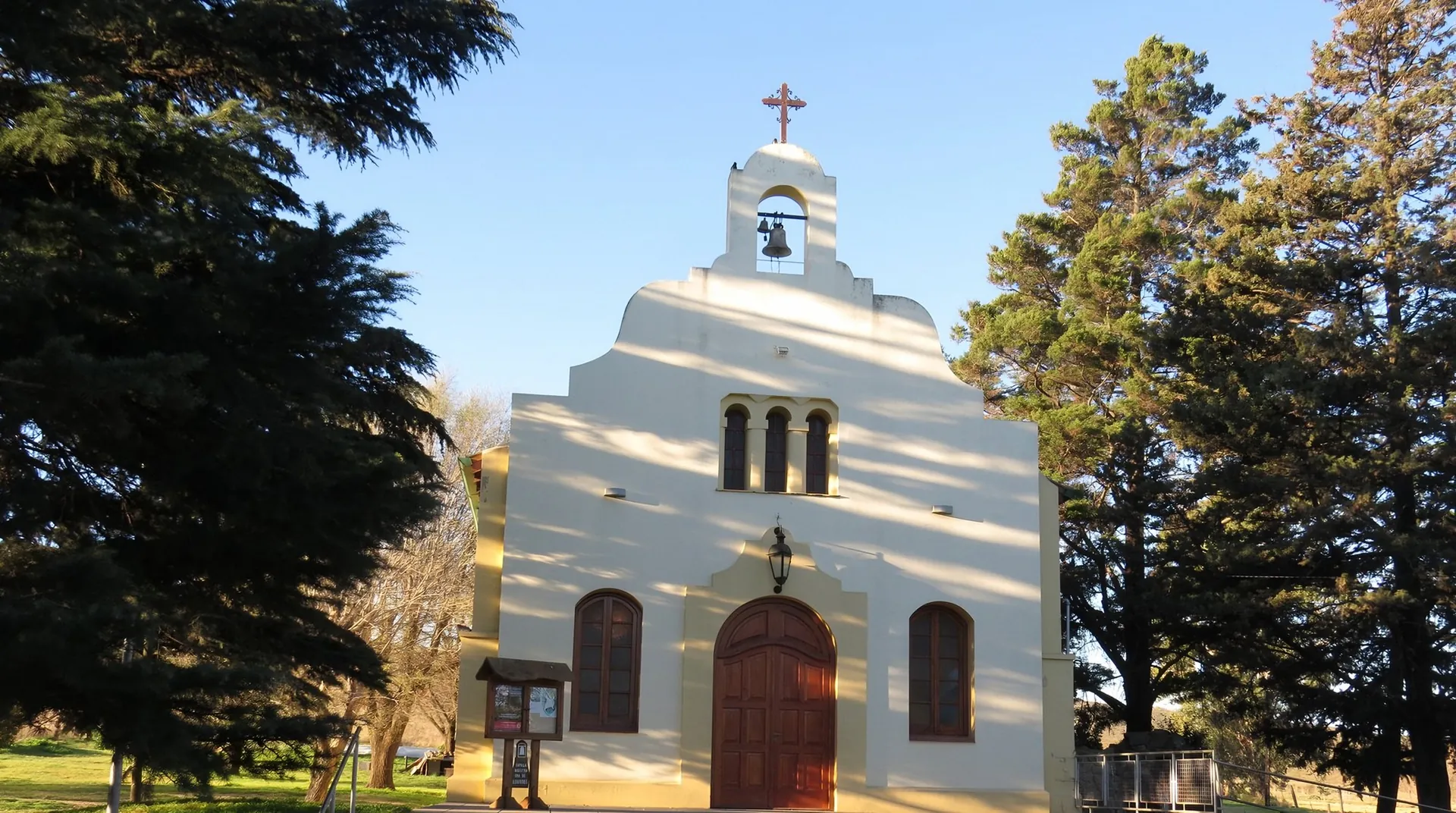
At Santa Trinidad, the gateway to the route, visitors are greeted by the Christ the Redeemer by Antonio Bagué, from Catalonia. On Avenida Libertad, “the wide street” or Vordere Gasse, stands the church of the Santísima Trinidad, with a single nave, a vaulted wooden ceiling and a central bell tower. In San José, the Romanesque-style parish of San José Obrero can be seen from afar for its two towers with gilded crosses: inside are 71 stained-glass windows brought from Europe and Stations of the Cross carved in wood with inscriptions in German. The Fundación Raíces organizes guided tours.
Santa María was declared a Pueblo Turístico, a provincial tourist village, for keeping the architecture of the Volga Germans: you enter along a road lined with poplars and walk past houses of stone, adobe or dark brick with porches trimmed in carved wood, entered from the side, through the yard. The restored Casa del Fundador has a craft brewery, a kitchen and guided tours of its house museum, by advance booking. The Centro Cultural Héctor Maier Schwerdt brings together a four-room museum and the Plaza Andenkenplatz, with the carts of the first immigrants.
The festivals revolve around food. Santa María's Strudel Fest, a provincial festival, takes up the first weekend of March and closes on Sunday with a giant strudel on Avenida 11 de Mayo. At Santa Trinidad's Volga Fest, on the first weekend of April, each institution prepares a German dish. San José holds the Fiesta de la Carneada, a hog-butchering festival, in July, with cured ham, bondiola, cured pork neck, white and black sausage, head cheese and boiled sausage, and in November the Füllsen Fest, for füllsen, a dessert similar to bread pudding. Each village also celebrates its Kerb, the patron saint's feast, with Masses, a parade and tournaments of Kosser, a traditional German game.
Typical calendar
- First weekend of MarchStrudel Fest, in Santa María.
- First weekend of AprilVolga Fest, in Santa Trinidad.
- First weekend of MayKerb of San José.
- JulyFiesta de la Carneada, in San José.
- Second weekend of SeptemberKerb of Santa María.
- First weekend of OctoberKerb of Santa Trinidad.
- NovemberFüllsen Fest, in San José.
What to see
- Casa del FundadorHouse museum, craft brewery and kitchen in Santa María, by advance booking.
- Centro Cultural Héctor Maier SchwerdtA four-room museum on the settlers' life, in Santa María.
- Parroquia San José ObreroTwo towers, 71 European stained-glass windows and Stations of the Cross with German inscriptions.
- Santísima TrinidadA single-nave church on the wide street of Santa Trinidad.
- Weinmann HausHandmade chocolate, cakes and a café in Santa María.
Farmland, small-game hunting and fishing
From the farming plain to the Ventania hills, with partridge and pejerrey seasons.
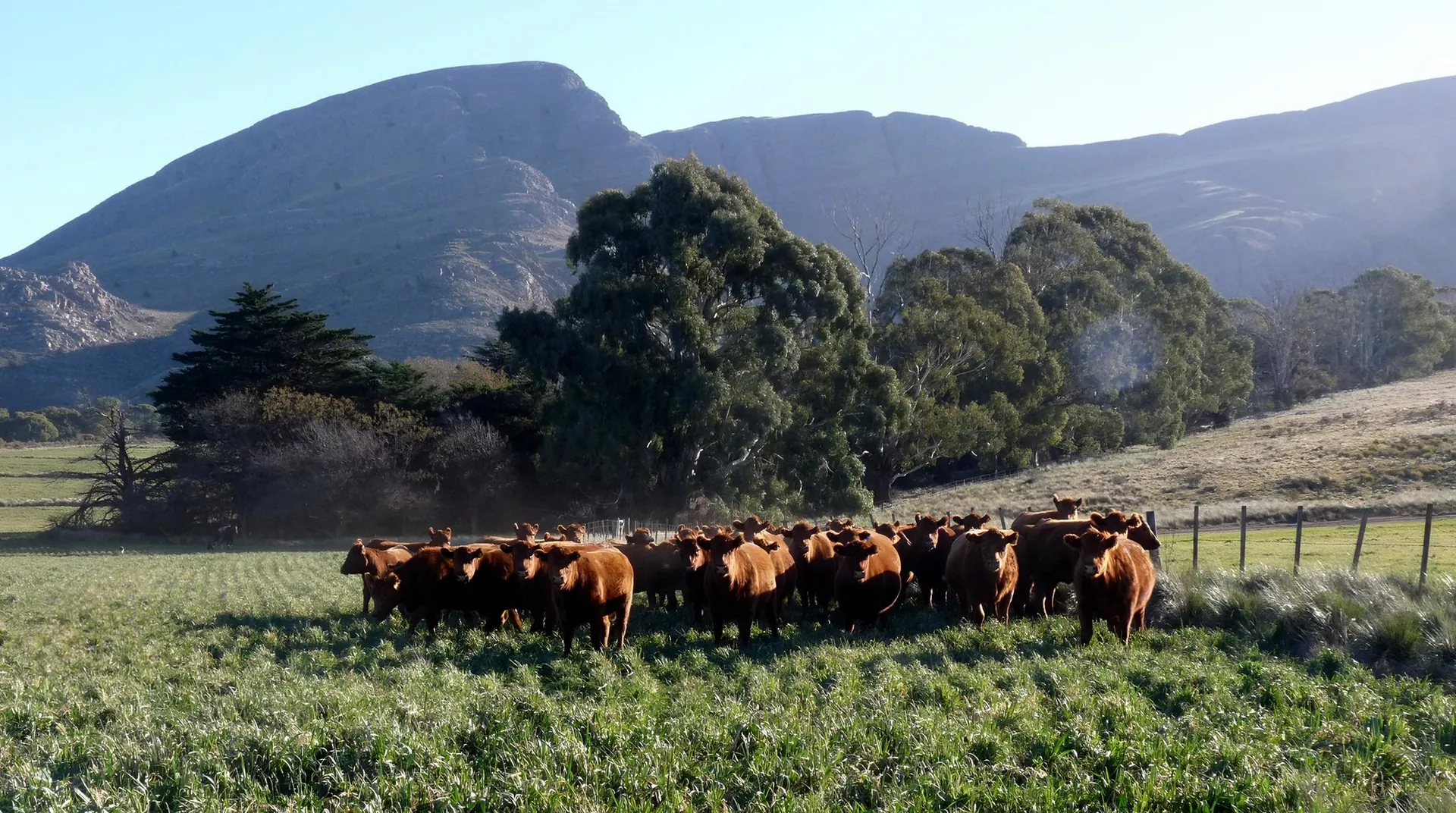
The district covers 5,985 km² of southwestern Buenos Aires province, from the farming plain in the north, toward Huanguelén, to the Ventania hills in the south. The 48 km rural road between Coronel Suárez and Huanguelén crosses one of its most productive areas, past old railway stations. The Sociedad Rural de Coronel Suárez holds the Expo Rural Suarense, its agricultural show, in October.
Buenos Aires province's small-game sport hunting season usually runs from May to late July or early August, and includes the district. The species are spotted nothura, a partridge-like tinamou locally called perdiz chica, up to 6 a day per hunter; European hare and eared dove, up to 10 each; and ducks, up to 6 in total among yellow-billed teal, yellow-billed pintail, red shoveler, rosy-billed pochard and white-faced whistling-duck. A provincial hunting license is required, applied for online with the Ministerio de Desarrollo Agrario; exact dates and bag limits are set each year.
For fishing, the Galano lake is the largest body of water in the district, with pejerrey, the Argentinian silverside, and carp; it is reached from Pasman, a rural village 35 km northwest of the city along Provincial Route 85. To the south, on Route 76 at the foot of the hills, the Estancia El Pantanoso grows certified organic lavender, sage and rosemary: in December the fields are in bloom. It offers the Camino del Inca hiking trail and its country house to stay in.
Typical seasons
- DucksFrom May to early August, up to 6 a day among five species.
- Eared doveFrom May to early August, up to 10 a day per hunter.
- European hareFrom May to early August, up to 10 a day per hunter.
- Spotted nothuraFrom May to early August, up to 6 a day per hunter.
What to see
- Estancia El PantanosoOrganic lavender, sage and rosemary at the foot of the hills; in bloom in December.
- Laguna GalanoPejerrey and carp, via Pasman, 35 km northwest along Route 85.
The city and where to stay
A railway city of wide streets, with hotels downtown.
The Ferrocarril del Sud opened the Coronel Suárez station on May 16, 1884, as a stop between Plaza Constitución and Bahía Blanca; the town plan was approved in 1889, and in 1907 the Ferrocarril Rosario a Puerto Belgrano arrived. The city has wide, tree-lined streets and is easy to explore on foot: the Town Hall, the Biblioteca Popular Sarmiento, the former seat of a Masonic lodge that keeps its tunnels and ritual objects, and the Synagogue.
Cultural life centers on the Mercado Municipal de las Artes, the Isidoro Espacio de Arte and the Cine-Teatro Italia. Outdoors are the Balneario Municipal Samuel Davies, a swimming area, and the Piñeyro trail, along the Sauce Corto River. The calendar adds the Peatonal Criolla in April, the city's anniversary in August and the Fiesta de la Primavera, the spring festival, in September.
To stay in the city, the Gran Hotel Coronel Suárez, at Brandsen and Mitre, serves a breakfast buffet and has a restaurant open to the public. The RR Apart Hotel, at Mitre 1415, has rooms with kitchenettes, air conditioning and covered parking, and the Hotel Bender adds its own grill. To eat in the colonies, the Casa del Fundador and Weinmann Haus, in Santa María.
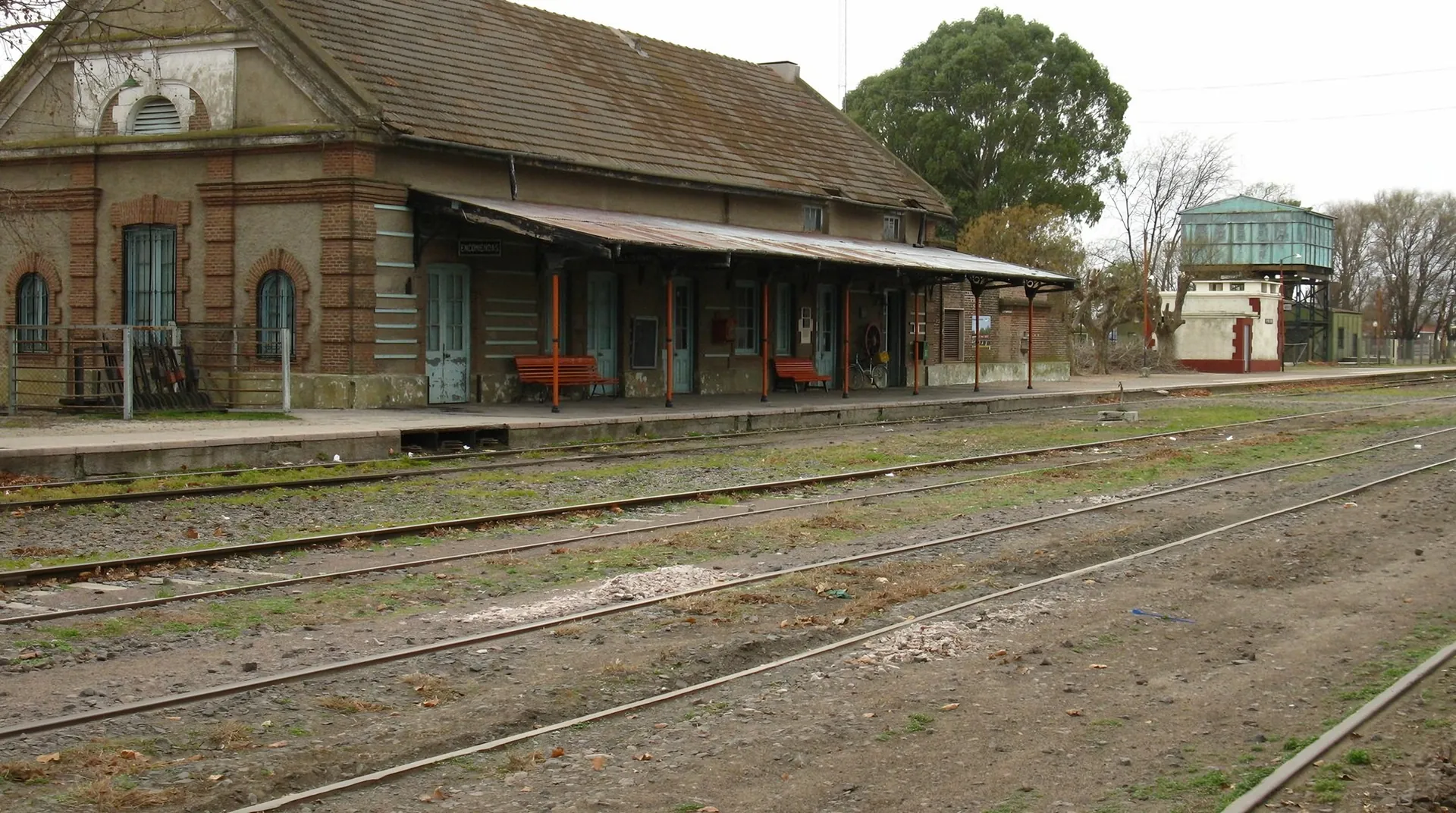
What to see
- Balneario Municipal Samuel DaviesOn Avenida San Lorenzo.
- Biblioteca Popular SarmientoFormer seat of a Masonic lodge, with its tunnels; Sarmiento 349.
- Mercado de las ArtesMunicipal cultural space on Brandsen, between Las Heras and Lamadrid.
Where to stay
- Gran Hotel Coronel SuárezAt Brandsen and Mitre, with a breakfast buffet and a restaurant open to the public.
- Hotel BenderA small hotel with its own grill.
- RR Apart HotelRooms with kitchenettes and covered parking, at Mitre 1415.
Arrival
From departure to destination.
- Departure
- From San Fernando (FDO), Aeroparque (AEP) or Ezeiza (EZE). The fare may change depending on where each aircraft is based.
- Airfield
- Coronel Suárez, Brigadier Héctor Eduardo Ruiz (SUZ), public-use and non-towered, with a paved runway, a few minutes from downtown.
- Colonies
- Santa Trinidad, San José and Santa María are a few kilometers away; buses run Monday to Friday from the bus terminal.
- Polo
- International tournament in February and Copa Belgrano in March: book the flight and accommodation well in advance.
When to go
The seasons at the destination.
- Summer (December to March)
- Mild to hot, with an average high of 29.0 °C and a low of 13.8 °C in January; international polo tournament in February.
- March
- Copa Belgrano polo and the Strudel Fest in Santa María, with an average high of 25.1 °C.
- April
- Volga Fest in Santa Trinidad.
- May to early August
- Small-game hunting. July is the coldest month: a high of 12.5 °C, a low of 0.4 °C and frost on almost half the days; Fiesta de la Carneada in San José.
- October
- Expo Rural Suarense and the Kerb of Santa Trinidad; 94.2 mm of rain.
- November and December
- Polo lesson season begins; Füllsen Fest in November and lavender in bloom in December.
Key facts
- Airport
- Brigadier Héctor Eduardo RuizIATA / ICAO: — / SAZCPaved runwayA few minutes from downtown
- Category
- Public-use, non-towered
- Distance
- 454 kmFlight distance from Buenos Aires
Frequently asked questions
Price, flight time, airport, departure and travel documents.
How much does a private flight from Buenos Aires to Coronel Suárez cost?
Reference fares for a one-way private flight from Buenos Aires (San Fernando), whole aircraft, start at USD 3,970 for a piston twin and USD 4,070 for a turboprop. Round trips are calculated in the quote tool according to the length of your stay.
How long is the flight?
Between 1 h 10 and 1 h 45, depending on the aircraft.
Which airport does the flight land at?
Coronel Suárez airfield, Brigadier Héctor Eduardo Ruiz (SUZ / SAZC), public-use and non-towered, with a paved runway at an elevation of 233 m, a few minutes from downtown.
When are the polo tournaments in Coronel Suárez?
At the Coronel Suárez Polo Club, the international tournament is played in February and the Copa Manuel Belgrano, on the Asociación Argentina de Polo calendar, in March. To play or take lessons, La Esperanza Polo Club operates every day from November to March, with lodging and meals.
What is there to do in the German colonies?
Visit the churches of Santa Trinidad and San José, the Volga German houses and the Casa del Fundador in Santa María, and try Volga German cooking. The busiest festivals are Santa María's Strudel Fest, on the first weekend of March, and Santa Trinidad's Volga Fest, on the first weekend of April.
When is the hunting season in Coronel Suárez?
Buenos Aires province's small-game sport hunting season usually runs from May to late July or early August: spotted nothura, European hare, eared dove and five duck species, with daily bag limits per hunter. A provincial hunting license is required; the exact dates are set each year.
When is the best time to fly to Coronel Suárez?
It depends on the plan. February and March bring polo and the Strudel Fest, with highs of 29.0 °C in January and 25.1 °C in March. From May to early August it is small-game hunting season; July is the coldest month, with a high of 12.5 °C and a low of 0.4 °C. In December the lavender blooms at El Pantanoso.
Can I fly there and back in a day?
Yes. The flight takes 1 h 10 to 1 h 45, enough for a meeting, a polo match or a tour of the colonies, flying back in the afternoon. The fare is calculated by length of stay, from a same-day return to several days.
What documents do I need?
It is a domestic flight within Argentina: Argentine citizens travel with a valid national ID (DNI) and foreign nationals with a valid passport.
Are the published fares final?
They are estimates. The final quote depends on dates, length of stay, aircraft type and applicable operating fees.
Where does the flight depart from?
Fares are calculated for departure from San Fernando (FDO). Departing from Aeroparque (AEP) or Ezeiza (EZE) may change the fare, depending on where each aircraft is based.

Ready to fly? Let’s talk.
Share the details of your trip and we’ll help you find the aircraft and flight solution best suited to your needs.
- WhatsApp+54 9 11 3080 7775
- Phone+54 9 11 3080 7775
- Emailinfo@argentina-fly.com
For charter operatorsList your aircraft